
Home · Science · Nov 3 archive
NASA's Swift Telescope Set to Re-Enter Earth's Atmosphere
· Confirmed
In Short: NASA's Swift Observatory, launched in 2004, is predicted to re-enter Earth's atmosphere on November 4, 2026, at 3:30 a.m.
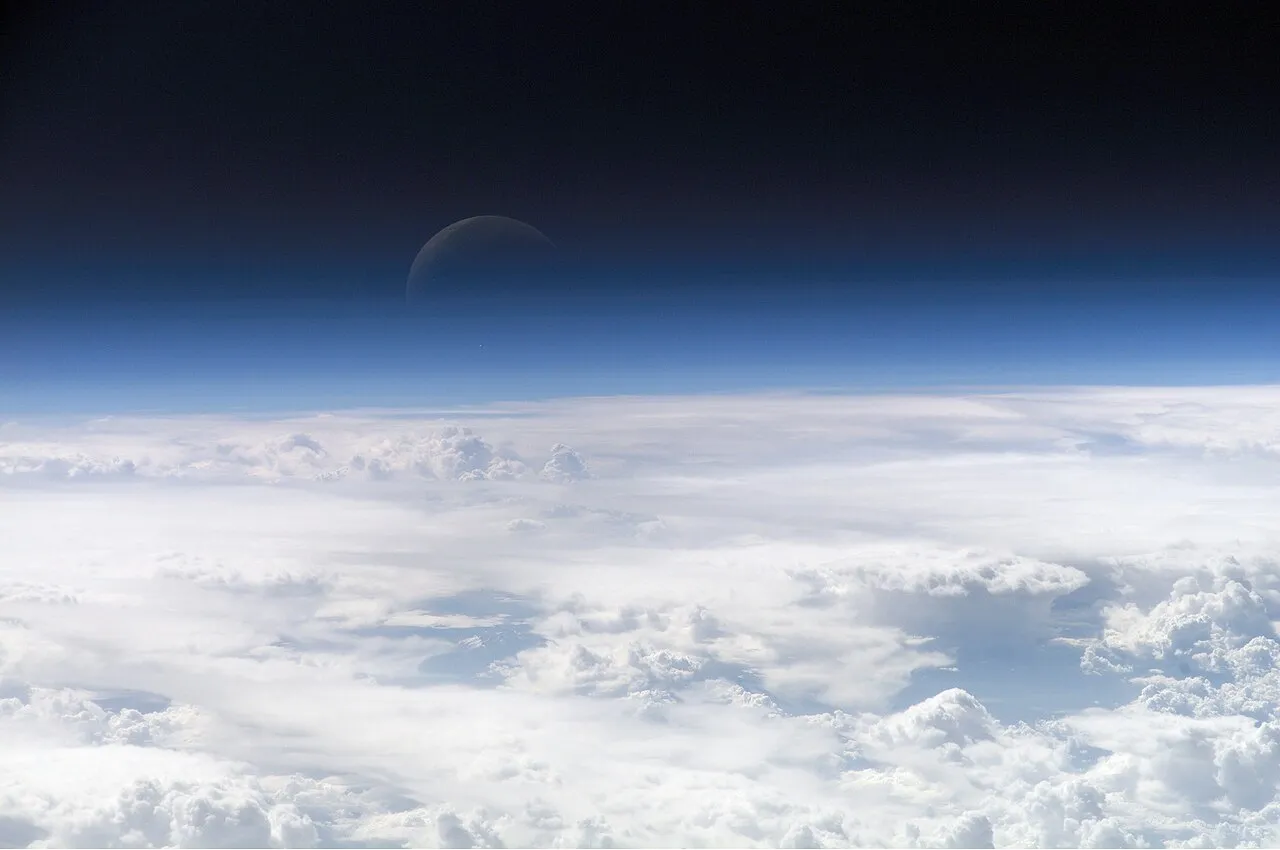
NASA's Swift Observatory, launched in 2004, is predicted to re-enter Earth's atmosphere on November 4, 2026, at 3:30 a.m. EST, with an uncertainty of 11 hours, according to NASA and the U.S. Space Force.
The Swift Observatory, a 3,200-pound spacecraft, has been monitoring sudden, powerful events in space for over two decades. Its re-entry is expected to occur after a failed rescue attempt left it in a lower orbit.
Most of the spacecraft is expected to burn up in the atmosphere, though some pieces, including denser-than-lead tungsten and mirror parts, could survive re-entry, according to NASA's Brad Cenko, the mission's chief scientist.
The risk of harm to anyone on Earth is considered unlikely, with a chance of about 1 in 2,100, according to the agency.
The Swift Observatory's re-entry zone includes swaths of Africa, Australia, India, Southeast Asia, and Central and South America.
The Swift Observatory was launched in 2004 to study gamma-ray bursts, flashes of high-energy light produced by some of the universe's most powerful explosions.
The Swift team is mourning the loss of the telescope but expresses gratitude for the observations it made during its 22 years in orbit.
NASA's James Webb Space Telescope recently released a new 223-megapixel composite featuring about 16.5 million stars that have been evolving over several million years.
Features of interest for the Nancy Grace Roman Space Telescope include the Large Magellanic Cloud dwarf galaxy and the star cluster NGC 6811 in the constellation Cygnus.
NASA has set a total mission cost of $4.3 billion for the Nancy Grace Roman Space Telescope, which is planned to operate for at least a decade.
NASA and the U.S. Space Force will continue to monitor the re-entry and update predictions.
What's confirmed
- NASA's Swift Observatory, launched in 2004, is predicted to re-enter Earth's atmosphere on November 4, 2026, at 3:30 a.m. EST, with an uncertainty of 11 hours, according to NASA and the U.S. Space Force.
- The Swift Observatory, a 3,200-pound spacecraft, has been monitoring sudden, powerful events in space for over two decades. Its re-entry is expected to occur after a failed rescue attempt left it in a lower orbit.
- Most of the spacecraft is expected to burn up in the atmosphere, though some pieces, including denser-than-lead tungsten and mirror parts, could survive re-entry, according to NASA's Brad Cenko, the mission's chief scientist.
- The risk of harm to anyone on Earth is considered unlikely, with a chance of about 1 in 2,100, according to the agency.
- The Swift Observatory's re-entry zone includes swaths of Africa, Australia, India, Southeast Asia, and Central and South America.
- The Swift Observatory was launched in 2004 to study gamma-ray bursts, flashes of high-energy light produced by some of the universe's most powerful explosions.
- The Swift team is mourning the loss of the telescope but expresses gratitude for the observations it made during its 22 years in orbit.
- NASA's James Webb Space Telescope recently released a new 223-megapixel composite featuring about 16.5 million stars that have been evolving over several million years.
- Features of interest for the Nancy Grace Roman Space Telescope include the Large Magellanic Cloud dwarf galaxy and the star cluster NGC 6811 in the constellation Cygnus.
- NASA has set a total mission cost of $4.3 billion for the Nancy Grace Roman Space Telescope, which is planned to operate for at least a decade.
- NASA and the U.S. Space Force will continue to monitor the re-entry and update predictions.
What's still developing
- Shawn Domagal-Goldman, Astrophysics Division director at NASA, told "CBS Mornings" in June that nothing pinpoints gamma-ray bursts like the Swift Observatory.
- "We've known this day would come since before Swift was launched. At least in low-Earth orbit, what goes up must come down. And that end is catastrophic," said Pennsylvania State University's John Nousek, an astronomer who led the control team.
- Due to an ongoing commercial spacecraft attitude control issue, NASA and Katalyst Space announced Wednesday the LINK spacecraft will not capture or boost an agency satellite to a higher altitude to extend its science mission as planned.
- The Neil Gehrels Swift Observatory, better known as Swift, has been orbiting Earth since 2004.
- NASA Administrator Jared Isaacman said : This is not the outcome we were working toward, but it does not change why this mission was worth attempting.
- Amateur astronomers in Puerto Rico — with the Sociedad de Astronomía del Caribe — captured a video of both LINK and Swift in the same (or a similar) orbit around Earth.
- Once Swift has slewed toward a newly detected gamma-ray burst, the X-Ray Telescope (XRT) takes over.
- “Galaxies are such intricate ecosystems that if you truly want to understand them, you have to pull datasets from different missions together,” said Kristen McQuinn, of the Space Telescope Science Institute.
- About half an hour later, Roman separated from the rocket’s upper stage and began traveling toward its intended orbit around the Sun-Earth Lagrange Point 2.
- During the 1.5 million-kilometer journey to L2, NASA mission controllers will command the telescope through commissioning to start up and calibrate the onboard instruments.
- Roman is poised to “revolutionize our understanding of the universe,” a launch commentator said during NASA’s broadcast.
- NASA’s Goddard Space Flight Center built the WFI’s focal plane assembly and calibration system, while BAE Systems built the remainder of the instrument at its Colorado facilities, including the “element wheel which precisely articulates eight optical filters as well as a prism and grism,” meaning prism with a grate to diffract light, BAE said in response to emailed questions.