
Home · Science · Nov 3 archive
NASA Crew Emerges After Yearlong Mars Habitat Simulation
· Confirmed
In Short: Four crew members emerged from a 3D-printed habitat in Houston on October 31, 2026, after a yearlong simulation of life on Mars.
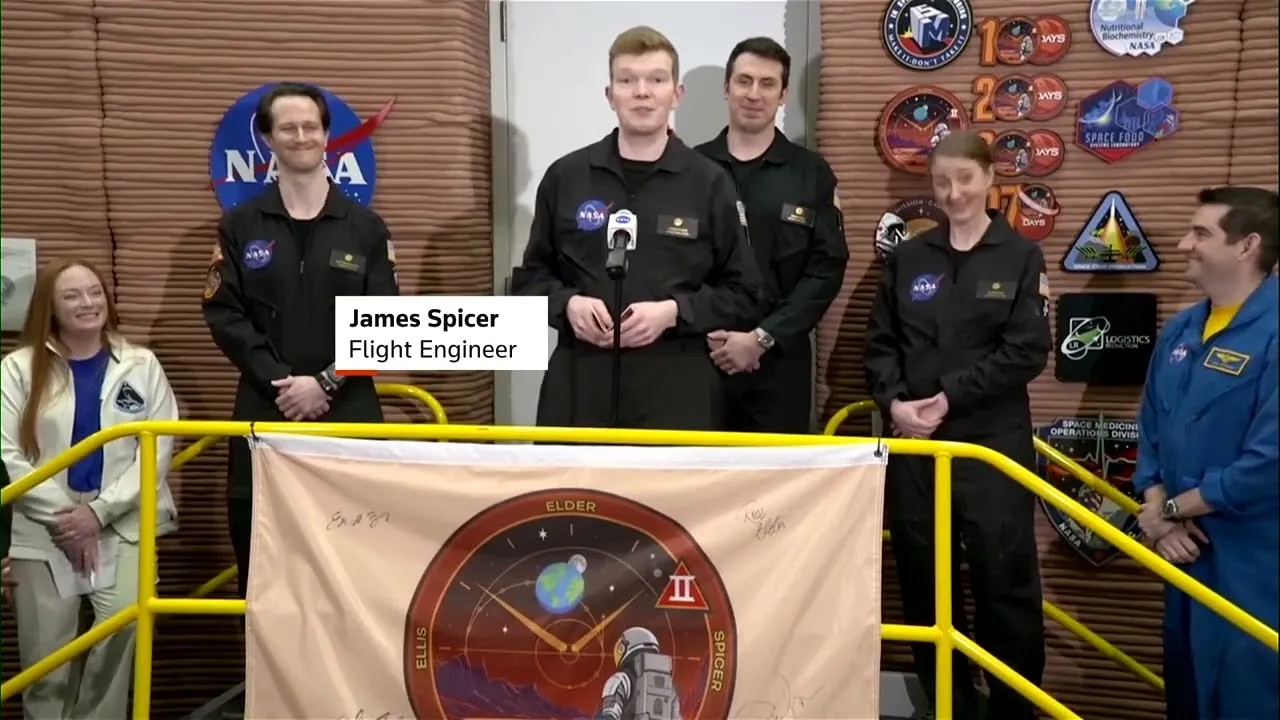
The crew, consisting of Ross Elder, Ellen Ellis, Matthew Montgomery, and James Spicer, entered the Crew Health and Performance Exploration Analog (CHAPEA) on October 19, 2025.
The simulation aimed to replicate the conditions astronauts would face during an extended mission to Mars, including delayed communication with Earth and limited personal time.
The crew will undergo post-mission evaluations and debriefing for the next two weeks.
NASA astronaut Jack Hathaway greeted the crew with 'Trick or treat,' as they stepped out on Halloween.
The habitat, designed to mimic Mars conditions, is a 1,700-square-foot 3D-printed structure at Johnson Space Center.
NASA invested over $2 million in the mission, which is part of a series of simulations since 2013.
The data collected will help NASA understand the challenges of deep space missions and inform future lunar and Mars exploration.
NASA plans to continue similar simulations, with the next mission beginning no earlier than August 2027.
What this adds
NASA has not yet released specific data on crew weight changes, crop yields, power draw, water use, or medical events from this mission.
Background
Four crew members emerged from a 3D-printed habitat in Houston after a yearlong Mars mission simulation.
What's confirmed
- And after 378 days, the four crew members — Ross Elder, commander; Ellen Ellis, medical officer; Matthew Montgomery, science officer; and James Spicer, flight engineer — emerged from the 3D printed habitat in Houston on October 31, 2026.
- “I’m looking forward to pineapple,” Andrzej Stewart, the chief engineering officer of the latest NASA-funded Hawaii Space Exploration Analogand Simulation (HI-SEAS) mission, said moments before he and his crew mates feasted on fresh fruits and vegetables outside the dome.
- “We now have 24 months of 24-7 data,” HI-SEAS Principal Investigator Kim Binsted said Sunday, moments before the crew exited.
- Since 2013, some 24 specialists chosen from some 800 applicants have now put their lives on hold and simulate extended missions to Mars atop Mauna Loa.
- Also in attendance were NASA astronaut Jack Hathaway, who joined the four crew members.
- “Trick or treat,” Hathaway told the crewmembers as they emerged from isolation on Saturday.
- Specifically, the second Crew Health and Performance Exploration Analog mission began at Johnson Space Center on October 19, 2025.
- According to NASA, health and performance data from the simulation can help counter human spaceflight risks.
- Four crew members have lived and worked inside a 3D-printed 1,700-square-foot facility, simulating Mars mission operations, conducting simulated spacewalks, exercising, performing habitat maintenance, growing plants, and more, while operating under stressors that future deep space crews will likely experience.
What's still developing
- Messages back and forth from Mars won’t be instantaneous, so it was important for NASA to learn how people can cope when they can’t immediately ask for advice.
- They said the inside of the habitat was unusually quiet.
- And so, what we were doing is replicating as if the food had been pre-positioned and that the crew had no choice in what they were able to eat.
- By Laura Rice July 12, 2024 11:13 am Health & Science, Tech & Innovation, Texas Standard Original NASA / Josh Valcarcel The CHAPEA crew egress from their simulated Mars mission July 6, 2024, at NASA’s Johnson Space Center in Houston.
- Humans still haven’t been to Mars, but four NASA volunteers now know what it’s like to spend more than a year in a Mars simulation.
- Afterward, an in-person subject matter expert would answer media questions as the crew stepped outside.
- Media will have the opportunity to capture the moment the crew exits the building, stepping outside for the first time in more than a year.
- Wire coverage that circulated over the weekend, including a Channel News Asia report syndicated by several outlets, said Wyche stressed that communication delays demand patience, careful planning and more independence from the crew.
- Elder said in the same coverage that the risks of going to Mars are great, but that the goal remains inevitable if people keep seeking understanding.
- This analysis walks through what NASA and the early wire coverage have confirmed, what the data collection is meant to feed, and why the findings matter for lunar and Mars hardware planning.
- NASA has not published crew weight change, crop yields, power draw, water use or medical event counts for this mission.
- Furthermore, NASA planned live exit coverage starting at 3 p.m.