
Home · Politics · Nov 3 archive
California's Billionaire Tax Faces Uncertainty as Midterm Voters Decide
Confirmed
In Short: California voters are set to decide on Proposition 40, a proposed one-time 5% wealth tax on billionaires, which could raise about $100 billion over a five-year period, according to a working paper by UC Berkeley economists Gabriel Zucman and Emmanuel Saez, co-authored with Paris School of Economics's Jasper Boll.
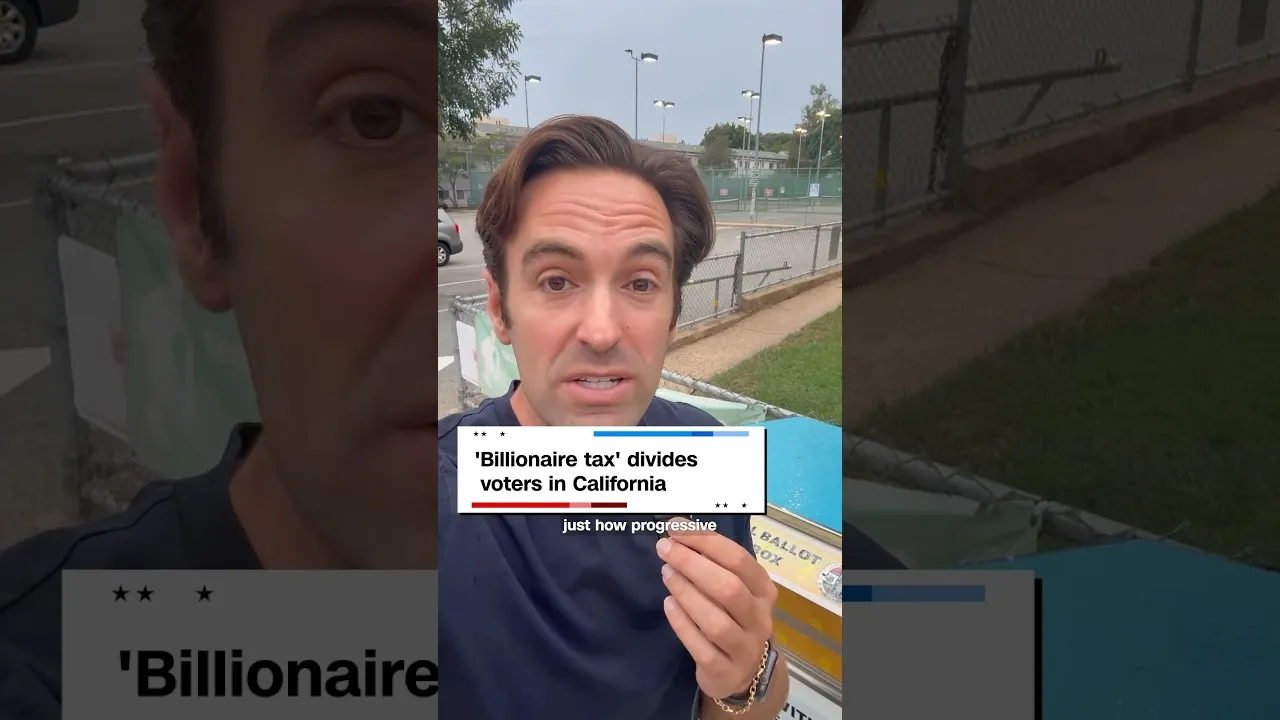
California voters are set to decide on Proposition 40, a proposed one-time 5% wealth tax on billionaires, which could raise about $100 billion over a five-year period, according to a working paper by UC Berkeley economists Gabriel Zucman and Emmanuel Saez, co-authored with Paris School of Economics's Jasper Boll. The tax is designed to fund state healthcare programs, public education, and food assistance.
However, the proposal faces significant opposition from some of the state's wealthiest residents. Max Levchin, the billionaire co-founder of Affirm Holdings, told Bloomberg that he would 'probably' leave California if the tax is passed. Zuckerberg has also discussed selling his Palo Alto compound, estimated to be worth $110 million, as part of plans to establish residency outside California.
Proponents argue that the tax would bring in about $100 billion from the roughly $2.3 trillion in wealth held by the state's billionaires, though recent analyses suggest it could shrink the state's tax base over the long term with losses exceeding near-term revenue gains. The tax is being presented as a one-time measure, but the legislature could amend it with a two-thirds vote without consulting voters, potentially allowing for additional wealth taxes in the future.
Advocates contend that billionaires typically pay little in income taxes due to deriving much of their wealth from investments, so the wealth tax would raise additional revenue even after accounting for some departures and reductions in income taxes paid in California by those who leave the state. However, a recent working paper by economists Rauh and Jaros suggests that behavioral responses prior to voting have eroded most of the projected tax base.
The ballot measure has yet to secure majority backing, with a recent poll showing 46% of respondents supporting the tax and 43% opposing it. The proposal has also faced challenges from other ballot measures, such as Propositions 41 and 42, which could introduce restrictions affecting the proposed wealth tax if approved by voters.
The outcome of Proposition 40 could have significant implications for California's economic future, particularly as the state faces challenges in healthcare, education, and food assistance. The proposal is part of a broader set of ballot measures related to taxes that voters will see this November.
What's confirmed
- California voters are set to decide on Proposition 40, a proposed one-time 5% wealth tax on billionaires, which could raise about $100 billion over a five-year period, according to a working paper by UC Berkeley economists Gabriel Zucman and Emmanuel Saez, co-authored with Paris School of Economics's Jasper Boll. The tax is designed to fund state healthcare programs, public education, and food assistance.
- However, the proposal faces significant opposition from some of the state's wealthiest residents. Max Levchin, the billionaire co-founder of Affirm Holdings, told Bloomberg that he would 'probably' leave California if the tax is passed. Zuckerberg has also discussed selling his Palo Alto compound, estimated to be worth $110 million, as part of plans to establish residency outside California.
- Proponents argue that the tax would bring in about $100 billion from the roughly $2.3 trillion in wealth held by the state's billionaires, though recent analyses suggest it could shrink the state's tax base over the long term with losses exceeding near-term revenue gains. The tax is being presented as a one-time measure, but the legislature could amend it with a two-thirds vote without consulting voters, potentially allowing for additional wealth taxes in the future.
- Advocates contend that billionaires typically pay little in income taxes due to deriving much of their wealth from investments, so the wealth tax would raise additional revenue even after accounting for some departures and reductions in income taxes paid in California by those who leave the state. However, a recent working paper by economists Rauh and Jaros suggests that behavioral responses prior to voting have eroded most of the projected tax base.
- The ballot measure has yet to secure majority backing, with a recent poll showing 46% of respondents supporting the tax and 43% opposing it. The proposal has also faced challenges from other ballot measures, such as Propositions 41 and 42, which could introduce restrictions affecting the proposed wealth tax if approved by voters.
- The outcome of Proposition 40 could have significant implications for California's economic future, particularly as the state faces challenges in healthcare, education, and food assistance. The proposal is part of a broader set of ballot measures related to taxes that voters will see this November.
What's still developing
- Stuart Varney and Kelly Saberi discuss Californias billionaire tax proposal.
- The report found the majority of voters view immigrants as a benefit and support state action on climate change.
- The Bay Area is an outlier both politically and economically.
- The report also documented a geographic shift in California conservatism.
- 1, 2026, has caused some prominent billionaires to move out of the state or relocate businesses – including Google co-founders Larry Page and Sergey Brin, Oracle founder Larry Ellison and PayPal co-founder Peter Thiel.