
Home · World · Nov 1 archive
Youth Protests in Germany Turn Violent, Police Clash With Demonstrators
· Confirmed
In Short: In Germany, police used water cannons to disperse protesters who were targeting emergency workers with fireworks, stones, and bottles in Berlin, Cologne, and Hamburg.
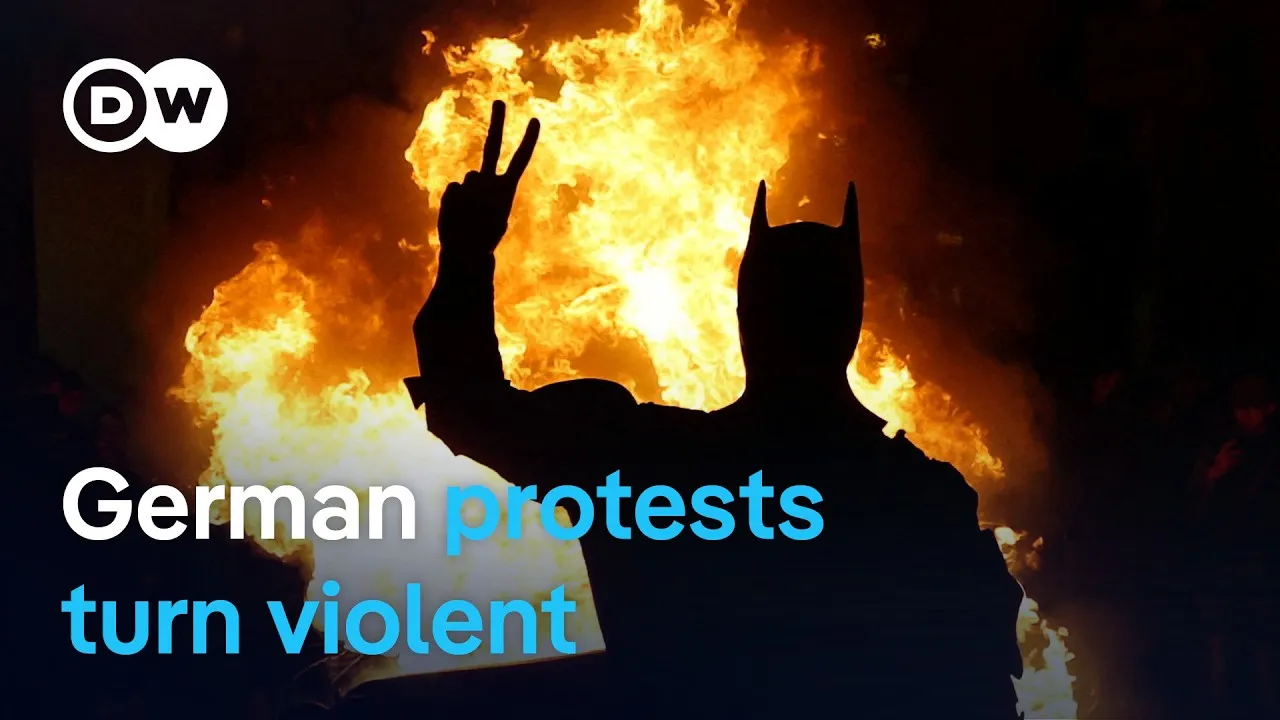
Tens of thousands of protesters, organized by the campaign group 'Gen Z regelt,' took to the streets across Germany on Saturday, demanding better education, lower living costs, and opposition to compulsory military service.
According to Al Jazeera, 'Gen Z regelt' estimated about 120,000 people participated in the protests, though the group had expected around 180,000 participants.
In Frankfurt, police reported 'violent riots' in the city center, with windows of several shops smashed and Molotov cocktails thrown at emergency services.
CNA and NewsCord reported that police withdrew a march in Cologne after face covering and pyrotechnics were used, and Interior Minister of Hesse state, Roman Poseck, said around 100 clearly identified left-wing extremists had infiltrated the protest.
The protests in Germany followed similar youth-led mass protests in France, where more than 320,000 people demonstrated on Saturday, leading to widespread violence and over 1,200 arrests.
Protesters in Milan dumped manure outside Italy’s energy regulator and burned a symbolic, oversized electricity bill, images broadcast on local television showed.
In Germany, police used water cannons to disperse protesters who were targeting emergency workers with fireworks, stones, and bottles in Berlin, Cologne, and Hamburg.
Gen Z regelt's campaign called for protests in more than 30 cities, with protesters demanding better support for the health and education systems and against compulsory military service.
The protests in Germany and France reflect broader dissatisfaction with rising living costs, deteriorating public services, and political establishments.
Protesters in Paris said they were fighting because 'the cost of living is too harsh, because the price of fuel is too high, and because high school pupils are being violently attacked and hurt all over the country just for trying to protest and ask for more teachers and decent learning conditions.'
What this adds
The unrest in Germany and France follows similar protests in previous weeks, where hundreds of thousands of people participated in demonstrations that turned violent.
The protests in Germany and France reflect broader dissatisfaction with rising living costs, deteriorating public services, and political establishments.
The protests in Germany and France are part of a wider trend of youth-led protests across Europe, including in Italy and Albania, where similar grievances over living costs and political dissatisfaction have led to violent clashes.
Background
Youth-led protests in Germany turned violent, with clashes between demonstrators and police, leading to injuries and property damage.
In Frankfurt, Germany’s financial hub, at least two stores were looted and several more damaged as protests organized by the campaign group 'Gen Z regelt' turned violent.
What's confirmed
- Several police officers were injured on Saturday after tens of thousands of people joined youth-led protests across the country organised by the group “Gen Z regelt” (Gen Z has got this).
- Police withdraw a Cologne march after face covering and pyrotechnics Roman Poseck, interior minister of Hesse state, said “around 100 clearly identified left-wing extremists” had infiltrated the protest in the city.
- Premier Giorgia Meloni announced a raft of measures, including sending an additional 500 soldiers to Milan and tougher penalties for minors, who police said made up a large part of the violent protesters last week.
- Officials said Saturday they were investigating a 30-year-old freelance journalist said to be the “mastermind” of the newly formed October 17 movement, which has been the main driver of the recent protests in Italy.
- The unrest in Germany follows similar youth-led mass protests in France, where more than 320,000 people also demonstrated on Saturday.
- They were organised by the campaign group Gen Z regelt - meaning "Gen Z takes charge" - to protest against underfunding in schools, the high cost of living, public spending cuts and military service.
What's still developing
- Download the Straight Arrow app today to get the stories that matter free from manipulation, bias or agenda.™ Last week, hundreds of thousands of people participated in protests across the country, and while most were peaceful, some deteriorated into riots, with arson and looting reported.
- Iran accused France of “violent treatment” of the protesters and “extensive and flagrant human rights violations” during the demonstrations, which began late last month and have been accompanied by unrest.
- Iran itself suffered major anti-government protests in January, during which the authorities reported more than 3,000 deaths, blaming “terrorist acts” orchestrated by the United States and Israel.
- A lbanian Prime Minister Edi Rama said Thursday he would not resign over violent student-led protests that entered a third consecutive day, insisting that governments should be changed through elections rather than street demonstrations, Reuters reported.
- Rama was scheduled to meet his party's parliamentary group Thursday morning as protest organizers circulated an “ultimatum” demanding his resignation by 1:00 p.m.
- Protesters wearing face coverings at protests planned in Portsmouth this weekend could be arrested under new policing powers, Hampshire Police has said.
- It comes as a 42-year-old man has become the first to be arrested as part of an investigation into violent disorder in Portsmouth last weekend.
- Paris – France was reeling on Sunday from widespread damage caused in violent protests the day before that saw 1,800 people arrested, a historic town hall torched and widespread looting.
- He ordered a review of intelligence gathering and police preparedness to determine whether failures in anticipation and intelligence had contributed to the authorities’ response to protests that descended into violence.
- Protesters in Albania have said they will accept nothing less than the resignation of Prime Minister Edi Rama, who they describe as a “public enemy”, as violent clashes continue into a fifth night.
- “While sparked by the proposed luxury resorts of Jared Kushner and Ivanka Trump on protected nature reserves, these protests are the result of deep dissatisfaction with the entire 36-year-old political establishment,” said Mei Seva, an artist and activist at the Tirana protest.
- In May 1968, student protests and mass strikes paralysed the country and shook Charles de Gaulle’s government.