
Home · Politics · Nov 1 archive
Senate Blocks Bill to Make Daylight Saving Time Permanent
· Confirmed
In Short: Sen. Tom Cotton (R-Ark.) and Sheldon Whitehouse (D-R.I.) blocked a bipartisan push in the Senate Tuesday to make daylight saving time permanent, halting an effort that aimed to end the twice-yearly clock changes.
Cotton cited concerns about late sunrises during winter, stating that permanent daylight saving time would mean the sun wouldn't rise until after 8:00 or even 8:30 a.m. In winter, which he argued would be especially harmful for school children and working Americans.
Cotton took 'full responsibility' for not blocking a similar measure earlier, vowing this time to ensure the bill did not advance. He noted that Congress has enacted permanent daylight saving time multiple times before, only to repeal it once Americans experienced late sunrises in winter.
President Donald Trump, a supporter of Cotton, expressed frustration, urging the Senate to clear the House-passed bill to make daylight saving time permanent. Trump called it 'a GREAT Bipartisan WIN for the United States Senate, and for America, itself.'
Sen. Rick Scott (R-Fla.) had sought unanimous consent to advance his 'Sunshine Protection Act,' which would allow states to stay on daylight saving time year-round. Scott argued that the bill allows each state to choose what best fits their needs and the needs of their families.
Despite strong public support for ending the twice-yearly clock changes, Senate Majority Leader John Thune (R-S.D.) has not weighed in publicly on the House bill, and it is considered a 'non-starter' for Senate Republican leaders.
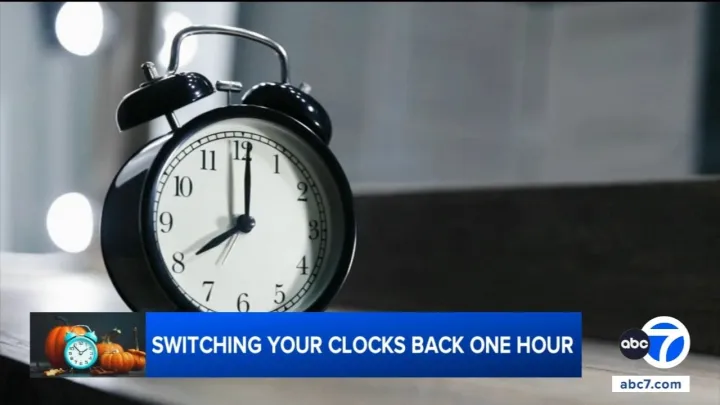
As daylight saving time ends early Sunday, much of the country will turn the clocks back an hour, with many Americans now relying on digital clocks that change automatically.
The extra hour doesn’t necessarily mean more revelry on Halloween night, as California rules say bars must stop serving alcohol two hours past midnight, regardless of the time change.
What this adds
The effort to make daylight saving time permanent has been a recurring topic in the Senate, with previous attempts to enact it being repealed once the public experienced late sunrises in winter.
The bill's supporters argue that permanent daylight saving time would provide more daylight in the evening, benefiting various sectors such as retail and tourism, while opponents like Cotton argue it would make winter mornings darker and potentially dangerous.
Background
Sen. Tom Cotton (R-Ark.) and Sheldon Whitehouse (D-R.I.) blocked a bipartisan push in the Senate to make daylight saving time permanent, halting an effort that aimed to end the twice-yearly clock changes.
Most of Arizona and Hawaii do not observe daylight saving time, while the rest of the U.S. will set clocks back an hour tonight.
What's confirmed
- Sen. Tom Cotton (R-Ark.), joined by Sens. Sheldon Whitehouse (D-R.I.) and Tommy Tuberville (R-Ala.), blocked a renewed bipartisan push in the Senate Tuesday to make daylight saving time permanent, halting an effort that aimed to end the twice-yearly clock changes.
- As daylight saving time ends early Sunday and much of the country turns the clocks back an hour, several senators are holding up legislation that would eliminate the longtime U.S. practice.
- "No one likes changing the clock, me included, but Congress has enacted permanent Daylight Savings Time multiple times before and repealed it each time once Americans experienced absurdly late sunrises in the winter," said Sen. Tom Cotton, R-Ark.
- He renewed his call in a social media post this week, writing on Truth Social that "United States Senate is letting the Daylight Saving Bill die, when a vast Majority of the Country want it."
- He has argued that changing the time can be dangerous, especially when "you have high and dangerous steeples to reach, like on churches and municipal buildings."
- Even as many Americans now rely on digital clocks that change on their own, Trump said that "nobody wants to spend their precious time running all over the place, turning Clocks back twice a year."
- Sen. Todd Young, R-Ind., said that it’s his understanding that the House bill is a “non-starter” for Senate Republican leaders.
- Senate Majority Leader John Thune, R-S.D., hasn’t weighed in publicly on the House bill, but he has voted against similar versions in the past.
- “For some reason, Tom is stopping the Bill and, in the Senate, it’s very easy to do, it only takes one. It should pass overwhelmingly, in a Bipartisan fashion,” Trump posted.
What's still developing
- “If permanent Daylight Savings Time becomes the law of the land, it will again make winter a dark and dismal time for millions of Americans,” Cotton said in his objection, per the report.
- Having introduced the "Hail Raiser" helmet as part of their uniform rotation for this season, the Washington Commanders could look to make it a permanent part of their look.
- Micaiah Stevens, who has been living and working in Tokyo for 10 years, was not able to compile the necessary documentation to submit his application for permanent residency before the price hike.
- Depending on who you ask, it’s either the welcome return of before-work sunshine, or the start of a dreary slog through 4:30 pm sunsets. (The good news, though, is that however you feel about falling back, it’s not nearly as hard on the body as springing forward will be in March, when we return to daylight saving time.) It’s also a topic that draws strong opinions, including in the pages of Vox (which has both pointed out the awfulness of daylight saving time and argued that it should go on forever ).
- Why has it been so hard to get people into permanent housing?
- In a Senate floor speech last year, Cotton said doing so would “make winter a dark and dismal time for millions of Americans,” particularly harming kids.