
Home · World · Nov 1 archive
Netanyahu Loses Majority in Israel's General Election
· ConfirmedShare on
In Short: Israeli Prime Minister Benjamin Netanyahu has lost his coalition’s parliamentary majority following legislative elections on October 27, according to Al Jazeera.
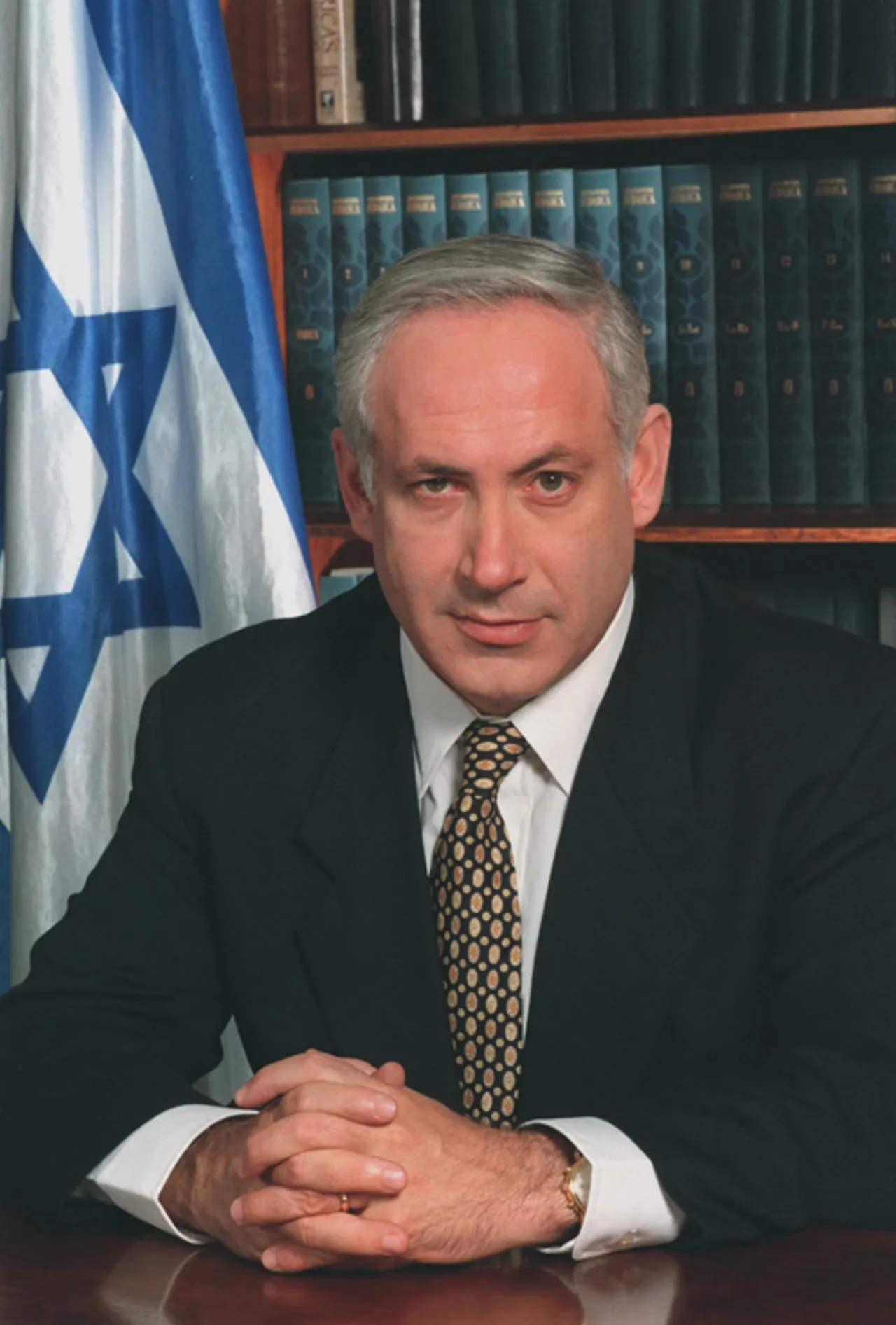
Israeli Prime Minister Benjamin Netanyahu has lost his coalition’s parliamentary majority following legislative elections on October 27, according to Al Jazeera. The new Knesset is scheduled to be sworn in on November 10, with elections potentially needing to be called within 90 days if a new government cannot be formed.
Netanyahu's bloc won 53 seats in the 120-seat Knesset, while the opposition bloc led by Gadi Eisenkot secured 48 seats. Neither side has a clear path to a majority, leaving Israel without a clear direction for forming a new government.
A bloc of Jewish parties opposing Netanyahu won 48 seats, but this is short of the 61 seats needed for a majority. This leaves all existing blocs short of the required majority, necessitating realignment or cooperation across bloc lines.
The Arab-led parties, representing Palestinian citizens of Israel, have gained significant influence. The Joint List and Ra’am, two Arab-majority lists, have a combined 19 seats, according to the Arab Center Washington DC.
The Arab parties have made a historic gain, with nearly 840,000 people voting for them, a 64 percent increase from the last elections in 2022, according to the Central Election Committee.
Netanyahu struck a defiant tone in his first election-night speech, declaring his party the largest in Israel and calling for the formation of a strong right-wing government. Eisenkot, for his part, has urged Israeli politicians to move away from rigid partisan stances and look for “creative solutions” to form a new government.
Protesters in Tel Aviv have rallied to urge the Israeli opposition to make a deal with Arab parties to remove Netanyahu. Raluca Ganea, co-founder of Israeli civil society group Zazim, told Al Jazeera that a coalition between the opposition bloc and the Arab-led parties is the only path forward for Israeli democracy.
The Arab electoral success means a coalition with Eisenkot would provide a comfortable majority of 67 seats, according to Al Jazeera. However, for many in Israel, the idea of siding with Arabs is politically unpalatable.
The Central Elections Committee has launched its election-integrity monitoring operation, as it does in every election, examining all inquiries from parties concerning election integrity or alleged errors in the results.
Netanyahu’s bloc won 53 seats in Tuesday’s elections, while Eisenkot’s won 48, meaning neither side can form a government in Israel’s 120-seat parliament alone.
The opposition bloc is considering legislation to introduce direct elections for prime minister as it seeks a way out of the political deadlock following an inconclusive election.
The unusually high participation prompted election officials to streamline voting procedures and assure voters that anyone arriving at a polling station before the 10 p.m. Deadline would be allowed to cast a ballot.
What this adds
In Israel's general election on Tuesday, Arab citizens, mostly of Palestinian heritage, accounted for about 21 percent of the country's 10 million people, urging each other to vote. This is a significant demographic that has historically played a key role in the election outcomes.
Background
Netanyahu, the longest-serving prime minister in Israel’s history, is seeking another term while standing trial on corruption charges.
In Israel's general election on Tuesday, Arab citizens, mostly of Palestinian heritage, accounted for about 21 percent of the country's 10 million people, urging each other to vote.
A general election is an electoral process to choose most or all members of a governing body at the same time. They are distinct from by-elections, which fill individual seats that have become vacant between general elections.
What's confirmed
- The new Knesset is scheduled to be sworn in on November 10.
- A protester dressed as US President Donald Trump and holding a puppet depicting Israeli Prime Minister Benjamin Netanyahu takes part in a demonstration in Tel Aviv on October 31, 2026, calling for the formation of a Jewish-Arab coalition government following Israel’s general elections [AFP] Thousands of people have rallied in Tel Aviv to urge the Israeli opposition to make a deal with Arab parties to remove Prime Minister Benjamin Netanyahu.
What's still developing
- Abbas himself has signalled a willingness to work the opposition camp, saying Eisenkot’s conditions would not pose an obstacle for his party, according to Israel’s Channel 12.
- For the eighth time in 13 years, an Israeli election that effectively served as a referendum on Israeli Prime Minister Benjamin Netanyahu has yielded a similar result: a divided Jewish electorate that may well leave Netanyahu in power.
- Below is a roundup of the main developments from the Israeli election : Gazans weigh in on the current coalition stalemate after Israel went to the polls on October 27 with neither major bloc reaching a governing majority.
- Israeli President Isaac Herzog has urged the country’s political parties to enter negotiations on forming a new government with an “open heart,” as he prepares to consult with factions on a path forward after an uncertain election result.
- Veteran Arab MK Ahmad Tibi, No. 2 on the Joint List, said Saturday that his party was ready to support the anti-Netanyahu Zionist parties in establishing a government to replace the outgoing coalition, but stressed that it did not want to be part of the government itself.
- In Israel's general election on Tuesday, Arab citizens, mostly of Palestinian heritage, accounted for about 21 percent of the country's 10 million people, urging each other to vote.
- Sohlberg requested preliminary findings within one week, citing legal deadlines for challenging election results.
- Early voting has surged in the 2026 United States midterm elections with more than 50 million Americans casting their ballots as of Sunday, according to an analysis by the University of Florida.
- He entered the election facing longstanding corruption charges, which he denies, and criticism over intelligence failures that allowed Hamas-led militants to kill 1,200 people and take 251 hostages.
- Will Arab communities, representing more than 20 percent of the population in the State of Israel and perhaps 18 percent of its voters, play a kingmaking role in upcoming elections?
- Protesters at Saturday’s rally told the AFP news agency this may be the “last chance for real change” and that Netanyahu, Israel’s longest-serving prime minister, is a “great manipulator”.
- Odeh said that Israeli right-wing circles have described “the historic turnout of Palestinian Israelis as electoral terrorism, equating it to the October 7th attack”, when Hamas-led fighters stormed southern Israel, killing more than 1,200 people and taking hundreds captive.