
Home · Science · Nov 1 archive
NASA Seeks Commercial Help to Extend Hubble's Lifespan
ConfirmedShare on
In Short: NASA has issued a Request for Information to the commercial space industry to explore options for extending the Hubble Space Telescope's lifespan or safely disposing of it.
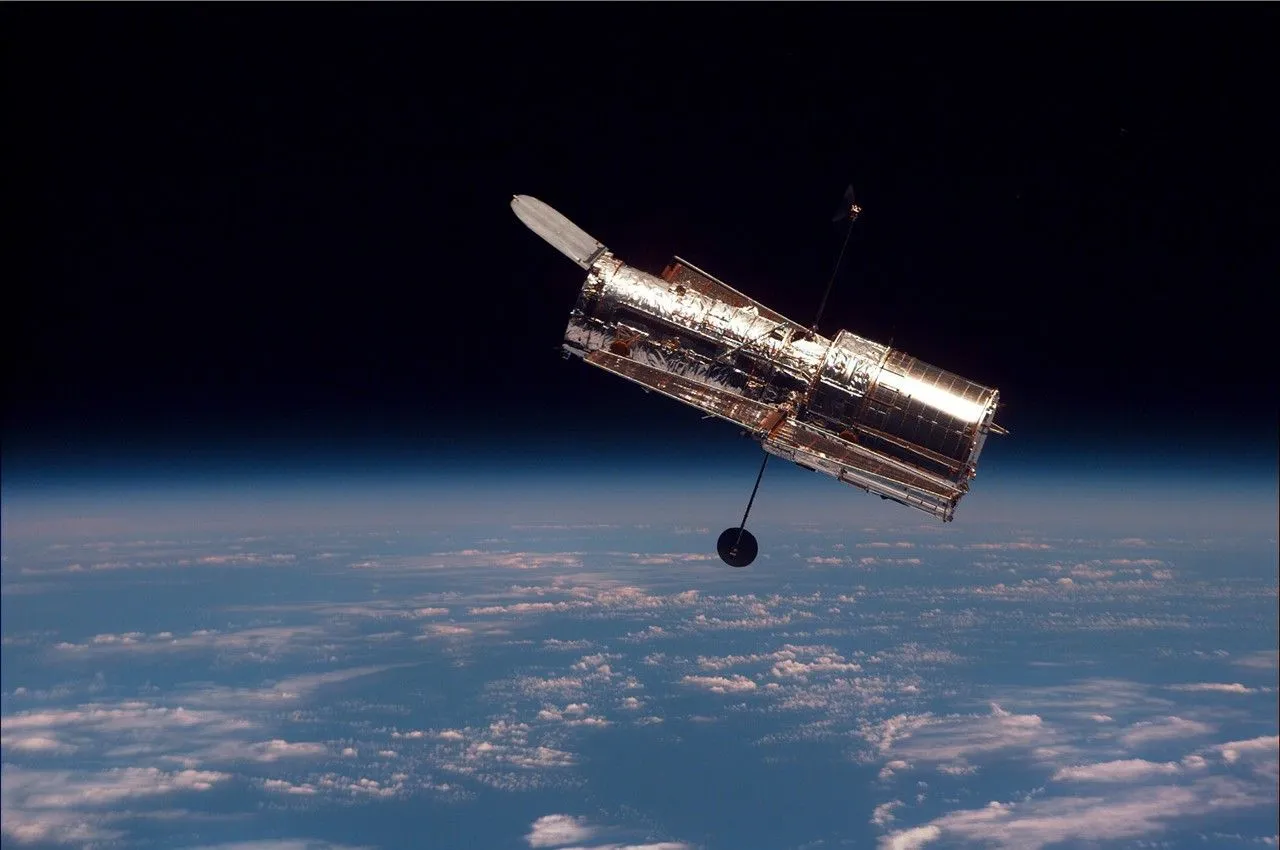
NASA is seeking assistance from the commercial space industry to extend the lifespan of the Hubble Space Telescope, which is expected to re-enter Earth's atmosphere by 2033 or 2034, potentially endangering human life.
The Hubble Space Telescope, launched in 1990, has been a cornerstone of astronomical discoveries for over three decades, providing stunning images of the universe.
If NASA had more budgetary flexibility, it could repeat its 2002 Space Shuttle Columbia mission STS-109 to boost the telescope into a higher orbit, extending its operational life.
NASA Administrator Jared Isaacman emphasized the importance of exploring every reasonable opportunity to keep Hubble operational, stating, “Hubble still has important science ahead of it.”
NASA issued a Request for Information on October 29, 2026, inviting companies to express interest in three potential activities: boosting Hubble to a higher orbit, servicing the telescope to enhance its capabilities, or safely disposing of it.
Interested parties will need to share details about their company’s current or near-future capabilities for safely capturing and elevating Hubble to an altitude of 373 miles (600 km) or higher.
NASA estimates there is a 10 percent chance Hubble could re-enter Earth's atmosphere by September 2032, rising to 50 percent by December 2033.
The last Hubble Space Telescope servicing mission was the STS-125 Space Shuttle flight, launched on May 11, 2009.
NASA is eager to explore the breadth of possibilities offered by the commercial space sector, which has rapidly evolved to offer new capabilities for in-space satellite capture and servicing.
To learn more about NASA’s Hubble Space Telescope, visit the agency’s media contacts: Alise Fisher at Headquarters, Washington, 202-358-2546, or Claire Andreoli at Goddard Space Flight Center, Greenbelt, Md.
While Hubble continues to deliver scientific discoveries, lesser photographers on Earth might be envious of its jaw-dropping images.
NASA hopes that history will repeat itself and that the commercial space sector will lend a helping hand, as it did in rescuing stranded astronauts Suni Williams and Butch Wilmore from the International Space Station in 2022.
What this adds
NASA anticipates that a mission would need to take place by 2032 to extend Hubble's lifespan.
The commercial space sector's capabilities for in-space servicing could potentially create new options for maintaining valuable spacecraft already in orbit.
What's confirmed
- "Commercial industry has rapidly evolved in recent years to offer new capabilities for in-space satellite capture and servicing. Given the time we have until Hubble’s anticipated re-entry, we are eager to explore the breadth of possibilities to boost Hubble to a higher orbit while we develop the flagship mission to follow."
- NASA issued a Request for Information Oct. 29 to learn more about industry capabilities for in-space servicing to support the agency’s Hubble Space Telescope.
- “Hubble is a national icon that has fundamentally changed how humanity views our universe for more than 35 years,” said Nicky Fox, associate administrator, Science Mission Directorate, NASA Headquarters in Washington.
What's still developing
- At its present rate of altitude loss, NASA's most famous telescope is expected to re-enter Earth's atmosphere sometime in 2033 or 2034, at which point it will come crashing down like a comet, according to Space.com, possibly endangering human life on its descent It doesn't have to be that way, though.
- Sad news for space aficionados: the famous Hubble Space Telescope, responsible for some of the most jaw-dropping images of our solar system taken more than three decades since its launch into low-Earth orbit in 1990, is on a slow path towards a fiery fate.
- Let's hope history repeats itself and NASA finds a willing collaborator, because Hubble's insights over more than a three decades have radically altered our understanding of the universe we inhabit and inspired new generations to look to the stars.
- In desperation, NASA has put out a Request for Information (RFI) to the fast-growing commercial space sector, hoping for aid to either boost Hubble's altitude and extend its lifespan or else guide its descent to a safe crash site, such as the middle of the ocean.
- As such, NASA anticipates that a mission would need to take place by 2032.
- So NASA is taking proposals from the private sector to see if anyone can save it.
- While Hubble’s up there snapping jaw-dropping close-ups of our planetary neighbors or gargantuan nebulae light years away, lesser 36-year-old photographers on Earth are sliding into the DMs of the Instagram models they’d “love to collab” with.
- NASA puts the chance of re-entry at 10% by September 2032, The Register reported.
- Capabilities once associated primarily with government missions are increasingly being developed by commercial providers, potentially creating new options for maintaining valuable spacecraft already in orbit.
- WASHINGTON — NASA is restarting a search for commercial missions to reboost or service the Hubble Space Telescope, more than two years after concluding existing options were too risky.
- Jeff Foust writes about space policy, commercial space, and related topics for SpaceNews.
- That gives industry 32 days to say what it can do.