
Home · Entertainment · Nov 1 archive
Harry Houdini's Final Detroit Show Haunts City 100 Years Later
Confirmed
In Short: Houdini's death in Detroit has left a lasting legacy, with his spirit still said to haunt certain locations in the city.
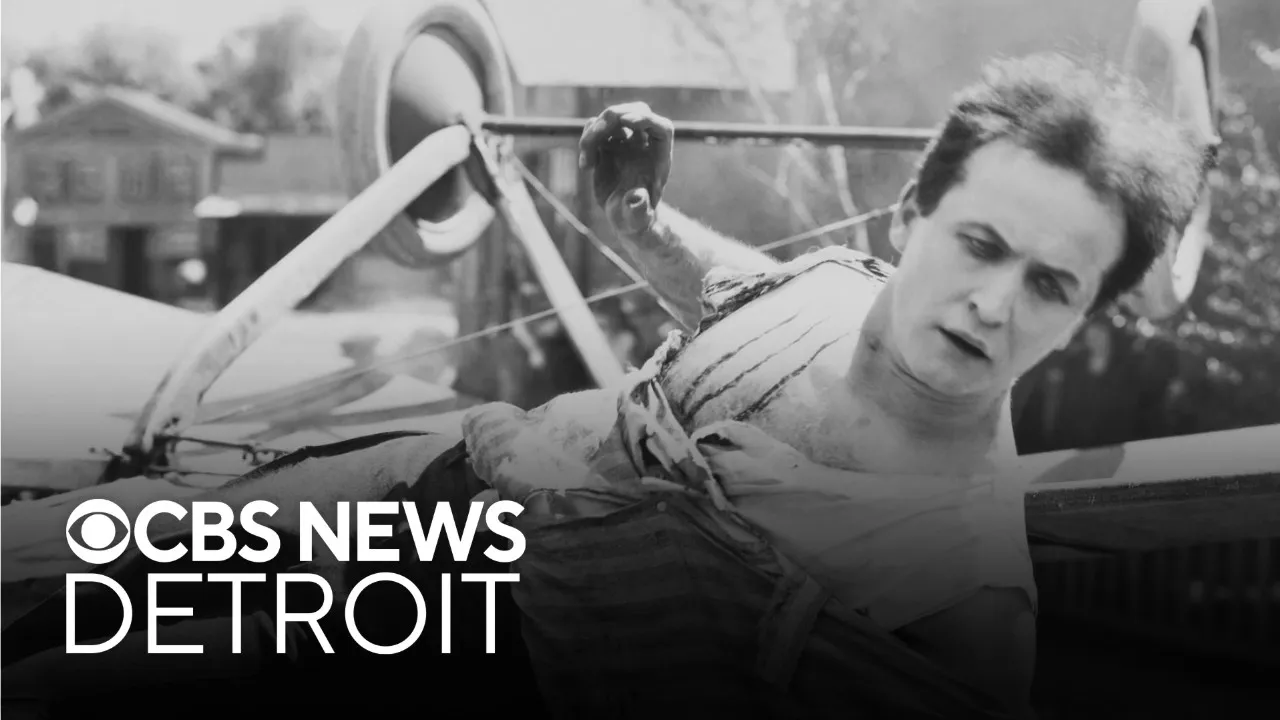
Harry Houdini's final performance in Detroit on October 24, 1926, marked the end of a legendary career and left a lasting impression on the city.
Houdini, known for his death-defying stunts, performed his '3 Shows In One' revue at the Garrick Theatre, despite being advised by his doctor to cancel his shows and rest in Montreal.
According to Jeremy Dimick, a curator at the Detroit Historical Museum, Houdini's Detroit shows reflected the arc of his career, from the early days when he was relatively unknown to his superstardom in the 1920s.
Dimick noted that Houdini performed in Detroit 19 times between 1894 and 1926, showcasing his growth as a magician and performer.
During his final show, Houdini was punched in the abdomen by a student, J. Gordon Whitehead, who had attended his lecture earlier in the week. The punches, though painful, did not cause immediate harm.
However, Houdini ignored symptoms of appendicitis, which later led to his death on October 31, 1926, at Detroit's Grace Hospital.
Houdini's wife, Bess, always stood in the wings during his shows, ready to help if he couldn't get out. She revealed this in a 2004 interview with NPR.
Houdini's final performance was marked by a series of death-defying stunts, including a daring jump from Detroit's Belle Isle Bridge in 1906, where he leapt from a height of two dozen feet into frigid water while handcuffed.
Despite financial pressure to fulfill his contract, Houdini refused to cancel his Detroit shows, performing even though he was under the weather.
Houdini's impact on the magic community is also evident, with the Society of American Magicians, which he served as president from 1917 until his death, continuing to thrive.
Houdini's life insurance policy was worth $25,000, and an additional $500,000 was paid if he died from an accident, according to a 2020 Yale University Press report.
Houdini's final performance and subsequent death continue to intrigue and haunt the city, with his legacy influencing generations of magicians and performers.
What this adds
Houdini's final performance and subsequent death continue to intrigue and haunt the city, with his legacy influencing generations of magicians and performers.
Houdini's death has sparked numerous theories and conspiracy theories over the years, with historians agreeing that the punches likely contributed to his appendicitis symptoms being ignored.
Houdini's impact on the magic community is also evident, with the Society of American Magicians, which he served as president from 1917 until his death, continuing to thrive.
Houdini's death in Detroit has left a lasting legacy, with his spirit still said to haunt certain locations in the city.
Background
Houdini's final performance in Detroit, and his subsequent death, have left a lasting impression on the city, with his spirit still said to haunt certain locations.
Harry Houdini's death in Detroit on October 31, 1926, continues to intrigue and haunt the city 100 years later.
What's confirmed
- He changed his name to “Harry Houdini” when he launched his magical career and quickly became the biggest vaudeville star in the country.
- We finally had a couple more Michiganders in recent years: John Sturk—who was born in Detroit, raised in Plymouth, and graduated from Michigan State —served as the SAM president from 2023-24.
- Houdini was 52 years old when he did his final performance, and according to a review in the Detroit News, the show at the Garrick was broken up into three acts.
- On 24 October, the 52-year-old gave a performance in front of a large crowd in Detroit but was afterwards rushed to the hospital with what appeared to be appendicitis.
What's still developing
- Sometimes the buildings housed a local newspaper, ensuring free publicity for Houdini's upcoming stage shows.
- 31, 1926, and his spirit still haunts the Motor City.
- As his fame grew, and a series of other magicians began copying his escapes, Houdini ramped up the stakes, stacking one increasingly death-defying feat on top of another.
- At the American Museum of Magic in Marshall, Mich., about 100 miles west of Detroit, John Sherwood banged on an empty, aged metal can from Houdini's workshop that has been the centerpiece of several séances.
- "And to think those boys didn't give him a chance to get himself protected."
- "Houdini was laid out here by the Hamilton Funeral Home, in this room here," Hammond said on a tour in 2004.
- "Some say, 'I'm not going back to the kitchen because I might see Houdini,'" she said.
- "One time he showed me that he had a way of doing it," Young said.
- "I always watched because it was very exciting!"
- He earned his reputation by freeing himself from traps that seemed impossible for a mere mortal to survive.But Houdini couldn't escape the ultimate fate waiting for him in Detroit on Oct.
- But at a séance on Halloween a decade after her husband's death, Bess Houdini finally said good night to Harry.
- “I used to work on cruise ships and stage shows, and if you ever said to anybody in the audience, ‘Name a magician,’ nobody said (David) Copperfield, nobody said David Blaine. People yelled out, ‘Harry Houdini,’ because he set the bar for magic,” said magician Eric Bedard, of Windsor.
Sources
- Fox Newslink
- NPRlink
- News 9link
- PJ Medialink
- Warpbeatlink
- C & G Newspaperslink
- East Bay Timeslink
- FOX 2 Detroitlink
- Fox Newslink
- Michigan Enjoyerlink
- Hungarian Conservativelink
- Peoplelink
- Petaluma Argus-Courierlink
- WarpBeat — background on Houdini's Final Detroit Show Haunts City 100 Years Later link
- CBS Detroit — video link