
Home · Politics · Nov 1 archive
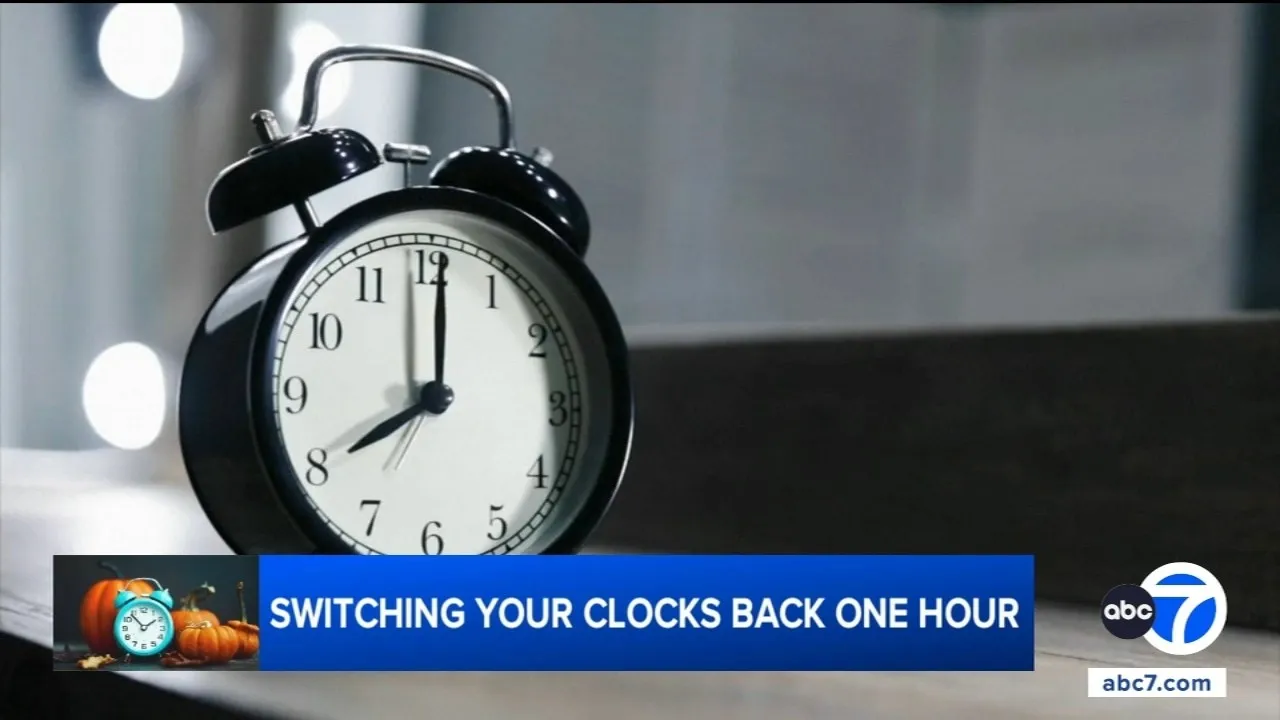
Daylight saving time 2026 ends tonight. Here's what time the clocks change and more key details.
· Confirmed
In Short: Both publications agree that daylight saving time is ending tonight, with clocks set back an hour.
According to ABC News - Breaking News, Latest News and Videos, most of Arizona and Hawaii observe standard time year-round, along with U.S. Territories like American Samoa, Guam, and Puerto Rico. Meanwhile, NBC News reports that daylight saving time is governed by Title 15, Chapter 6, Subchapter IX of the U.S. Code.
Both publications agree that daylight saving time is ending tonight, with clocks set back an hour. However, ABC News notes that the Navajo Nation in parts of Arizona is an exception, observing daylight saving time like its neighboring lands in New Mexico, Utah, and Colorado.
Foreign Policy Journal and Kbzk report that the Senate is unlikely to act before the end of the year on the House-passed bill to make daylight saving time permanent, despite pressure from President Donald Trump. Both sources agree that the Senate remains divided on the issue.
Sen. Tom Cotton, R-Ark., argues that eliminating daylight saving time could lead to absurdly late sunrises in the winter, as quoted in Kjrh, Kjzz, Koaa, Ksby, Ktvh, Nbc26, PBS, Reviewjournal, Wccbcharlotte, Wmar2News, Wtxl, Julesburgadvocate, Redbluffdailynews. In contrast, Florida Sen. Rick Scott supports making daylight saving time permanent, pending federal approval, as noted by Wtxl, Julesburgadvocate, Redbluffdailynews, and PBS.
The extra hour gained from turning back the clocks does not necessarily mean more revelry on Halloween night, according to NBC News. California bars, for instance, must stop serving alcohol two hours past midnight, regardless of the time change.
Studies have found that the time change can affect health and productivity, as reported by Sleepfoundation. For example, the transition to daylight saving time has been linked to an increased risk of heart attacks, strokes, traffic accidents, and mood disturbances.
Sen. Mike Rounds of South Dakota is concerned that making daylight saving time permanent could mean sending children to school in the dark, as quoted in Koaa, Ksby, Ktvh, Nbc26, Reviewjournal, Wccbcharlotte, Wmar2News, Wtxl, Julesburgadvocate, Redbluffdailynews, PBS.
Despite the Senate's reluctance to act, the debate over daylight saving time continues, with strong opinions on both sides.
The Senate is unlikely to make daylight saving time permanent before the end of the year, despite the House passing a bill to do so.
The Navajo Nation in parts of Arizona is an exception to the current rule and observes daylight saving time, like its neighboring lands in New Mexico, Utah, and Colorado.
What this adds
The Senate's reluctance to act on the House-passed bill to make daylight saving time permanent is a continuation of previous debates over the practice.
The Navajo Nation's observance of daylight saving time highlights the complexity of the issue, as it affects different regions in varying ways.
Background
The Senate blocked a bill to make daylight saving time permanent, despite pressure from President Donald Trump.
The Senate is unlikely to act before the end of the year on a House-passed bill that would make daylight saving time permanent.
What's confirmed
- Most of Arizona and Hawaii observe standard time year round, according to the Department of Transportation, as well as the U.S. territories of American Samoa, Guam, Northern Mariana Islands, Puerto Rico and the Virgin Islands.
- Not all 50 states participate in daylight saving time.
- As daylight saving time ends early Sunday and much of the country turns the clocks back an hour, several senators are holding up legislation that would eliminate the longtime U.S. practice.
- "No one likes changing the clock, me included, but Congress has enacted permanent Daylight Savings Time multiple times before and repealed it each time once Americans experienced absurdly late sunrises in the winter," said Sen. Tom Cotton, R-Ark.
- He renewed his call in a social media post this week, writing on Truth Social that "United States Senate is letting the Daylight Saving Bill die, when a vast Majority of the Country want it."
- He has argued that changing the time can be dangerous, especially when "you have high and dangerous steeples to reach, like on churches and municipal buildings."
- Even as many Americans now rely on digital clocks that change on their own, Trump said that "nobody wants to spend their precious time running all over the place, turning Clocks back twice a year."
- Florida Sen. Rick Scott signed legislation when he was governor in 2018 that would allow the state to remain on daylight saving time year round, pending federal approval.
- RELATED STORY | Alternative bill to permanent daylight saving time gains support from doctors, lawmakers President Donald Trump has said he supports making daylight saving time permanent.
- WASHINGTON (AP) — The Senate is unlikely to act before the end of the year on a House-passed bill that would make daylight saving time permanent, defying President Donald Trump and dashing the hopes of Americans who don’t like having to change their clocks twice a year.
What's still developing
- "In a state like Florida, my home state of Florida, where tourism is a cornerstone of our economy, having more predictable daylight hours is a practical improvement that benefits workers, businesses, and visitors alike," Bilirakis said in Congress on July 14.
- In the fall, the first Sunday in November is when clocks are set back.
- Here's what to know about what's formally known as daylight saving time as it ends for the year: Daylight saving time is the period during the year, from March to early November, when the majority of the U.S. operates one hour ahead of standard time.
- A lack of sleep caused by the time change can affect thinking, decision-making, and productivity.
- Depending on who you ask, it’s either the welcome return of before-work sunshine, or the start of a dreary slog through 4:30 pm sunsets. (The good news, though, is that however you feel about falling back, it’s not nearly as hard on the body as springing forward will be in March, when we return to daylight saving time.) It’s also a topic that draws strong opinions, including in the pages of Vox (which has both pointed out the awfulness of daylight saving time and argued that it should go on forever ).
- When daylight saving time begins before spring, clocks move one hour ahead, meaning sunrise and sunset occur later in the day.