
Home · Science · Oct 31 archive
Rare Martian Meteorite Reveals Ancient Crust
· Confirmed
In Short: A meteorite found in the Sahara Desert in 2022 is a rare piece of Mars' ancient crust, according to a NASA study.
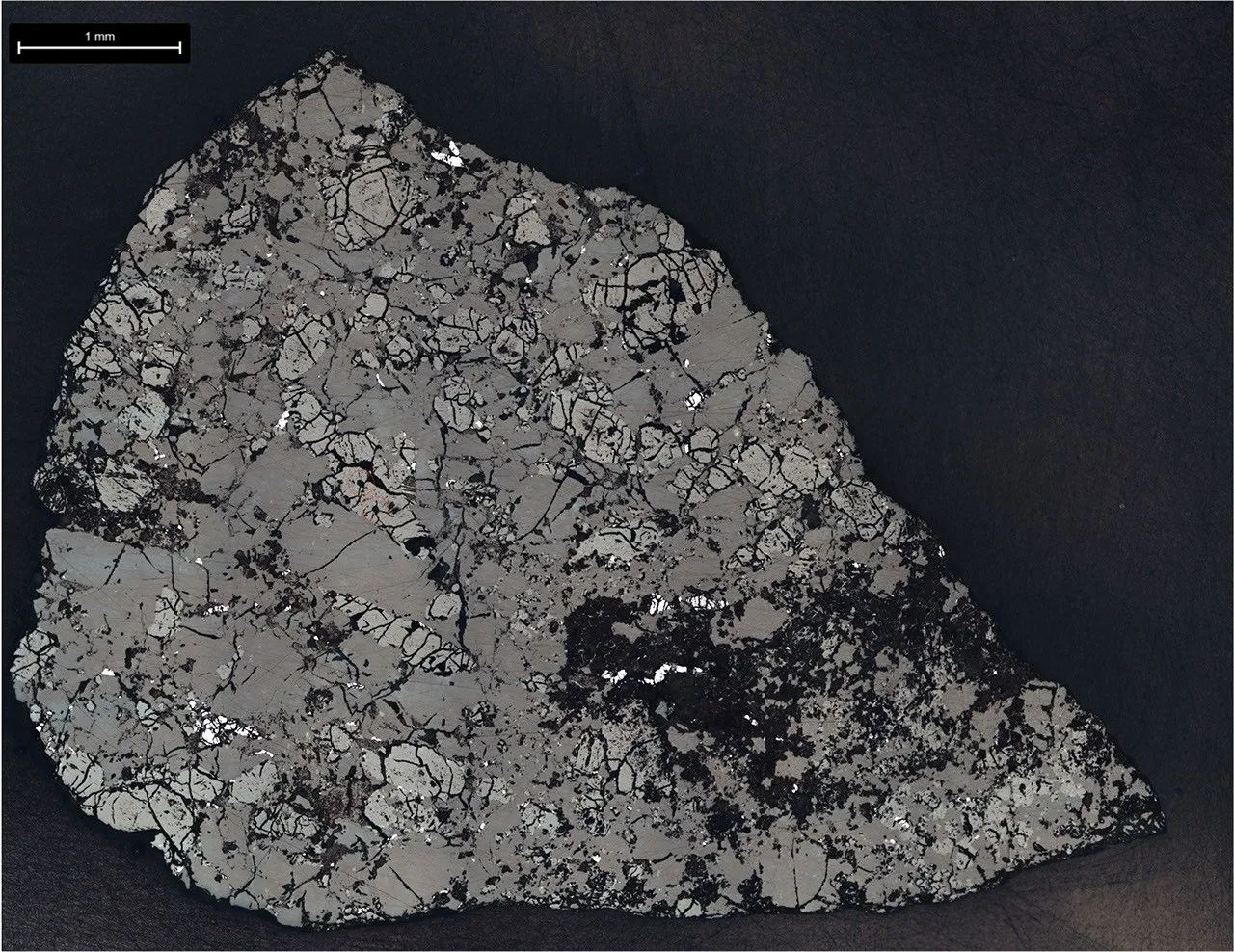
A meteorite discovered in the Sahara Desert in 2022 has been identified as a 4.1-billion-year-old chunk of Mars, offering scientists rare insights into the Red Planet's ancient crust and water history. The rock, named Teghaza 001 after the Teghaza salt plain in Mali where it was found, is one of the oldest Martian meteorites ever discovered on Earth.
Yang Liu, a planetary scientist at NASA’s Jet Propulsion Laboratory, led a team that analyzed Teghaza 001. Liu said, “The crystallization age would be older than 4.1 billion years.” This age is significant because most Martian meteorites are 2.4 billion years old or younger, according to Ars Technica.
The meteorite's unique composition includes high levels of manganese oxide and anomalous oxygen isotopes, which are consistent with its formation during a time when Mars had a different environment, as Liu explained. Carl Agee, the director of the Institute of Meteoritics at the University of New Mexico, noted that Teghaza 001's oxygen values resemble those of NWA 7034, the famous Martian meteorite nicknamed Black Beauty.
The study, published in the Journal Science, also revealed that water was circulating through the Martian crust and reacting with magma before it had even finished cooling. Liu said, “To change it, you really require some kind of hydrothermal fluid.” This suggests that Mars had an active hydrosphere when Teghaza 001 was forming.
Researchers identified 13 possible source areas for Teghaza 001, although its precise Martian origin remains unknown. The meteorite is one of roughly 435 known Martian meteorites, according to CBS News. Liu added, “When this rock was forming, we do have a hydrosphere on Mars, and that hydrosphere is reacting with Martian crust intensely.”
The discovery of Teghaza 001 provides an unprecedented look at Mars’ earliest geological history, which could help guide future exploration of the planet. Lee Saper, the study’s second author, said, “This is really our first piece of Martian crust from a part of Mars we’ve never had a sample of before.” Saper also noted that the meteorite records interactions of water and rock and possibly an imprint of the Martian atmosphere as it was losing water.
The meteorite’s unique composition and age make it a valuable resource for understanding Mars’ ancient environment. Liu said, “The high-manganese material is actually terrestrial, but I quickly realized the sample is very different, very special.” This discovery could provide information about Earth that was lost over billions of years of geological movement.
The study of Teghaza 001 offers a glimpse into Mars’ early crust and mantle, providing scientists with crucial data about the planet’s ancient geological history. Liu concluded, “This implies that there was active circulation of water through Martian crust.”
What this adds
This discovery is significant as it provides new insights into Mars' ancient crust and water history, unlike previous meteorites that are younger. The meteorite's unique composition and age make it a valuable resource for understanding Mars' early environment.
Background
A meteorite discovered in the Sahara in 2019, designated Northwest Africa 13441, has provided scientists with new insights into Mars' ancient past, according to Muslim Network TV and Sci.News.
What's confirmed
- A meteorite found in the Sahara is a rare piece of Mars’ ancient crust.
- The rock — which scientists named Teghaza 001 after the Teghaza salt plain in Mali where it was found — is one of the most ancient Martian meteorites identified on Earth.
- NASA-funded researchers have determined that Teghaza 001, an approximately 800-gram (1.8-pound) meteorite found in the Sahara Desert, originated on Mars and is among the oldest Martian meteorites ever discovered on Earth.
- “This is really our first piece of Martian crust from a part of Mars we’ve never had a sample of before,” said Lee Saper, the study’s second author, who did the work as a postdoctoral scholar at NASA’s Jet Propulsion Laboratory and is now a scientist at NASA’s Ames Research Center.
- “This is really our first piece of Martian crust from a part of Mars we’ve never had a sample of before. It records interactions of water and rock and maybe even an imprint of the Martian atmosphere as it was losing water,” said Lee Saper, the new paper’s second author.
What's still developing
- With shergottites being the most common of the three meteorite types — constituting 90 percent of the current Martian meteorite collection, according to a 2025 study in Geochimica et Cosmochimica Acta — Teghaza 001 was not seen as anything special upon first glance.
- Figure A is the same image with annotations showing minerals like iron-titanium oxides (brighter grains) and pyroxene (medium gray), both of which tell a story about the formation of Mars’ crust and mantle.
- “For the first time, we know the geological context of the only brecciated Martian sample available on Earth, 10 years before the NASA’s Mars Sample Return mission is set to send back samples collected by the Perseverance rover currently exploring the Jezero crater,” said Lagain, a research fellow in the School of Earth and Planetary Sciences at Curtin.
- The others include ALH84001, which is composed almost entirely of one mineral and is of a similar age, and “Black Beauty,” which formed about 2.1 billion years ago.