
Home · Politics · Oct 31 archive
El-Sayed's Campaign Asks Stevens to Stay Away Before Election
· Confirmed
In Short: Abdul El-Sayed's campaign has asked rival Haley Stevens to stay away from his events, just days before the midterm elections.
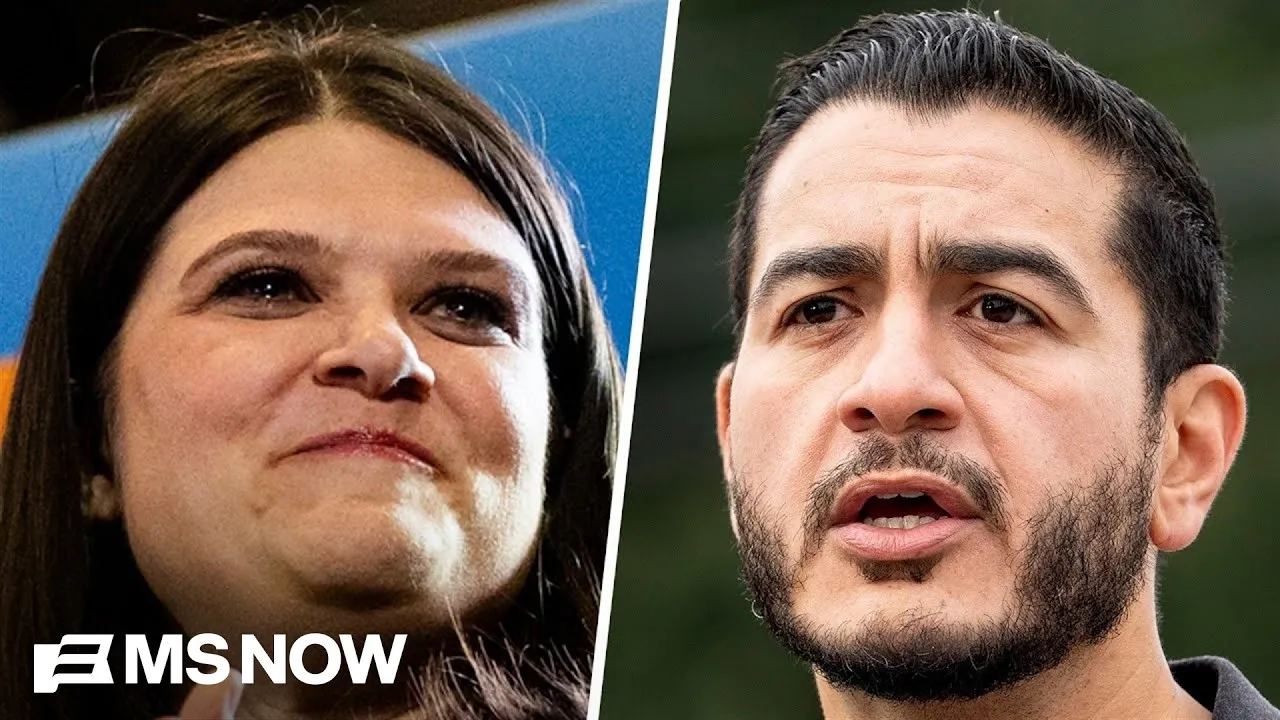
Abdul El-Sayed's campaign has asked rival Haley Stevens to stay away from his events, just days before the midterm elections, according to a person familiar with the matter. The request comes amid a bitter feud between the two Democratic candidates, with El-Sayed slightly ahead of Stevens with more than 90% of the votes counted, as reported by the BBC.
Stevens, who narrowly lost the primary to El-Sayed, has been a vocal critic of his campaign, particularly over an ad linking US military aid to Israel with rising grocery prices, which she characterized as antisemitic. Stevens called on El-Sayed to condemn the ad and remove another featuring conservative commentator Tucker Carlson, according to NBC News.
El-Sayed's campaign maintains it has no affiliation with the outside ad, and the candidate has accused Stevens of trying to relitigate a primary that ended three months ago, rather than focus on defeating Republican Mike Rogers, whom he calls 'Trump’s hand-picked candidate.' El-Sayed said, 'That focus is why our people-powered campaign defeated a historic $70M in outside spending from big corporations and AIPAC on behalf of Congresswoman Stevens,' referencing Stevens’ support from the American Israel Public Affairs Committee, a pro-Israel lobbying group, during the primary campaign.
The feud has escalated in recent days, with Stevens' fiancé, Jason Turkish, publicly announcing he would vote for Rogers, despite Stevens reaffirming her support for El-Sayed during a CNN interview. Turkish told The Detroit News, 'I've just seen an escalation in his rhetoric since the primary, and it makes folks unsafe. Every time he talks about g******e (in Gaza), Jews get death threats.'
Stevens has also criticized El-Sayed for previous remarks that she said linked US support for Israel to Michigan's affordability challenges. She addressed the internet memes at a campaign rally, calling those that dissect her voice 'coastal elites,' and said, 'Let's be real. They're making fun of Michigan.'
The joint appearance of Stevens and El-Sayed at a church in Detroit with US Representative Jim Clyburn of South Carolina was initially seen as a sign of unity, but the request for Stevens to stay away from El-Sayed's campaign events has reignited the feud. Stevens said she accepted Clyburn’s invitation from Democrat intermediaries, not from El-Sayed’s campaign, and that she would do 'whatever he wants me to do' on the campaign trail.
The clash comes just days before Election Day and could undermine the party’s effort to flip a critical Senate seat. Stevens said, 'The Jewish and African American communities of my district deserve to see their leaders show up for them rather than fight over them.' El-Sayed, meanwhile, has called Israel's actions in Gaza a genocide, which Israel denies.
The feud has also drawn attention from national figures, with former President Barack Obama campaigning alongside El-Sayed in Detroit later this month, and Vice President Kamala Harris campaigning with El-Sayed last month. Obama taped ads for Democratic candidates for governor and Senate that will be released in the coming days and weeks, in addition to more campaign stops soon to be announced.
What this adds
The feud between El-Sayed and Stevens has drawn national attention and could impact the outcome of the Senate race in Michigan. Despite their initial unity, the two candidates are now at odds over campaign strategy and messaging, with Stevens calling for El-Sayed to 'shut out the hate and call it out.'
Background
Abdul El-Sayed's campaign has asked rival Haley Stevens to stay away from his events, just days before the midterm elections.
El-Sayed's campaign performed well among traditionally progressive groups, including younger voters and those with college educations, but faced skepticism from Jewish voters.
What's confirmed
- Obama taped two dozen ads last week for Democratic candidates for governor and Senate that will be released in the coming days and weeks, in addition to more campaign stops soon to be announced.
- Some ads that supported Stevens showed Obama praising her, and she outperformed El-Sayed in Wayne County, winning about 51% of the Democratic primary vote compared with 45% for El-Sayed.
- Haley Stevens in an August primary and has since worked to consolidate Democratic support in his race against Republican Mike Rogers.
- Former President Barack Obama will campaign alongside Michigan Senate candidate Abdul El-Sayed in Detroit later this month, lending his support to the progressive nominee after a bruising Democratic primary exposed divisions within the party.
- El-Sayed defeated Stevens by less than a percentage point in a primary that became a national test of the Democratic Party’s ideological direction.
- He appeared earlier this year in a campaign ad with Iowa Senate candidate Josh Turek and campaigned in Texas with Senate candidate James Talarico and the candidate for governor, Gina Hinojosa.
- Stevens should stay away “so as not to distract from the central issues of the campaign,” the person said.
- Kamala Harris, the first black and South Asian person to serve as vice president, campaigned with El-Sayed last month.
- Published: 22:57 EDT, 31 October 2026 | Updated: 23:02 EDT, 31 October 2026 With three days left until the 2026 midterm elections, a Democratic Party civil war has erupted in Michigan between progressive Senate candidate Abdul El-Sayed and former primary opponent Rep. Haley Stevens.
- Stevens appeared on CNN hours later to reaffirm that she would be voting for El-Sayed, but urged his campaign to 'shut out the hate and call it out.' On Thursday, the two seemed to make amends and scheduled a Sunday campaign event at a church in Detroit with South Carolina Congressman Jim Clyburn, an influential Democrat seen as a major force in Joe Biden 's 2020 primary win.
- Published: 22:57 EDT, 31 October 2026 | Updated: 00:17 EDT, 1 November 2026 With three days left until the 2026 midterm elections, a Democratic Party civil war has erupted in Michigan between progressive Senate candidate Abdul El-Sayed and former primary opponent Rep. Haley Stevens.
What's still developing
- CBS News' latest poll shows nearly 60% of Hispanics backing Talarico.
- Closing out his multi-state campaign swing, Cruz urged conservative, independent, and libertarian voters to get to the polls immediately to avert a Democratic legislative sweep.
- According to her campaign, the spot contrasts Hinojosa's proposals to protect public schools, restrict data center expansion and lower taxes with what she argues is three-term Republican Gov. Greg Abbott's prioritization of wealthy donors and large corporations.
- "We knew that this was going to be a close race, and that's exactly what we've got," Stevens said.
- In a statement to the BBC, a spokesperson for Stevens' campaign said the congresswoman would "fight for all Michiganders from every zip code to lower costs, protect manufacturing jobs, and take on Donald Trump's corruption and abuses of power".
- The Times report said it relied on 12 sources, text messages and documents that allegedly showed members of Peltola's campaign, lawyers for Peltola, and senior aides at the Democratic Senatorial Campaign Committee (DSCC) pushing to find a spoiler candidate who could potentially siphon votes from Sen. Sullivan and benefit Peltola.
- "The media freakout over President Trump’s comments is not rooted in reality," White House Communications Director Steven Cheung wrote in a statement on X in response to the backlash.
- Rapper Nicki Minaj praised President Donald Trump during a flight aboard Air Force One on Sunday, as the pair traveled to Michigan for a rally ahead of the November midterm elections.
- Democratic candidate for US Senate Abdul El-Sayed speaks to attendees at the Carpenters & Millwrights Labor Center during a campaign stop in Warren, Michigan, US, October 3, 2026.
- Stevens was backed by Senate Democratic Leader Chuck Schumer.
- "are scared to call the police in case of an emergency."
- "I am feeling fired up, and you should be too."
Sources
- MEAWW Newslink
- The Times of Israellink
- Washingtonexaminerlink
- BBClink
- Hotnewhiphoplink
- Arabnewslink
- Abcnewslink
- Dailymaillink
- Nbclosangeleslink
- Justthenewslink
- Nypostlink
- PBSlink
- WarpBeat — background on El-Sayed's Campaign Tells Stevens to Stay Away Before Election link
- WarpBeat — background on El-Sayed’s campaign test: Can he win over Black and Jewish voters? link
- MS NOW — video link