
Home · Health · Oct 31 archive
Congo's Ebola Outbreak Surpasses 10,000 Cases, 5,000 Deaths
· Confirmed
In Short: The Democratic Republic of Congo's Ebola outbreak, caused by the Bundibugyo virus, has surpassed 10,000 confirmed cases and nearly 5,000 deaths.
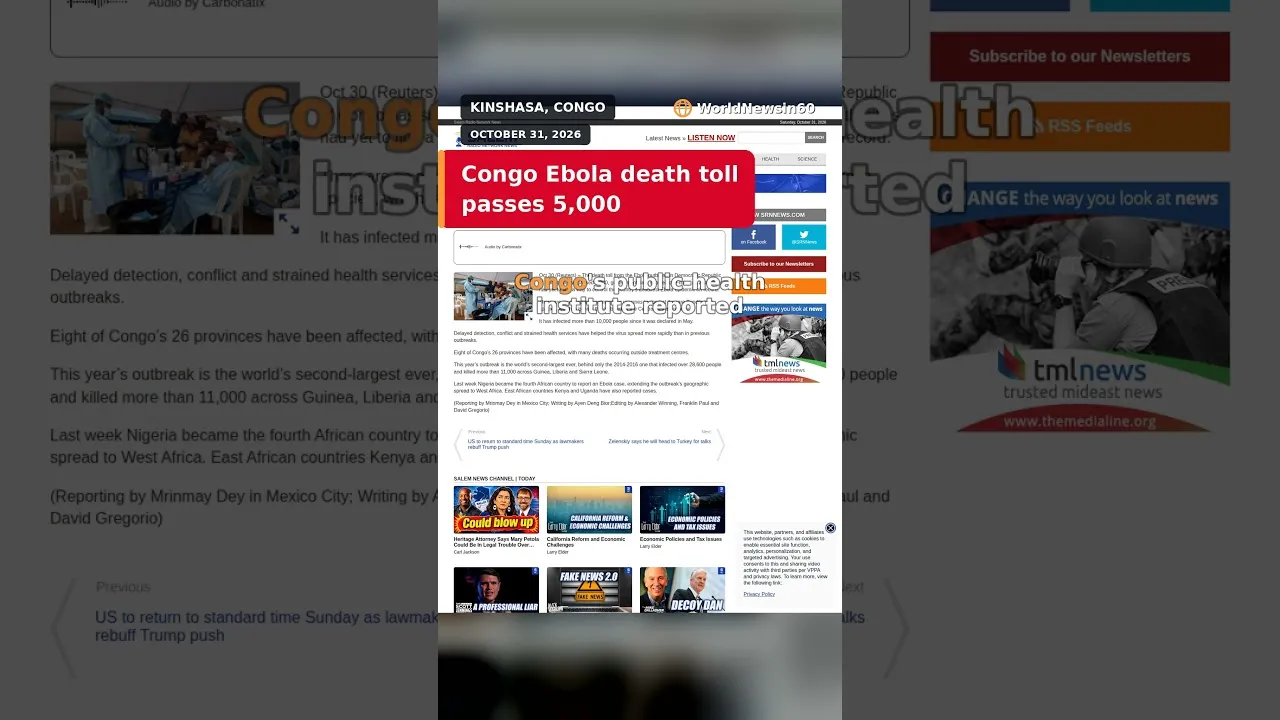
The Democratic Republic of Congo's Ebola outbreak has surpassed 10,000 confirmed cases and nearly 5,000 deaths, according to the latest government figures. The outbreak, declared in May, has spread to eight of the DRC's 26 provinces, with Ituri remaining the epicenter.
Health authorities are struggling to contain the outbreak, with only about 12 percent of confirmed cases identified among previously known contacts, signaling significant gaps in tracking transmission. The Centers for Disease Control and Prevention (CDC) reported 9,735 total confirmed cases and 4,690 confirmed deaths as of October 21, 2026.
The outbreak, caused by the rare Bundibugyo strain of the virus, has spread to neighboring countries, including Uganda, Kenya, France, and Nigeria. Uganda has recorded 20 cases and two fatalities, while Kenya has nine confirmed cases and two deaths.
The fatality rate has reached 48.6 percent, with the outbreak affecting 66 health zones in eight provinces. Ituri accounts for 80.2 percent of cumulative confirmed cases, down from 82.2 percent in the previous update, while Nord-Kivu has now surpassed 1,000 cumulative cases.
According to the DRC’s Ministry of Public Health, the outbreak has reached 10,060 confirmed cases and 4,887 deaths, marking the fastest-growing Ebola outbreak in the country’s history. About 80 percent of new cases are coming from outside the chains of transmission that health authorities are monitoring, complicating containment efforts.
The outbreak is concentrated in the eastern provinces of Ituri, North Kivu, and South Kivu, with Ituri accounting for nearly 95 percent of all reported infections. The outbreak is the second-largest ever, behind only the 2014-2016 epidemic that infected more than 28,600 people and killed more than 11,000 people across Guinea, Liberia, and Sierra Leone.
Thomas-Canfield, an expert, noted, 'That's a really long time for things to be undetected in communities, and that means we started at a disadvantage.' The outbreak was declared on May 15, but genetic sequencing suggests it may have begun months earlier, possibly in February.
The outbreak has raised fears of a wider regional spread, with infections reported in other African countries. Health authorities are working to contain the virus, but the delayed detection, conflict, and strained health services have helped the virus spread more rapidly than in past outbreaks.
The outbreak has become the deadliest Ebola epidemic in Congo’s history, with the virus spreading to neighboring countries and complicating containment efforts.
The outbreak has surpassed a grim milestone, with more than 5,000 deaths reported since the outbreak was first declared in May, according to the latest Health Ministry update released Saturday.
What this adds
The outbreak has surpassed 10,000 confirmed cases and nearly 5,000 deaths, marking a significant escalation from previous reports.
The fatality rate has reached 48.6 percent, with the outbreak affecting 66 health zones in eight provinces.
The outbreak has spread to neighboring countries, raising fears of a wider regional spread.
The outbreak is the second-largest ever, behind only the 2014-2016 epidemic that infected more than 28,600 people and killed more than 11,000 people across Guinea, Liberia, and Sierra Leone.
Background
The Ebola outbreak in the Democratic Republic of Congo has surpassed 5,000 deaths, with the virus spreading to neighboring countries.
The Democratic Republic of Congo's Ebola outbreak, caused by the Bundibugyo virus, has surpassed 10,000 confirmed cases and nearly 5,000 deaths.
What's confirmed
- This year’s Ebola outbreak is the second-largest ever, behind only the 2014-2016 epidemic that infected more than 28,600 people and killed more than 11,000 people across Guinea, Liberia and Sierra Leone.
- The fatality rate reached 48.6 percent as the outbreak affected 66 health zones in eight of the DRC’s 26 provinces, with the eastern province of Ituri remaining the epicenter.
What's still developing
- There are no approved treatments or vaccines to combat the rare Bundibugyo strain of the virus, responsible for the ongoing outbreak.
- By comparison, the 2018 DRC outbreak took approximately 235 days to pass the same mark.
Sources
- Al Jazeeralink
- Contagion Livelink
- NPRlink
- Newscordlink
- Saharareporterslink
- Saudi Gazettelink
- The Arkansas Democrat-Gazettelink
- Warpbeatlink
- Washingtonexaminerlink
- Afrolink
- Trtworldlink
- Telesurenglishlink
- The-Starlink
- Cphpostlink
- WarpBeat — background on Congo Ebola Outbreak Deaths Top 5,000 as Virus Spreads link
- WorldNewsin60 — video link