
Home · World · Oct 30 archive
Ukraine Claims Destruction of Su-34 Bombers in Neptune Missile Strike
Confirmed
In Short: Ukraine's Navy reported on October 29 that it had used its Neptune coastal missile system to strike the Marinovka airfield in Russia's Volgograd Oblast, claiming the destruction of two Russian Su-34M fighter-bombers.
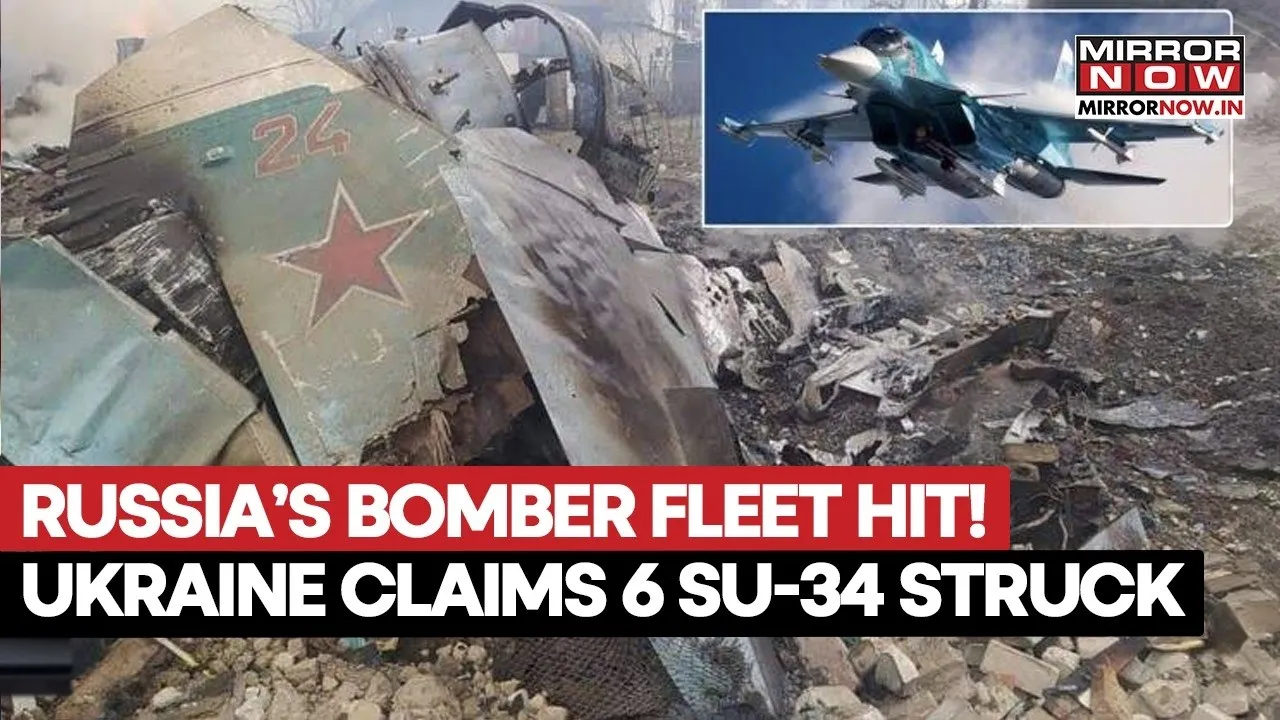
Ukraine's Navy reported on October 29 that it had used its Neptune coastal missile system to strike the Marinovka airfield in Russia's Volgograd Oblast, claiming the destruction of two Russian Su-34M fighter-bombers.
According to AeroTime, the strike occurred overnight into October 15, 2026, and the Ukrainian Navy stated that the attack hit equipment used to support flight operations, causing secondary detonations and a fire at the airfield.
Kyiv Post reported that the General Staff of the Armed Forces of Ukraine confirmed that six Su-34 multirole fighter-bombers sustained varying degrees of damage at the base, though the Navy's claim of destroying all six was not fully confirmed by the General Staff.
United24Media and Kyivpost reported that the attack targeted the area where Russian military aircraft were stationed at the airfield, which hosts the 11th Mixed Aviation Regiment.
Themoscowtimes noted that the Su-34M is the modernized variant of the Su-34 fighter-bomber, with upgraded avionics and the ability to carry a wider range of precision weapons.
The Ukrainian Navy did not specify which version of the Neptune missile system was used in the attack, according to AeroTime.
Satellite imagery from Defence-Blog showed that a Ukrainian Neptune missile strike on October 14–15 destroyed four Su-34 fighter-bombers and badly damaged two more at the Borisoglebsk air base, supporting the Navy's claim.
While AeroTime and Kyivpost reported the destruction of two Su-34s, Kyivindependent and United24Media reported that the attack also hit a Su-35, one of Russia’s most advanced operational fighter aircraft.
Despite the varying reports, all outlets agreed that the Ukrainian Navy used its Neptune missile system to target Russian Su-34 fighter-bombers at an airfield in Russia.
The attack adds to a series of Ukrainian strikes on airfields hosting Su-34s, aiming to reduce Russia's capacity to conduct such strikes, particularly if the losses are confirmed and the aircraft cannot be quickly replaced.
What this adds
The exact number of aircraft destroyed remains disputed, with some reports citing two Su-34s and others including a Su-35. However, all sources agree that the Ukrainian Navy used its Neptune missile system in the attack.
Background
While the exact extent of the damage and the number of flights affected varied slightly between reports, all outlets agreed that the Ukrainian missile strike on the electronics plant in Oryol caused significant disruptions at Moscow's main airports.
What's confirmed
- Ukraine’s Navy said it used its Neptune coastal missile system to strike the Borisoglebsk military air base in Russia’s Voronezh region overnight into October 15, 2026, claiming six Su-34M fighter-bombers were destroyed.
- On October 4, 2026, the Security Service of Ukraine (SBU) said its drones had hit a Su-35 and a Su-34 at Khanskaya air base in the Republic of Adygea.
- According to the Ukrainian Navy’s statement, the strike also hit equipment used to support flight operations, and secondary detonations and a fire were recorded at the airfield.
- In a later statement, the General Staff of the Armed Forces of Ukraine said it had confirmed that six Su-34 multirole fighter-bombers sustained damage of varying degrees at the base.
- The Ukrainian Navy did not say which version of the Neptune it used.
- The Ukrainian Navy has reported destroying two russian Su-34 fighter-bombers in a missile strike on the Marinovka airfield in russia's Volgograd region.
- Ukraine’s Navy said on 29 October that it destroyed two Russian Su-34 fighter-bombers in a Neptune missile strike on Marinovka airfield in Russia’s Volgograd Oblast.
What's still developing
- President Volodymyr Zelenskyy said on March 15, 2025, that an extended-range Long Neptune had passed testing and been used in combat at a distance of 1,000 kilometers (about 620 miles).
- According to the Ukrainian Navy, the Su-34M can carry several guided and high-explosive aerial bombs at once, as well as missiles, and is one of the main aircraft Russia uses for guided-bomb strikes on Ukrainian positions and front-line towns.
- On July 5, 2025, the General Staff said Special Operations Forces had hit a glide-bomb depot and a combat training aircraft at the base, which it described as home to Su-34, Su-35S and Su-30SM aircraft.
- The Navy identified the regiment's location as near Oktyabrsky in Volgograd region.
- "As a result of the strike, two Su-34 frontline fighter-bombers were destroyed at the 11th Mixed Aviation Regiment's base in the settlement of Oktyabrsky, Volgograd region, which is part of the 4th Air Force and Air Defense Army's 4th Mixed Aviation Division," the statement said.
- Ukraine's Security Service (SBU) said it struck two key Russian military airbases in occupied Crimea with drones, damaging or destroying at least seven combat aircraft in its second attack on the Saky airbase this week.
- The operation confirms earlier reports from regional monitoring channels and eyewitnesses in Maykop, who reported drone engine sounds and active Russian air defense fire beginning around 1:00 a.m. local time on Sunday, followed by loud secondary explosions and large blazes visible across the airfield complex.
- Ukrainian President, Volodymyr Zelenskyy, announced the operation in a post on X on Thursday, October 15, saying the aircraft were preparing to launch further attacks on Ukraine and were loaded with aerial bombs.
- Satellite photos taken earlier this week showed six Su-34s lined up side by side — the exact same spot that is now a blackened strip of charred wreckage.
- Two Russian Su-35S multirole fighter jets collided in the air over the Kursk region on September 7, killing one pilot and destroying both aircraft, according to Russian military channels tracking the loss.