
Home · Science · Oct 30 archive
NASA Identifies 4.1-Billion-Year-Old Martian Meteorite Found in Sahara
· Confirmed
In Short: NASA researchers have determined that a rose-colored meteorite discovered in the Sahara Desert in 2022 is a 4.1-billion-year-old piece of Mars, making it one of the oldest Martian meteorites ever found on Earth.
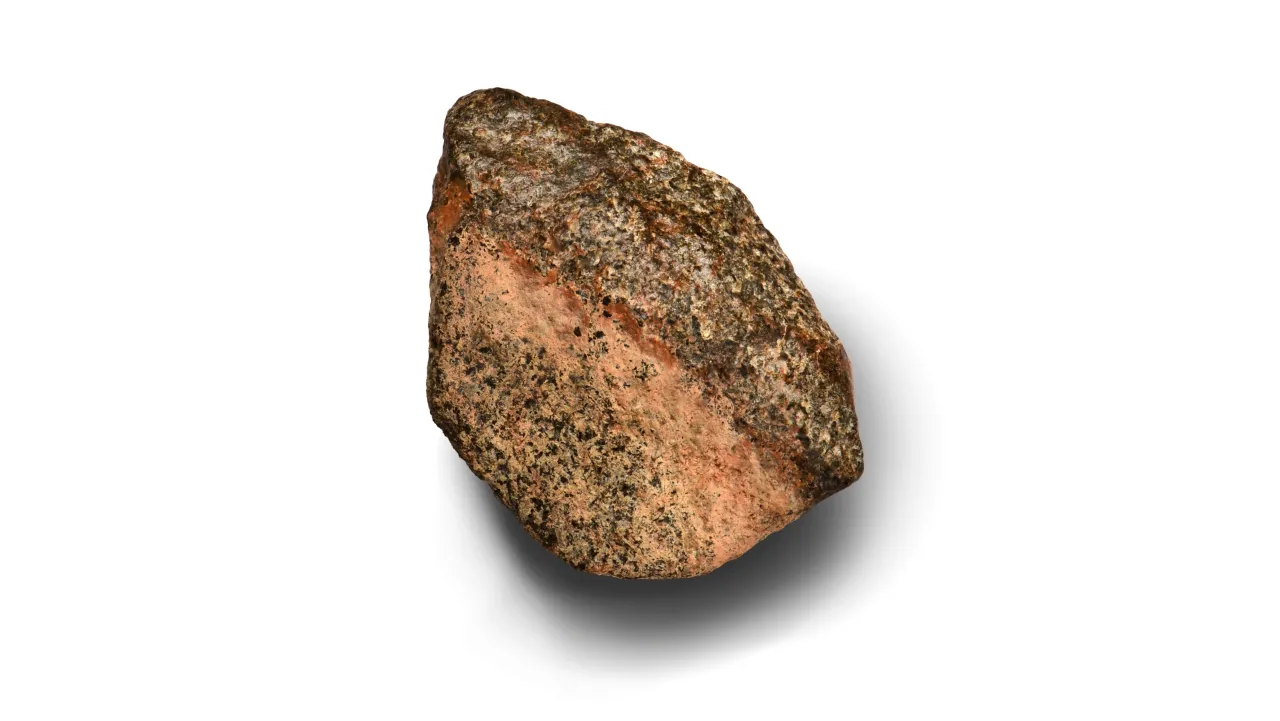
The meteorite, named Teghaza 001 after the Teghaza salt plain in Mali where it was found, is believed to be one of roughly 435 known Martian meteorites.
According to NASA, Teghaza 001 is from a part of Mars that formed more than 4.1 billion years ago, providing scientists with a unique snapshot of the planet's ancient crust.
Previously, only two meteorites provided insights into early Mars: Allan Hills 84001, dated at 4.1 billion years old, and Northwest Africa 7034, which contains fragments dated at more than 4.3 billion years old.
Carl Agee, the director of the institute, noticed that Teghaza 001's oxygen values resembled those of NWA 7034, the famous Martian meteorite nicknamed Black Beauty, and that some patches were rich in manganese oxide.
Lee Saper, a planetary scientist at NASA's Ames Research Center, said, “This is really our first piece of Martian crust from a part of Mars we’ve never had a sample of before. It records interactions of water and rock and maybe even an imprint of the Martian atmosphere as it was losing water.”
The meteorite, which weighs about 800 grams (1.8 pounds), was not initially seen as special due to its similarity to shergottites, the most common type of Martian meteorite, which make up 90 percent of the current Martian meteorite collection.
Scientists identified 13 locations on Mars that match the mineralogy and chemistry of Teghaza 001, offering new clues to how Mars evolved and insight into the history of volcanic activity on the planet.
Ethan Baxter, an Earth and environmental science professor at Boston College and a co-author of the study, noted that the meteorite’s characteristics were unexpected because no other Martian meteorite of the same type had previously been dated to 1.27 billion years.
The discovery of Teghaza 001 could provide information about Earth that was lost over billions of years of geological movement, as it offers a rare glimpse into Mars' ancient past.
Cosmogenic nuclide data demonstrate that NWA 7635 was ejected from Mars 1.1 million years ago, as were at least 10 other depleted shergottites, the researchers said.
The rock is a snapshot in time that shows how a wetter early Mars with a thick atmosphere could have supported habitable conditions but that these conditions were waning rapidly over the first billion years or so of Mars' existence, trending towards its currently dry and inhospitable environment.
What's confirmed
- Age-dating of the meteorite led researchers to conclude it was about 4.1 billion years old, making it one of the three most ancient Martian meteorites found on Earth, NASA said.
- The rock — which scientists named Teghaza 001 after the Teghaza salt plain in Mali where it was found — is one of the most ancient Martian meteorites identified on Earth.
- “This is really our first piece of Martian crust from a part of Mars we’ve never had a sample of before,” said Lee Saper, the study’s second author, who did the work as a postdoctoral scholar at NASA’s Jet Propulsion Laboratory and is now a scientist at NASA’s Ames Research Center.
- The other meteorite, nicknamed “Black Beauty,” formed about 2.1 billion years ago and is composed of small, volcanic rock fragments.
- A meteorite found in Mali in 2022 is among the oldest Martian rocks known on Earth, a recent study says, dating back more than 4.1 billion years and offering scientists rare insights into Mars’ ancient crust and water history.
- NASA-funded researchers have determined that a meteorite discovered in Mali's Sahara Desert in 2022 represents one of the oldest Martian rocks ever found on Earth, according to a study published Thursday in the journal Science.
- The meteorite, designated Northwest Africa 13441, was found in the Sahara in 2019.
- Most known Martian meteorites belong to the shergottite group and date to roughly 600 million years ago, while only two specimens are believed to be about 2.4 billion years old.
What's still developing
- When a rose-colored meteorite was found in the Sahara Desert in 2022, no one knew how old it was or where it came from.
- Singapore lauds Pakistan's 'unique' role in Gulf mediation Singaporean Foreign Minister Vivian Balakrishnan on Friday praised Pakistan for playing a "unique but very constructive" role in addressing regional challenges, citing Islamabad's recent mediation between the United States and Iran to secure Gulf energy supplies for Asia.
- In 2022, a strange, rosy stone was discovered in the Sahara Desert.