
Home · Business · Oct 29 archive
Lagarde to Step Down as ECB President Nine Months Early
· Confirmed
In Short: European Central Bank President Christine Lagarde announced she will step down nine months early on February 7, 2027.
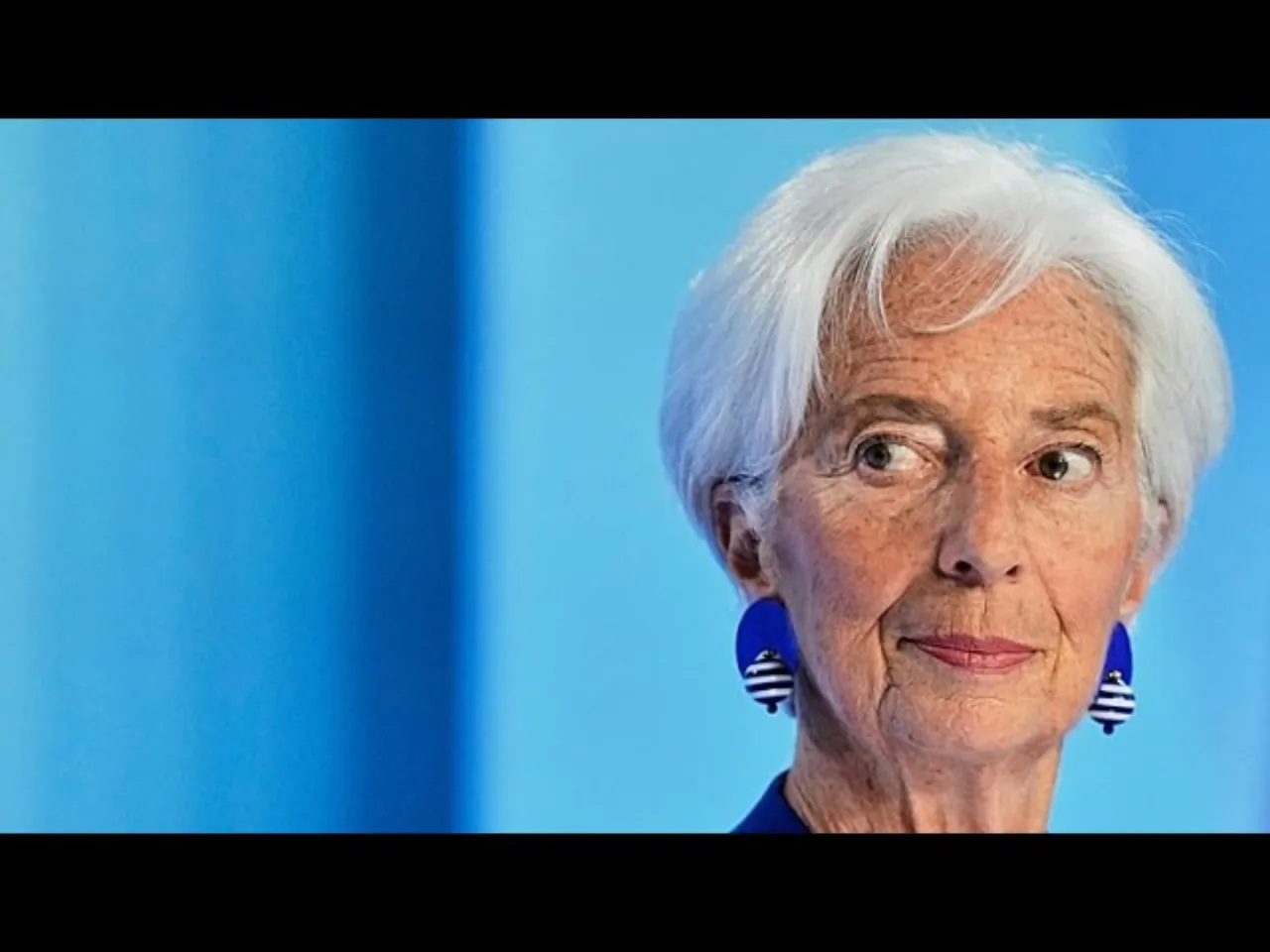
European Central Bank President Christine Lagarde announced on Thursday that she will step down nine months early, on February 7, 2027, from her position as president of the ECB. Brusselssignal reported that Lagarde informed the Governing Council and European Council President António Costa of her decision, while Politico noted that Lagarde cited the need for greater freedom to express her views on non-monetary matters.
Both Brusselssignal and Politico reported that Lagarde gave no specific reason for her early departure, but sources told Politico that Lagarde wanted to have the freedom to speak out on matters beyond monetary policy. Brusselssignal, however, emphasized that Lagarde’s decision came amid high inflation and nervous bond markets.
Euronext Markets: Real-time Stock Market Data | live and MercoPress reported that Lagarde’s early departure will give European leaders time to choose her successor before the French presidential elections in 2027. Euronext Markets noted that Lagarde’s tenure was marked by navigating the ECB through the COVID-19 pandemic and the energy crises, while MercoPress highlighted the challenges Lagarde faced in managing inflation.
Brusselssignal and Euronext Markets: Real-time Stock Market Data | live reported that Lagarde urged EU institutions to agree on the legal framework for the digital euro as quickly as possible. Both outlets also noted that Lagarde said inflation had come in lower than anticipated but would likely prove more persistent than expected.
Politico and Euronext Markets: Real-time Stock Market Data | live reported that Lagarde’s departure will not affect the ECB’s current policies. Politico cited Lagarde’s statement that the ECB is not pre-committing to a particular rate path, while Euronext Markets noted that Lagarde gave no signal on the next move, repeating that decisions would be taken meeting by meeting.
Brusselssignal and Politico reported that Lagarde’s early departure will allow Emmanuel Macron to have a say in choosing her successor before he leaves office next spring. Brusselssignal noted that Lagarde’s decision could be influenced by the upcoming French elections, while Politico cited sources who said Lagarde wanted to have the freedom to engage in non-monetary matters.
Euronext Markets: Real-time Stock Market Data | live and MercoPress reported that Lagarde’s announcement followed speculation about her potential early departure. Euronext Markets noted that Lagarde’s decision was made to ensure an orderly transition at the ECB, while MercoPress highlighted the challenges Lagarde faced in managing the rise in yields and its impact on growth and inflation.
Both Brusselssignal and Politico reported that Lagarde’s early departure will give European leaders time to settle on a replacement before the French presidential vote in 2027. Brusselssignal noted that Lagarde’s decision was made to ensure an orderly transition at the ECB, while Politico cited sources who said Lagarde wanted to have the freedom to engage in non-monetary matters.
Euronext Markets: Real-time Stock Market Data | live and MercoPress reported that Lagarde’s announcement followed speculation about her potential early departure. Euronext Markets noted that Lagarde’s decision was made to ensure an orderly transition at the ECB, while MercoPress highlighted the challenges Lagarde faced in managing the rise in yields and its impact on growth and inflation.
All outlets agreed that Lagarde’s early departure will give European leaders time to choose her successor before the French presidential elections in 2027, and that Lagarde’s decision was made to ensure an orderly transition at the ECB.
Both Brusselssignal and Politico reported that Lagarde’s early departure will allow Emmanuel Macron to have a say in choosing her successor before he leaves office next spring. Brusselssignal noted that Lagarde’s decision could be influenced by the upcoming French elections, while Politico cited sources who said Lagarde wanted to have the freedom to engage in non-monetary matters.
Euronext Markets: Real-time Stock Market Data | live and MercoPress reported that Lagarde’s announcement followed speculation about her potential early departure. Euronext Markets noted that Lagarde’s decision was made to ensure an orderly transition at the ECB, while MercoPress highlighted the challenges Lagarde faced in managing the rise in yields and its impact on growth and inflation.
What this adds
The sources have not established a specific reason for Lagarde's early departure beyond her desire for greater freedom to express her views on non-monetary matters.
Background
European Central Bank President Christine Lagarde announced she will step down nine months early on February 7, 2027.
Georgia Juvelis, a 19-year AMC Global Media veteran, will leave her role as Chief Communications Officer at the end of 2026.
What's confirmed
- European Central Bank President Christine Lagarde has played down the importance of the so-called neutral interest rate and declined to rule out further rate rises.
- Lagarde, a former French finance minister, was also head of the International Monetary Fund from 2011 to 2019.
- "I leave this institution with a sense of good work done and an ECB that is fit for the future," Lagarde, a French economist, said in a short video shared on social media.
- "European Central Bank President Christine Lagarde today informed the Governing Council and the president of the European Council Antonio Costa that she will step down from her position on 7 February 2027," the ECB said in a statement.
- European Central Bank (ECB) President Christine Lagarde is to resign nine months ahead of the end of her 8-year term.
- In a clip she shared on X $TWTR, Lagarde called it "a great pride and a huge privilege to serve this institution." Costa said the selection process "will be initiated today and will proceed without delay." The departure gives European leaders time to settle on a replacement before France holds its presidential vote in 2027.
- Lagarde’s announcement landed on the same day the ECB is scheduled to publish its interest rate decision at 1:15 p.m.
- Markus Ferber, a German member of the European parliament for the centre-right European People's Party, also said Lagarde's early resignation sent "the wrong signal" given high inflation, nervous bond markets and looming elections. "If the impression arises that such a departure is timed around national elections, it damages trust in an institution that must stand above any domestic political calculation," Ferber, who sits on the parliamentary committee that will confirm Lagarde's successor, said. By contrast, Marcel Fratzscher, president of German think-tank DIW, said Lagarde was showing "a strong sense of responsibility towards Europe".
- "Our view is that institutional behaviour is likely to outlast Lagarde, and be quite similar, whoever takes over."
- "By leaving office early, Christine Lagarde gives European governments and institutions an opportunity to appoint a successor who will safeguard European values and protect the ECB's independence," he told Reuters.
- “I want to have the freedom of speech, the freedom of expression, and the freedom to engage on matters that are not monetary policy matters,” Lagarde said at her regular press conference after the ECB left its key interest rates unchanged on Thursday.
- German Chancellor Friedrich Merz, leader of the eurozone’s largest economy, said Lagarde had led the bank “with great aplomb during challenging times”, and European Union chief Ursula von der Leyen thanked Lagarde “for everything you have done for Europe and the euro”.
What's still developing
- Lagarde told reporters the concept was highly theoretical and designed for a world without shocks.
- Pushing rates above neutral would restrain growth, a step she did not exclude.
- Costa praised Lagarde's leadership during her seven-year stint at the ECB helm, a period in which the EU and the world faced great challenges.
- “Christine Lagarde's tenure at the helm of the ECB has only strengthened the confidence in the European single currency,” Eurogroup President Kyriakos Pierrakakis said in a statement, promising to give the council a “swift” recommendation on the succession to heads of government.
- None looks likely to make the final round of the presidential election in May.
- Speculation has long swirled that Lagarde, formerly finance minister under President Nicolas Sarkozy, may throw herself back into French politics.
- Lagarde is only the second president in the ECB's 28-year history to leave early, after Wim Duisenberg.
- The spread between French and German 10-year yields widened to about 178 basis points this month, the highest in nearly 15 years, and Lagarde has said the rise in yields will weigh on both growth and inflation.
- Lagarde, the first woman to lead first the International Monetary Fund and then the ECB, guided the eurozone from massive bond-buying and negative interest rates to sharp rate hikes as inflation surged past 10%, then back down as prices cooled toward the bank's 2% goal, reports the New York Times.
- Klaas Knot, who used to head the Netherlands' central bank, and Pablo Hernandez de Cos, a onetime Spanish central bank governor, are regarded as the leading contenders to take over from Lagarde.
- Lagarde, 70, was initially set to serve an eight-year term that would have ended on 31 October 2027.
- Lagarde has repeatedly dismissed suggestions of ambitions to run in France's presidential election next year -- unlikely now with only five months until voting gets underway in April -- but another theory with more credence is that she is departing early to ensure an orderly transition at ECB that ensures the new French president has no say.