
Home · Business · Oct 28 archive
Stocks Fall Despite China's Market Support Efforts
· Confirmed
In Short: The spike in rates seems to defy Treasury Secretary Bessent’s efforts to suppress costs when he ordered the Treasury Department to buy back $5.2 billion of long-dated debt, crossing the 5 percent threshold and demonstrating the limits of the Treasury secretary’s ability to bend global markets to his will.
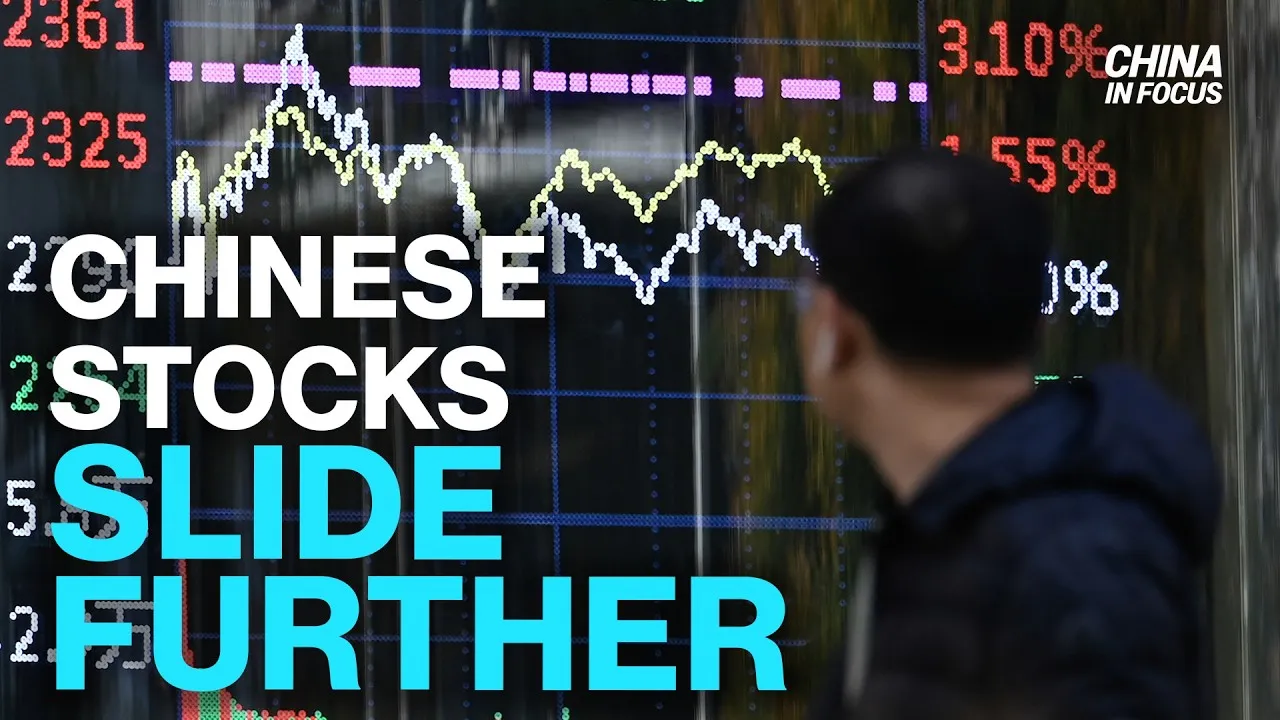
The STAR50 index, which tracks major technology and semiconductor companies in China, has plunged 40% in less than four months, wiping out about US$480 billion in market value and exposing the risks of inflated valuations and mounting uncertainty over demand for AI technology.
According to Goldman Sachs, AI-related stocks account for 42% of China’s market capitalization and 57% of turnover across mainland-listed A-shares and Hong Kong-listed H-shares, leaving a large share of the market exposed to the downturn.
Robot-maker Unitree has lost half its value since beginning trading in August, while chipmakers MetaX Integrated Circuits and Moore Threads Technology, which surged 700% and 400% respectively on their market debuts in 2025, have also halved from their July levels.
Despite the sell-off, the STAR50 still trades at about 100 times trailing earnings, down from a peak of nearly 250 times, compared with about 30 times for the Nasdaq 100, underscoring concerns that valuations remain stretched.
The mainland STAR50 index has fallen 40% over the period, while China’s broader blue-chip index has dropped about 20% from its June peak.
The sell-off threatens to undermine Beijing’s efforts to encourage households to invest in equities to help finance the country’s AI ambitions, after a two-year rally fueled by expectations of economic stimulus and government support for technology industries.
Fund manager Wang Zhuo of Shanghai Zhuozhu Investment Management noted, “Just like all other Chinese manufacturers, (chipmakers and AI suppliers) will eventually end up in a price war,” adding, “And now we see the bubble bursting.” Unlike the recent pullback in US technology shares, the Chinese sell-off has been particularly severe, with investors reassessing lofty valuations amid concerns about AI demand, potential export restrictions, and the possibility of Chinese equipment being barred from overseas data centers.
What's confirmed
- The STAR50 index, which tracks major technology and semiconductor companies in China, has plunged 40% in less than four months, wiping out about US$480 billion in market value and exposing the risks of inflated valuations and mounting uncertainty over demand for AI technology.
- According to Goldman Sachs, AI-related stocks account for 42% of China’s market capitalization and 57% of turnover across mainland-listed A-shares and Hong Kong-listed H-shares, leaving a large share of the market exposed to the downturn.
- Robot-maker Unitree has lost half its value since beginning trading in August, while chipmakers MetaX Integrated Circuits and Moore Threads Technology, which surged 700% and 400% respectively on their market debuts in 2025, have also halved from their July levels.
- Despite the sell-off, the STAR50 still trades at about 100 times trailing earnings, down from a peak of nearly 250 times, compared with about 30 times for the Nasdaq 100, underscoring concerns that valuations remain stretched.
- The mainland STAR50 index has fallen 40% over the period, while China’s broader blue-chip index has dropped about 20% from its June peak.
- The sell-off threatens to undermine Beijing’s efforts to encourage households to invest in equities to help finance the country’s AI ambitions, after a two-year rally fueled by expectations of economic stimulus and government support for technology industries.
- Fund manager Wang Zhuo of Shanghai Zhuozhu Investment Management noted, “Just like all other Chinese manufacturers, (chipmakers and AI suppliers) will eventually end up in a price war,” adding, “And now we see the bubble bursting.” Unlike the recent pullback in US technology shares, the Chinese sell-off has been particularly severe, with investors reassessing lofty valuations amid concerns about AI demand, potential export restrictions, and the possibility of Chinese equipment being barred from overseas data centers.
What's still developing
- FIFA President Gianni Infantino will seek re-election next year despite ongoing criticism over a controversial proposal to sell stakes in the commercial rights to World Cup competitions, the world football body confirmed on Sunday.
- FIFA has accused UEFA of conducting a coordinated "smear campaign," while UEFA alleged in a US legal filing dated August 28 that Infantino had promoted a "fraudulently off-market price for his own benefit" during the proposed transaction.
- German startup Isar Aerospace on Sunday said it would rapidly expand satellite deployments after the first orbital launch of its Spectrum rocket from Arctic Norway, a milestone for Europe’s efforts to secure independent access to space.
- The uncrewed Spectrum became the first commercial rocket to reach orbit from continental Europe, marking a breakthrough for a region where several countries are seeking a foothold in the fast-growing market for satellite launches.
- “We need to make it clear that girls, despite their perceived maturity, are children,” Pellerin said in an interview.
- Newsom’s desk, despite efforts by the ACLU and Planned Parenthood to protect the practice.
- Salvadoran immigrants in the United States with Temporary Protected Status (TPS) will continue to have protections for now, despite their status having been set to expire Wednesday, the Trump administration said.
- After President Donald Trump returned to the White House, DHS began efforts to end TPS for most countries that had benefited from the program in recent decades, including Venezuela, Haiti, and Afghanistan.
- Amid allegations of insider trading, bets on military operations, and deceptive marketing practices, some states are seeking to sue or ban prediction markets.
- But just as attorneys general and prediction markets appear to be battling each other, Kalshi is pouring hundreds of thousands of dollars into the two major political organizations dedicated to electing and supporting AGs.
- Prediction market companies contend they are offering financial transactions known as swaps – which are regulated by the Commodity Futures Trading Commission, a federal agency – while many states argue they are gambling operations, akin to sportsbooks and casinos.
- Despite positive reviews — including a 92 percent critics score and 90 percent audience score on Rotten Tomatoes — as well as 11 Emmy nominations, the most of any Prime Video series this year, Spider-Noir will not return for a second season.