
Home · World · Oct 27 archive
WhatsApp Channel 'Lula's Army' Boosts President's Re-election
Confirmed
In Short: Brazilian President Luiz Inácio Lula da Silva secured his fourth term after a surprising election victory.
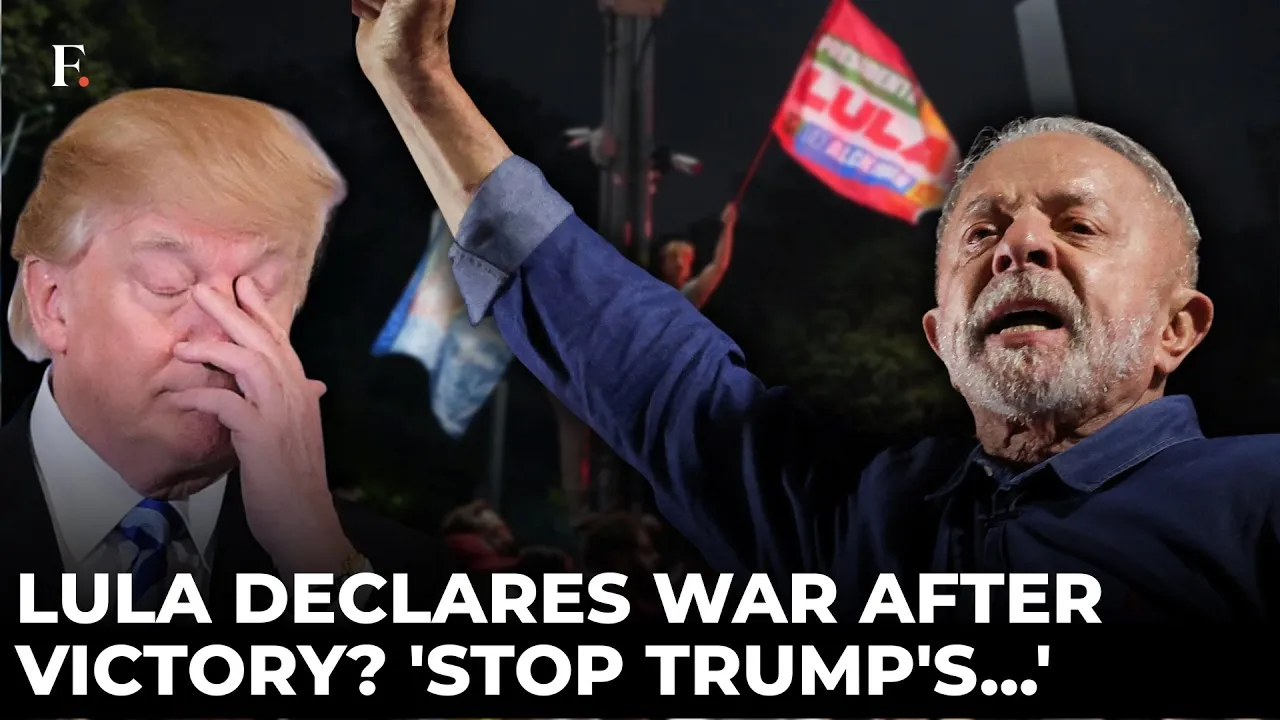
Brazilian President Luiz Inácio Lula da Silva secured his fourth term in office after a surprising election victory over right-wing challenger Flávio Bolsonaro.
The election, held on October 25, saw Lula win with 51.79% of the vote compared to Bolsonaro's 48.21%, according to Brazil's electoral authorities.
Social media played a pivotal role in Lula's campaign, particularly a WhatsApp broadcast channel called 'Lula's Army', which grew to over 10 million members by the runoff.
The channel featured a 90-minute interview with Lula and was instrumental in turning the tide of public opinion in the final weeks of the campaign.
On the eve of the vote, Lula hosted a 24-hour live broadcast, dubbed the 'turnaround livestream', which attracted a large audience.
Lula's campaign also faced challenges, including accusations of bias from Brazil's Superior Electoral Court, which gave Meta 24 hours to show it was not favoring one candidate over the other.
Despite these challenges, Lula managed to erase his deficit and win the runoff by more than 3.5 percentage points, or over 4 million votes.
Bolsonaro, however, has refused to accept defeat, calling the court's decision a 'dirty trick' that 'changed the rules in the middle of the game'.
What this adds
The election's outcome is closely watched as Brazil decides its political direction for the coming years, with Lula's left-wing policies contrasting sharply with Bolsonaro's right-wing vision.
Lula's victory has implications for Brazil's diplomatic and economic ties, particularly with the United States and China.
Background
Brazilian President Luiz Inácio Lula da Silva has won the runoff election against right-wing challenger Flávio Bolsonaro, securing his fourth term.
Luiz Inácio Lula da Silva, known mononymously as Lula, is a Brazilian politician, trade unionist and former metalworker who has served as president of Brazil since 2023 and from 2003 to 2011. He is a member of the Workers' Party.
What's confirmed
- "Either the homeland remains free, or we die for Brazil," he said.
- "I am very happy with the real possibility that, three weeks from now, Brazil will give a definitive answer by choosing a modern government," he said, according to AFP.
What's still developing
- The shift was particularly significant because social media has played a central role in Brazilian politics since Jair Bolsonaro's 2018 election victory, when WhatsApp networks became a defining feature of political campaigning.
- Luiz won a historic fourth term on Sunday (25 October), the country's electoral court said, in a shock result that defied polls, precedent and global anti-incumbent sentiment to put the brakes on a wave of right-wing election victories across Latin America.
- “I’m not sure whether to open this speech with ‘comrades’ or ‘fandoms from all over Brazil’,” Lula said earlier this month, starting a speech at a rally on São Paulo’s Avenida Paulista which attracted a crowd estimated by its organizers at over a million.
- Lula was president from 2003 to 2010 and later spent 580 days in prison on corruption convictions, which were annulled by Brazil's Supreme Court in 2021.
- Brazil has maintained diplomatic and economic ties with Russia since the beginning of the full-scale invasion in February 2022, opting out of Western sanctions and expressing a wish to have a role in a negotiated settlement to the war.
- Latin American e-commerce and payments giant MercadoLibre (MELI), with Brazil its biggest market, slumped 8%.
- Brazilian President Luiz Inacio Lula da Silva, who is running for reelection, greets supporters during a campaign rally in Sao Paulo, Brazil, Saturday, Sept. 26, 2026.
- “You cannot bring someone who has 49% (in the polls) to debate with someone who has 1%,” he said.
- The right-wing Flávio Bolsonaro has won the first round of Brazil's presidential election, beating the incumbent left-wing President Lula da Silva, but falling short of the outright majority needed to win.
- But the 80-year-old Lula, of Brazil's liberal Workers Party (PT), won decisively, 52% to 48%, to secure his fourth presidential term. (He served two other consecutive terms from 2003 to 2011.) Like most Brazilian expats in South Florida, payment services executive Ronald Wieselberg, of Aventura, a Rio de Janeiro native, voted for Bolsonaro. largely because of Lula’s left-wing economic policies, which critics warn have put Brazil in a fiscal hole, and what he calls Lula's flirtations with anti-semitism.
- But Cirino says Bolsonarismo — especially Bolsonaro's Liberal Party, which took a majority of seats in Brazil's Congress this month — remains a political arbiter.
- In addition to choosing the country's next president, voters are also electing 27 state governors, members of state legislatures, all 513 members of the lower house of Congress, and 54 of Brazil's 81 senators.