
Home · Science · Oct 27 archive
New Dinosaur Species Named Paludohadros proudlovii in Honor of Surrey Worker
· Confirmed
In Short: Paludohadros proudlovii, a new species of iguanodontian dinosaur, has been named in honor of Will Proudlove, who managed the Ewhurst brick and roof tile works in Surrey, England, where the fossil was discovered.
Proudlove passed away at the age of 35 shortly before the dinosaur's fossil was found in 2001 and donated to the Natural History Museum.
The dinosaur lived approximately 125 million years ago, during the Early Cretaceous Period, when southern England was covered in muddy wetlands.
Paludohadros proudlovii is the first named ornithischian genus from the Weald Clay Formation of Smokejacks Brickworks, where it was found.
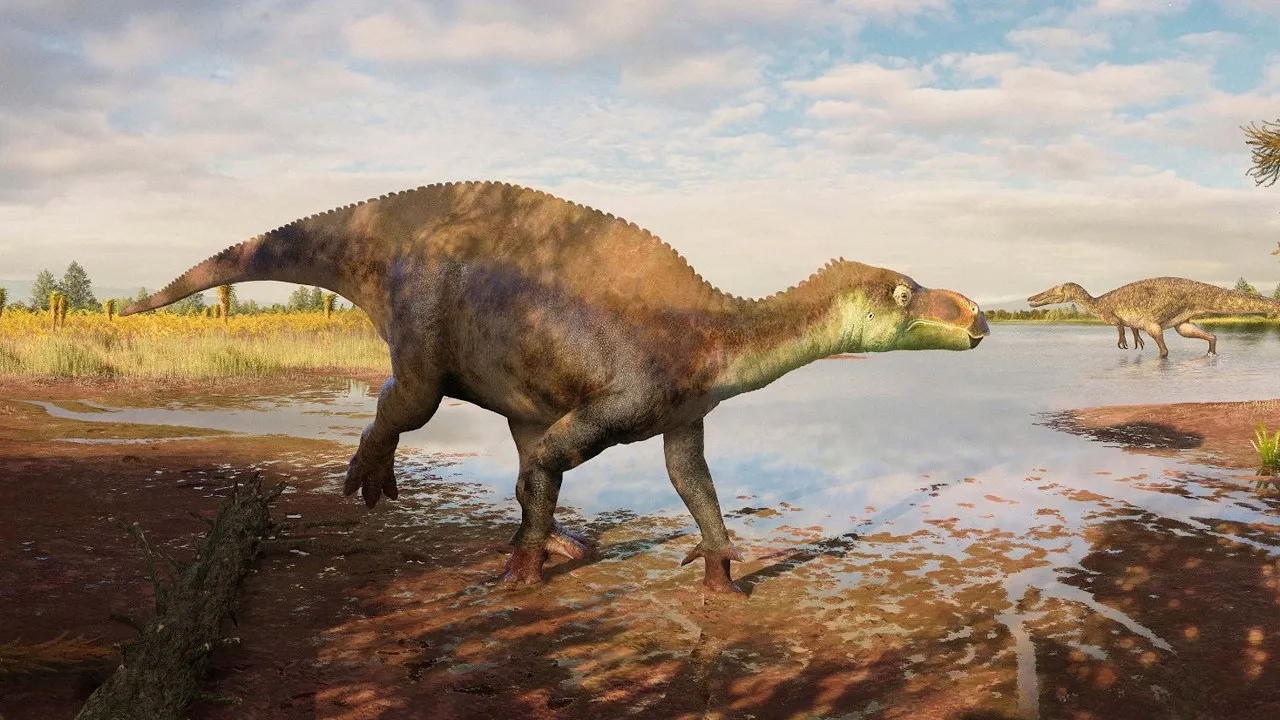
The dinosaur, about 5 meters long and weighing an estimated 1.5 to 2 tons, was similar in size to a rhinoceros.
Proudlove's wife, Rachel, said naming the dinosaur after Will was a 'huge' honor, noting that he had checked for dinosaur fossils each time a layer of clay was removed from the quarry.
The discovery of Paludohadros proudlovii adds to the growing list of newly named iguanodontians in recent years, including brighstoneus, comptonatus, and istiorachis.
The dinosaur's name, Paludohadros, means 'swamp hadrosaur' in Latin, reflecting the swampy environment where it lived.
Paludohadros proudlovii lived alongside the fearsome two-legged carnivore Baryonyx walkeri, whose fossils were also found at the Ewhurst Works.
Lead author Ricardo Sacamoto said, 'Paludohadros proudlovii is the first species I’ve ever named and I’m honored to have been able to work on it.'
Senior author Professor Susannah Maidment noted, 'Paludohadros proudlovii was found just 100 meters away from Baryonyx, whose fossils we also look after at the Natural History Museum, London.'
What this adds
The discovery of Paludohadros proudlovii highlights the ongoing importance of fossil sites in southern England for understanding dinosaur diversity during the Early Cretaceous Period.
What's confirmed
- The remains at the Ewhurst works belong to a member of the iguanodontians – a group of dinosaurs known for their thumb spikes, according to the Natural History Museum.
- “ Paludohadros proudlovii was found just 100 m (328 feet) away from Baryonyx, whose fossils we also look after at the Natural History Museum, London,” said senior author Professor Susannah Maidment, a paleontologist at the Natural History Museum, London and the University of Birmingham.
What's still developing
- Historically, it added that iguanodontians found in southern England were considered to be either Iguanodon or its smaller relative, mantellisaurus.
- Rachel said the dinosaur being named after Will - who worked his way up the ranks to become manager - was a "huge" honour.
- His wife Rachel told BBC Radio Surrey there was a history of finding dinosaur remains where the father-of-two worked.
- A partial dinosaur skeleton unearthed in a Surrey brickworks in 2001 has been identified as a previously unknown genus and species of an early-diverging hadrosauroid iguanodontian.
- Life reconstruction of the iguanodontian dinosaur Paludohadros proudlovii ; in the distance, the large predatory dinosaur Baryonyx walkeri can be seen.
- The new species, Paludohadros proudlovii, belonged to the iguanodontians, a group of plant-eating dinosaurs known for the spikes on their thumbs.
- Measuring around 5m (16ft) long and weighing around 1.5 to 2 tonnes, the Paludohadros proudlovii specimen would have been a similar size to a rhino, according to the new study published in the Journal of Systematic Palaeontology.
- “Sadly, this dinosaur was only discovered the year after he died, but its story has become a part of our lives since then,” Rachael Proudlove said.
- Will died at the age of 35 shortly before Paludohadros was excavated, leaving behind his wife Rachael and children Ellie and Matt.