
Home · World · Oct 27 archive
Netanyahu Fights for Survival as Israel Votes
· Confirmed
In Short: Prime Minister Benjamin Netanyahu is fighting for his political survival as Israelis head to the polls in Tuesday's parliamentary elections.
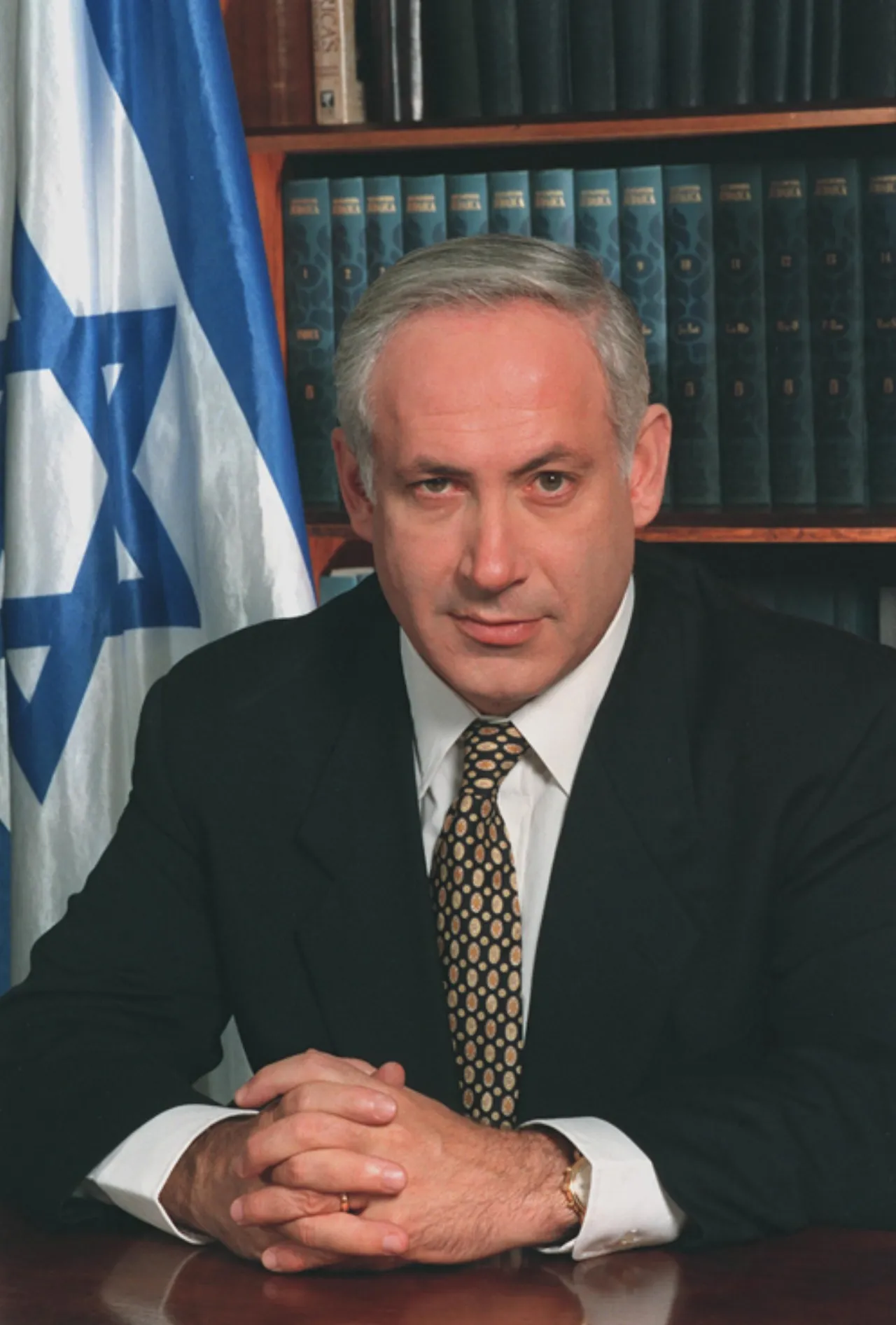
Netanyahu has campaigned on his wartime leadership and an endorsement from former US President Donald Trump, who has called him a 'Great Warrior Prime Minister' and an 'even greater partner for peace' in the confrontation with Iran.
However, Netanyahu's political future has come under growing pressure following the October 7, 2023, Hamas attacks on Israel and the subsequent wars in Gaza and Lebanon, as well as the ongoing conflict with Iran.
Eisenkot, who leads the newly formed Yashar Party, is the main figure in the so-called 'change bloc', a collection of parties which have ideological differences but share the goal of ousting Netanyahu.
Polling shows that Netanyahu and his governing coalition are slipping in their struggle to retain power, with the opposition bloc holding a slight lead.
The election has seen a record turnout of voters, with 55.7% of eligible voters casting their ballots within the first nine hours of voting, a record by that point in the day.
Neither of the main political blocs are projected to win the 61 seats needed to form a majority government, meaning weeks or months of political wrangling may lie ahead.
The Central Elections Committee reported that 7.3 million Israelis were eligible to vote, including about 330,000 first-time voters.
Netanyahu's long political career is anchored in his vow to defend Israel against its Iranian nemesis, but his handling of the Iran war has been criticized for failing to achieve regime change.
There is a new and concerted effort from Israel's military and political leaders to frame the achievements of the Iran war as having changed the Middle East, even without the regime change in Tehran that Netanyahu has focused on.
The election is taking place on Netanyahu's terms, but the opposition alliance led by Eisenkot has a slight lead in the polls.
Netanyahu's opponents share his worldview, but the election is ultimately a decision on whether to live in a functioning democracy or a democracy in name only.
The Israeli Central Election Committee said 16.7 per cent of eligible voters had already cast their ballots within the first three hours, the fastest early turnout rate since 1981.
Background
Prime Minister Benjamin Netanyahu is fighting for his political survival as Israelis head to the polls in Tuesday's parliamentary elections.
What's confirmed
- Ahead of Israel’s Oct. 27 national vote, President Donald Trump issued a sweeping endorsement of Prime Minister Benjamin Netanyahu’s re-election bid, calling him a "great warrior," an "even greater partner for peace" and an ally in the confrontation with Iran.
- An “unprecedented confrontation” has been unfolding in recent days between Prime Minister Benjamin Netanyahu and IDF Chief of Staff Eyal Zamir surrounding an instruction by the prime minister for unspecified military action that defense officials believe could lead to a flare-up with Iran shortly before the election, Channel 12 reported Sunday.
- “The president has the most influential endorsement in American or international political history,” Vance said during an interview with journalist Mark Halperin.
- Trump directed a Truth Social post to “the Great People of Israel” and called “Bibi” Netanyahu “a Great Warrior Prime Minister, and an even greater Partner for Peace in combatting the Islamic Republic of Iran, with its 51 year old chant, ‘Death to Israel, Death to America. We will destroy the Little Satan and the Big Satan.'” “If Israel has the wrong Leader, which would be anyone other than Bibi, America will have to do this work ourselves, and I am not inclined to do so,” Trump continued.
- Netanyahu has campaigned on his wartime leadership and his alliance with US President Donald Trump, who has endorsed him and joined Israel in waging war on Iran.
- Netanyahu said on Sunday that Trump was prepared to act again to “finally” remove the Iranian threat, but only if Netanyahu remained in power.
- "The president has the most effective endorsement in American or international political history. I endorse American candidates, and that's what I'm focused on in the midterms. So I'm not going to get involved in the Israeli elections," Vance said.
- Israel denies rift as reports reveal military objections to proposed pre-election attack Dubai: Israeli Prime Minister Benjamin Netanyahu reportedly pushed for a fresh military attack on Iran in the weeks leading up to Tuesday's closely contested election, but faced resistance from senior military commanders who questioned the urgency and political sensitivity of such an operation.
- "I think these elections are the most important of all the ones I’ve known," said Ruth Epstein, an 81-year-old longtime left-wing voter in Ramat Gan near Tel Aviv, who voted for the opposition Democrats.
- Policies of Netanyahu's right-wing coalition have been divisive at home and have deepened Israel's international isolation, while he has defended his record, calling himself the only leader with the mettle to face down Israel's foes.
- Israeli voters on Tuesday gave a narrow edge to opposition parties over Prime Minister Benjamin Netanyahu, initial projections showed, after decades-high turnout in the country's first election since the trauma of the October 7, 2023 attacks.
What's still developing
- "This is the culmination of what [Netanyahu] has tried to rebrand as the War of Redemption, which in his mind started on October 7, 2023. And this is - if not the last war - then the big war against Iran," said Neri Zilber, a journalist based in Tel Aviv and a policy advisor to the Israel Policy Forum, a US think tank.
- One of Netanyahu's former national security advisers has described it as "a golden opportunity to change the direction of the whole Middle East".
- "Benjamin Netanyahu is still selling a major victory," he added, pointing out that Israel had continued talking about the potential for regime change long after the Trump administration had stopped.
- But after assassinating Iran's Supreme Leader Ayatollah Ali Khamanei in an air strike, and making repeated calls to the Iranian people to use this moment to rise up, Netanyahu has now signalled the war may end with the regime still in place.
- Right-leaning pollsters give an advantage to the right-wing and religious bloc led by Netanyahu, while left-leaning pollsters show an advantage for the so-called change bloc opposing the incumbent.
- Published - October 27, 2026 06:10 am IST A protester dressed as Benjamin Netanyahu with a Pinocchio nose during an anti-govt. demonstration in Tel Aviv. | Photo Credit: AFP Thousands took to the streets of Tel Aviv on Saturday (October 24, 2026), demanding accountability for the failure to prevent the October 7, 2023 Hamas attack.
- Few leaders become so closely identified with their countries as Netanyahu has with Israel, making it more politically acceptable for detractors to direct at him the hatred they harbor toward the country as a whole.
- Trump issued what he called his “Complete and Total Endorsement” of Netanyahu on Sunday, describing him as a “Great Warrior Prime Minister” and praising his partnership with the United States against Iran.
- In an interview with Mark Halperin on 2WAY Tonight, the vice president did not directly criticize Netanyahu but said he would not interfere in foreign elections ahead of the US midterms.
- READ: Netanyahu ‘completely lacks legitimacy’ to launch new war ahead of elections: Opposition leader Golan According to The Times of Israel, Magal had previously mocked Eisenkot’s Moroccan heritage in August, making disparaging remarks about his mother’s head covering and Moroccan accent.
- Pressed again on the matter, the vice president said he is neither in favor of nor opposed to an endorsement of Netanyahu but doesn’t want to get involved in Israeli politics.
- In Israel’s convoluted political discourse, just days before a general election that many regard as one of the most consequential in the country’s history, the prevailing perception is that the current coalition and the opposition parties are running neck and neck.