
Home · World · Oct 27 archive
The Key Election Issues Dividing Israelis as They Vote
· Confirmed
In Short: Israelis cast ballots in a tightly contested election, with security and accountability at the forefront of voters' minds.
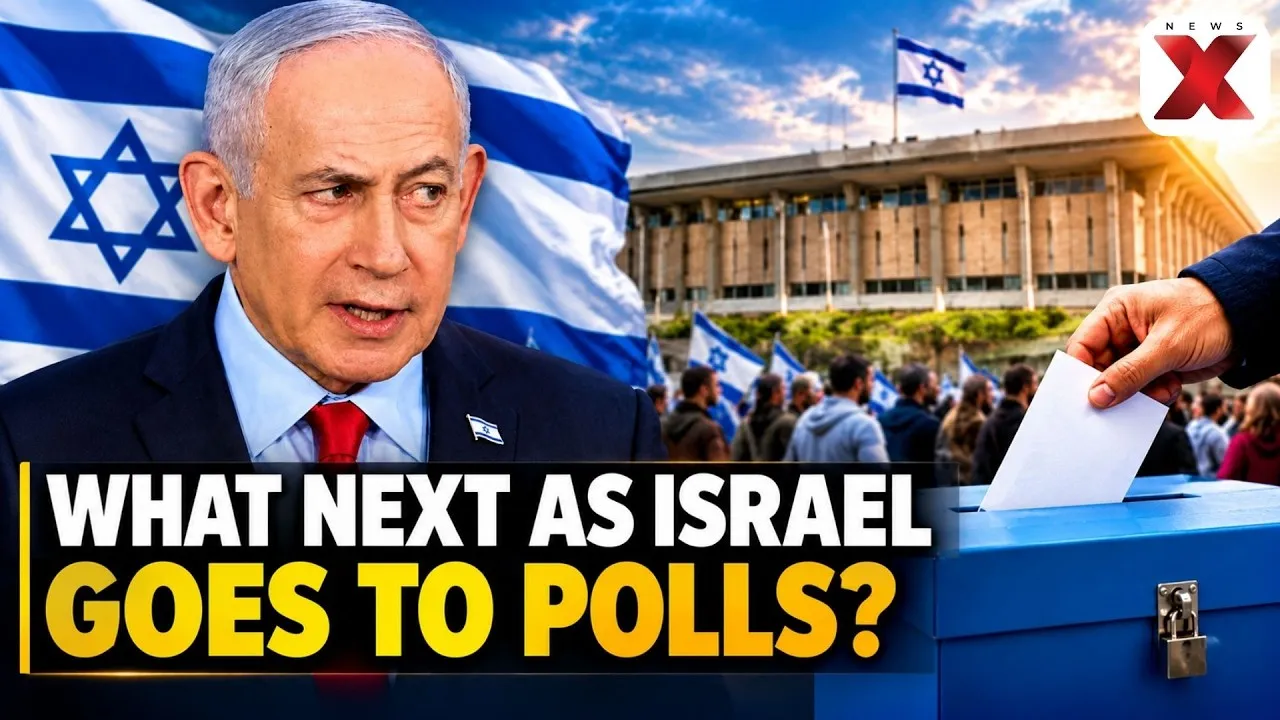
On Tuesday, Israelis went to the polls in what has been described as the most consequential election in the country's history. The election comes amid ongoing security concerns and deep political divisions, with Prime Minister Benjamin Netanyahu facing a strong challenge from opposition leader Gadi Eisenkot.
Netanyahu, the country's longest-serving prime minister, has been in power since late 2022. However, recent polls suggest a tight race, with neither his right-wing bloc nor Eisenkot's opposition alliance projected to secure a parliamentary majority. A KAN survey by Israeli public broadcaster KAN projected 52 seats for the opposition alliance and 50 for Netanyahu’s bloc in the 120-member Knesset, according to Al Jazeera.
The election is taking place in the shadow of the October 7, 2023, Hamas attacks, which have deeply impacted Israeli society. Turnout in the first three hours of the election was the highest since 1981, with the Central Elections Committee reporting a figure of 16.68 percent, according to Naharnet.
Over 12,000 polling stations and some 18,000 ballot boxes have been prepared for the vote, with approximately 100,000 workers overseeing the process, according to the Central Elections Committee. The election is seen as a critical moment for Israel, with many voters expressing their concerns about security and accountability.
Actress Gal Gadot, known for her role in the 'Wonder Woman' films, encouraged Israelis to vote, saying, “That’s it, I’m exercising my right to vote, and I ask all of you to go out and exercise your most basic, most important, the most democratic right, and to vote for who you believe in.” Gadot's message resonated with many voters who are casting their ballots in the wake of the October attacks.
The election also highlights the growing political polarization in Israel. A large rally was held in Hostages Square three days before the election, with thousands protesting against the government and calling for an independent inquiry into the security failures that led to the October 7 attacks. The demonstration was organized by the council, which said in a post on X that they would mark three years of struggle to uncover the truth and demand accountability.
Arab Israelis, also known as Palestinian citizens of Israel, account for about 20 percent of the country’s population, according to Arabnews (Saudi Arabia). However, an Arab Israeli politician, Sami Abu Shehadeh, withdrew his candidacy for the parliamentary election after the country’s Supreme Court indicated a majority of its judges supported barring him from the race.
The election also reflects the broader regional tensions in the Middle East. U.S. Defense Secretary Pete Hegseth made an unannounced visit to Israel a week before the election, meeting with Prime Minister Netanyahu, according to Axios. The visit underscores the international focus on the election and the potential implications for regional stability.
Background
Turnout in the first three hours of the election was the highest since 1981, with over 12,000 polling stations and 18,000 ballot boxes prepared for the vote.
What's confirmed
- The demonstration took place at Hostages Square, three days before Israel’s general election, the first since the war on Gaza began.
- “Three days before the election, we will hold the culminating event marking three years of struggle to uncover the truth, demand accountability and establish a state commission of inquiry,” the council said in a post on X ahead of the demonstration.
What's still developing
- On Sunday, Israel's Channel 12 reported that Netanyahu had pushed for last-minute military action that could trigger a confrontation with Iran prior to the elections - but was opposed by his own military chief Eyal Zamir.
- He recently said on social media he would not hit Iran again before the Nov. 3 midterm elections.
- Millions of Palestinians in the West Bank, East Jerusalem and Gaza, occupied by Israel for nearly 60 years, do not have Israeli citizenship and so cannot vote, in contrast to Israeli settlers living in the occupied territories.
- More than 1.2 million eligible voters had cast their ballots by then.
- A Channel 13 News poll published Monday evening projects that if an election were held today, the bloc of parties backing Yashar chairman Gadi Eisenkot would win 51 Knesset seats, compared with 50 for the bloc backing Prime Minister Benjamin Netanyahu.
- The French president said some leaders were influenced by fake videos generated by artificial intelligence about the unrest President Emmanuel Macron on Wednesday criticised world leaders for making “stupid” comments about the rioting on the sidelines of protests in France, in an apparent swipe at US President Donald Trump and Israeli Prime Minister Benjamin Netanyahu.
- Macron said the leaders were taking aim at France in the context of coming elections in their countries and added that they had been influenced by fake videos generated by artificial intelligence about the riots.
- But neither of their political blocs are projected to win the 61 seats needed to form a majority government - meaning weeks or months of political wrangling may lie ahead.
- The poll highlights key issues influencing voters ; one in three Americans face financial hardships, and four in 10 say their personal finances are worsening.
- Sam Mednick, Associated Press Sam Mednick, Associated Press Natalie Melzer, Associated Press Natalie Melzer, Associated Press TEL AVIV, Israel (AP) — For two decades since leaving Israel for Canada, Yael Natra said, she didn't consider returning to vote in her home country's elections.
- AID Coalition estimates that as many as 67,000 voters are returning to Israel, based on surveys of expatriates and registration data gathered for its "Fly&Vote" initiative.
- A poor showing could end the 77-year-old’s lengthy career on a bitter note and open the door to a new era in Israeli politics.