
Home · World · Oct 26 archive
Brazil keeps left: what Lula’s victory means for his country and beyond
· Confirmed
In Short: Brazilian President Luiz Inácio Lula da Silva narrowly won re-election over right-wing challenger Flávio Bolsonaro, securing 51.8% of the vote, according to Brazil's electoral court.
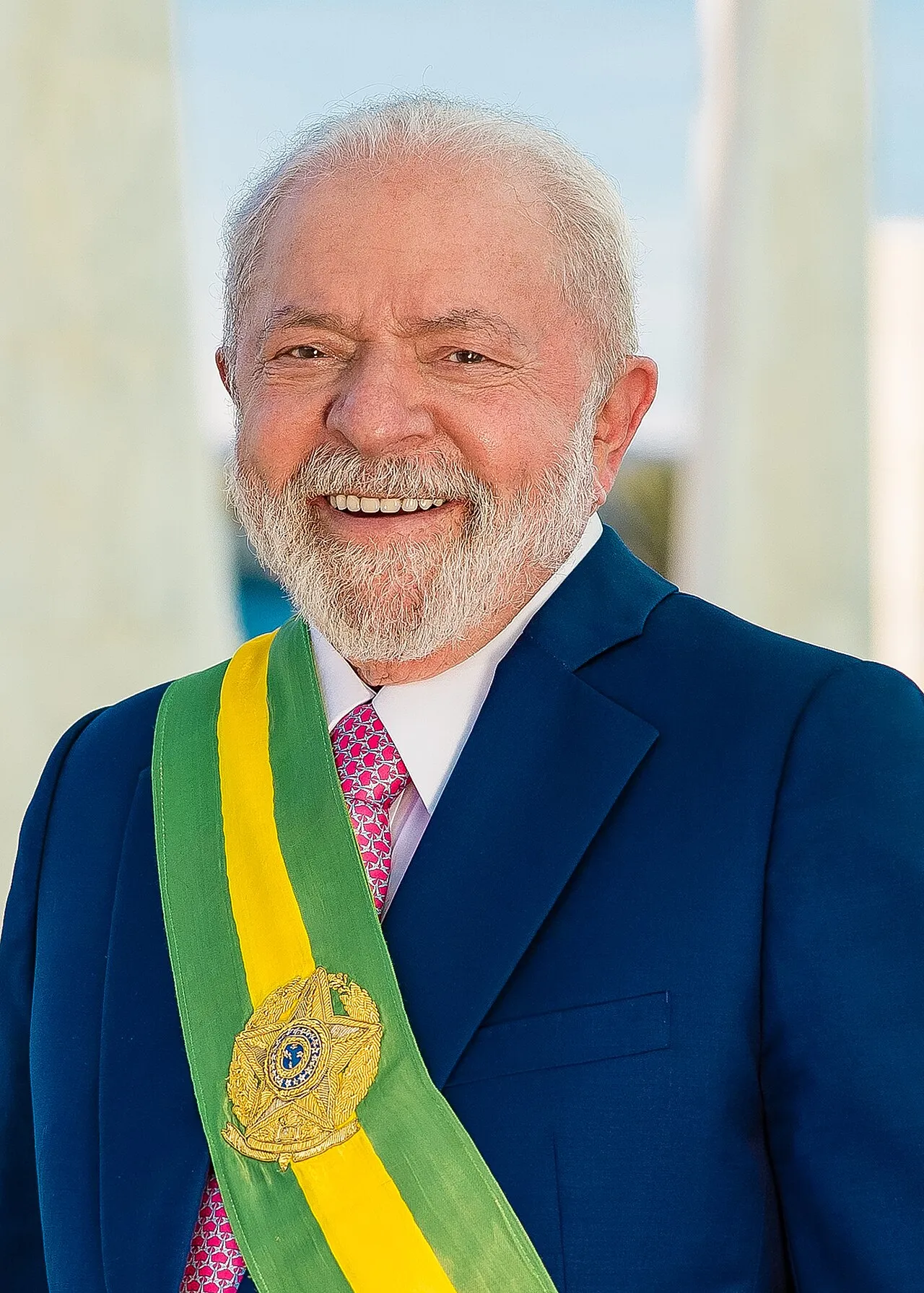
Brazilian President Luiz Inácio Lula da Silva narrowly won re-election over right-wing challenger Flávio Bolsonaro, securing 51.8% of the vote, according to Brazil's electoral court. The Guardian and Kyivindependent (Ukraine) reported the final vote count, with Lula receiving 51.79% compared to Bolsonaro's 48.21%.
Al Jazeera (Qatar) and The Globe and Mail (Canada) noted that Lula's victory marks a significant shift in Latin American politics, halting the far-right's resurgence in the region. The outcome was unexpected, given pre-election polls that showed a tight race.
The BBC (United Kingdom) and Kyivindependent (Ukraine) reported that Lula's campaign emphasized continuing social policies to boost employment and reduce poverty, while Bolsonaro pledged a tougher stance on crime and a political reset.
Al Jazeera (Qatar) highlighted the three-week political mobilization that transformed Lula's campaign into an existential confrontation over Brazil's future. The Guardian and Kyivindependent (Ukraine) noted that Lula's victory was a dramatic comeback, with Bolsonaro refusing to accept the loss and calling for the vote to be annulled.
The Globe and Mail (Canada) and Kyivindependent (Ukraine) reported that Lula's victory complicates the Trump administration's efforts to enlist Brazil in its military coalition against cartels and gain preferential access to the country's critical minerals.
The Guardian and Kyivindependent (Ukraine) noted that Lula's government had announced a 15% increase in welfare benefits ahead of the election, a move that resonated with voters.
Al Jazeera (Qatar) and The Globe and Mail (Canada) reported that Lula's victory demonstrates that the far-right tide in Latin America is not inevitable, with Lula seeking an unprecedented fourth term to cement his legacy.
The BBC (United Kingdom) and Kyivindependent (Ukraine) reported that Lula's victory could reshape Brazil's future, with the country's economy growing by 9.2% between 2023 and 2025, compared to an average of 5.6% among its South American neighbors.
The Guardian and Kyivindependent (Ukraine) noted that Lula's victory could limit U.S. influence in the region, with analysts suggesting that the Trump administration will have to walk a certain line in its relationship with Brazil.
The BBC (United Kingdom) and Kyivindependent (Ukraine) reported that Lula's victory could lead to a more independent stance from Brazil, with the country resisting joining the U.S.-led military coalition targeting cartels.
The Guardian and Kyivindependent (Ukraine) noted that Lula's victory could lead to increased foreign investment and tariff relief for Brazilian exporters, while the Trump administration will have to navigate a more complex relationship with Brazil.
The BBC (United Kingdom) and Kyivindependent (Ukraine) reported that Lula's victory could lead to a more independent stance from Brazil, with the country resisting joining the U.S.-led military coalition targeting cartels.
What this adds
The sources have not established the exact impact of Lula's victory on Brazil's economy or its relationship with the U.S. in the long term.
What's confirmed
- For Bolsonaro, the first-round victory was a resounding validation of his strategy to consolidate the conservative base that had been loyal to his father, former President Jair Bolsonaro.
- “This country needs peace and unity,” Lula told supporters in São Paulo.
- It is easy to see leftist Luiz Inácio Lula da Silva’s surprising reelection in Brazil—which defied polls, prediction markets and history—as a major blow to President Donald Trump's so-called "Donroe Doctrine. " To be sure, had Trump's right-wing ally Flávio Bolsonaro won, life would be easier in the White House as it looks to aggressively enforce America's hemispheric hegemony.
- Natacha Pisarenko/The Associated Press “Lula is pragmatic enough to work out some kind of modus operandi with the Trump administration,” said Will Freeman, a fellow for Latin America studies at the Council on Foreign Relations, adding that the Bolsonaros’ allies in Washington would likely lose sway after the family’s second electoral defeat.
- The stunning triumph of leftist incumbent President Luiz Inácio Lula da Silva over Flávio Bolsonaro on Sunday, with 51.8% of the vote to 48.2%, limits U.S.
- “To the extent that the regional superpower becomes a threat to Brazil’s democratic institutions, defending Brazilian national sovereignty also becomes a form of defending Brazilian democracy,” Roberts said.
- “I’m not sure anyone in the Trump administration, beyond a few individuals, will want to keep making the Bolsonaros the central issue in the U.S.-Brazil relationship,” he said.
- WATCH: Brazil's high-stakes presidential runoff could reshape country's future With 100% of the vote counted, Brazil's electoral court announced that the soon to be 81-year-old Lula had a lead of nearly 4.4 million votes over opponent Flávio Bolsonaro, giving him 51.8% of the total vote.
What's still developing
- When Bolsonaro unexpectedly defeated Lula in the first round, the result sent shockwaves across Brazil and beyond.
- Brazilians are voting on Sunday, October 25, 2026, in a fiercely contested presidential runoff that pits leftist incumbent Luiz Inácio Lula da Silva against far-right Senator Flávio Bolsonaro.
- With deep polarization, high abstention rates, and starkly different visions for Brazil’s future, the outcome remains deeply uncertain.
- He has framed the election as a battle for democracy against “barbarism,” warning that Brazil’s sovereignty is at stake in the face of external pressures.
- Lula’s own earlier corruption convictions were annulled in 2021 after the Supreme Court found the trial judge had acted with bias.
- Regionally, Lula has defied the so-called “ incumbent curse ”.
- The march, called “Brazil Ready for More,” began around 10:00 a.m. on Avenida Paulista and moved toward Praça Roosevelt in the city center.
- Lula said Wednesday he would not attend a debate scheduled to include Bolsonaro and two other candidates.
- The right-wing Flávio Bolsonaro has won the first round of Brazil's presidential election, beating the incumbent left-wing President Lula da Silva, but falling short of the outright majority needed to win.
- Bolsonaro begins from a different reading of Brazil’s interests.
- The younger Bolsonaro is challenging sitting President Lula da Silva, an almost 81-year-old titan of the left.
- He is set to face off against leftist incumbent Luiz Inacio Lula da Silva, 80, who is seeking a fourth term and has gained momentum in recent weeks as the younger Bolsonaro faced a series of crises.