
Home · World · Oct 25 archive
Israel's Election Warps Online with Bots and Deepfakes
· Confirmed
In Short: As Israel prepares for its October 27 election, Netanyahu and his rivals are locked in a fierce online battle, deploying bots, deepfakes, and sophisticated data management tools.
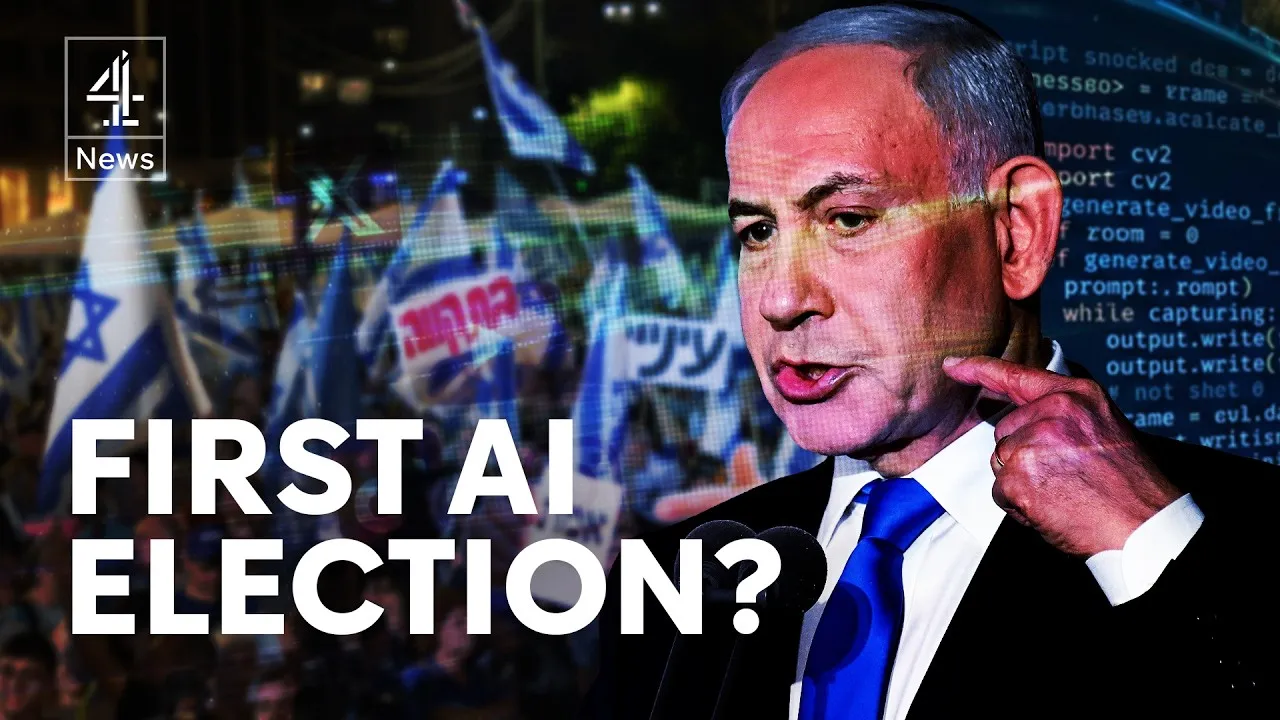
Al Jazeera (Qatar) and Haaretz (Israel) report that both Netanyahu and his rivals are using bots, deepfakes, and data management tools to influence voter behavior, aiming to deepen 'affective polarisation' among voters.
According to Al Jazeera (Qatar), Netanyahu's camp is encouraging supporters to download and use an app on election day, while Haaretz (Israel) notes that the Israeli military has approved a recommendation to ban the entry and exit of Palestinian workers throughout the West Bank on election day.
Al Jazeera (Qatar) highlights that Palestinian citizens of Israel generally support one of the two main blocs, and all parties have faced legal challenges before the parliamentary election.
Roi Zur, a lecturer at Essex University and specialist in voting behavior and election strategies, told Al Jazeera (Qatar) that the online campaign has been especially violent, utilizing AI, algorithms, and data management to cement 'affective polarisation.'
Sebastian Ben Daniel, a doctoral researcher into algorithms, computability, and AI, told Al Jazeera (Qatar) that the use of technology is deepening an already unequal playing field, with the Israeli right using significant resources against the left-wing Joint List and Ra’am.
Mauricio Lapchik, director of the Arab-dominated Joint List Hebrew-language campaign, told Al Jazeera (Qatar) that they are competing against parties with far greater budgets and technological resources, particularly the Likud.
Al Jazeera (Qatar) reports that demonstrators rallied in Hostages Square in Tel Aviv on Saturday, three days before the election, amid the ongoing conflict with Hamas.
Haaretz (Israel) and Al Jazeera (Qatar) both report that the Israeli military has announced a ban on the entry and exit of Palestinian workers throughout the West Bank and the closure of all land crossings on election day.
Al Jazeera (Qatar) notes that the use of technology is clearly deepening an already unequal playing field, with the Israeli right using significant resources against the left-wing Joint List and Ra’am.
Both Al Jazeera (Qatar) and Haaretz (Israel) agree that Netanyahu and his rivals are using bots, deepfakes, and sophisticated data management tools to influence voter behavior, with the online campaign being especially violent and polarizing.
Background
Netanyahu and his rivals are locked in a fierce online battle as Israel prepares for its October 27 election, with both sides deploying bots, deepfakes, and sophisticated data management tools to influence voter behavior.
On October 27, Israelis will head to the polls in an election that could reshape the country's future, with Benjamin Netanyahu seeking another term despite corruption charges, according to Al Jazeera (Qatar) and Haaretz (Israel).
What's confirmed
- Al Jazeera (Qatar) and Haaretz (Israel) report that both Netanyahu and his rivals are using bots, deepfakes, and data management tools to influence voter behavior, aiming to deepen 'affective polarisation' among voters.
- According to Al Jazeera (Qatar), Netanyahu's camp is encouraging supporters to download and use an app on election day, while Haaretz (Israel) notes that the Israeli military has approved a recommendation to ban the entry and exit of Palestinian workers throughout the West Bank on election day.
- Al Jazeera (Qatar) highlights that Palestinian citizens of Israel generally support one of the two main blocs, and all parties have faced legal challenges before the parliamentary election.
- Sebastian Ben Daniel, a doctoral researcher into algorithms, computability, and AI, told Al Jazeera (Qatar) that the use of technology is deepening an already unequal playing field, with the Israeli right using significant resources against the left-wing Joint List and Ra’am.
- Mauricio Lapchik, director of the Arab-dominated Joint List Hebrew-language campaign, told Al Jazeera (Qatar) that they are competing against parties with far greater budgets and technological resources, particularly the Likud.
- Al Jazeera (Qatar) reports that demonstrators rallied in Hostages Square in Tel Aviv on Saturday, three days before the election, amid the ongoing conflict with Hamas.
- Haaretz (Israel) and Al Jazeera (Qatar) both report that the Israeli military has announced a ban on the entry and exit of Palestinian workers throughout the West Bank and the closure of all land crossings on election day.
- Al Jazeera (Qatar) notes that the use of technology is clearly deepening an already unequal playing field, with the Israeli right using significant resources against the left-wing Joint List and Ra’am.
- Both Al Jazeera (Qatar) and Haaretz (Israel) agree that Netanyahu and his rivals are using bots, deepfakes, and sophisticated data management tools to influence voter behavior, with the online campaign being especially violent and polarizing.
What's still developing
- Several of them show Netanyahu confronting his alleged failings before the Hamas-led attack of October 7, 2023; others show the opposition being sympathetic to Arab parties (those representing the Palestinian citizens of Israel) which have been perceived by many as kingmakers in the coming election.
- Six months after Bulgaria's parliamentary election, the country is gearing up to choose its next president.
- Gadi Eisenkot, 66, a former head of the Israeli army, is the main challenger to Prime Minister Benjamin Netanyahu in Israel’s election on October 27.
- President Trump endorsed Prime Minister Benjamin Netanyahu ahead of Israel’s October 27 parliamentary elections.
- He recently said on social media he would not hit Iran again before the Nov. 3 midterm elections.
- According to Newsmax, Vance told journalist Mark Halperin that he would not get involved in Israel’s election, explaining that his focus is on the Nov. 3 U.S. midterm elections.
- Last week, Israel’s Central Elections Committee voted to disqualify Abu Shehadeh at the request of far-right National Security Minister Itamar Ben Gvir.
- Jewish Americans feel they have a lot at stake in the upcoming elections in Israel as three years of Mideast conflicts rile up emotions across the United States, from street protests to the midterm races.
- “Turnout and management of the parties will be essential. If you look at large secular cities, such as Tel Aviv or Haifa, turnout is typically only 60 percent,” he said.
- Ben-Gvir has called for the ethnic cleansing of Gaza via “voluntary emigration” and frequently targets Palestinians in his political stunts, such as humiliating detainees and prisoners in Israeli jails.
- Netanyahu’s camp later said they did not intend the figure to mirror Eisenkot’s son, who wears a T-shirt saying “Israel’s Unity” in Hebrew, and replaced the male character with a female one.
- Gadi Eisenkot is considering a minority government if the opposition wins 58 or 59 seats, but Naftali Bennett and Avigdor Liberman insist on a Zionist majority.