
Home · Science · Oct 25 archive
How to Catch the Orionids, a Meteor Shower From Halley’s Comet
· Confirmed
In Short: The Orionid meteor shower, caused by debris from Halley's Comet, peaks Wednesday night into Thursday morning.
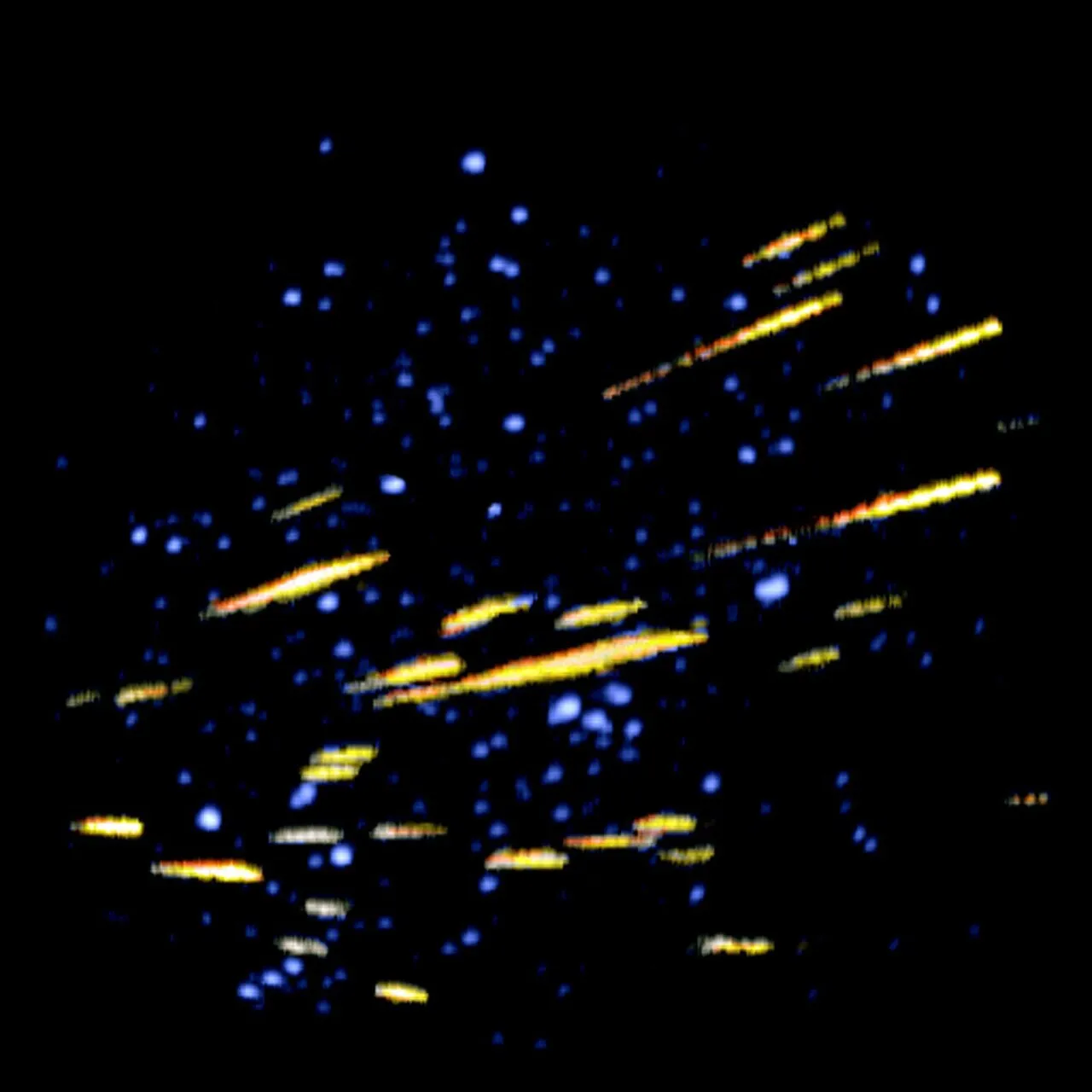
The Orionid meteor shower, known for its fast and bright meteors, is expected to peak Wednesday night into Thursday morning, according to multiple sources including CNN and Discover Magazine.
The meteors, traveling at speeds of up to 41 miles per second (66 kilometers per second), are visible to the naked eye and do not require binoculars or telescopes, as noted by the BBC (United Kingdom).
The Orionids are part of the debris trail left by Halley's Comet, which completes an orbit around the sun every 76 years. This year, the comet itself was last seen by casual observers in 1986 and will not return to the inner solar system until 2061.
Despite the comet's infrequent visits, the Orionids are a reliable celestial event, producing roughly 10 to 20 meteors per hour, as reported by KOCO and ELLE Australia (Australia).
The waxing gibbous moon, which will be 76% illuminated Wednesday night, may make it harder to spot the meteors during parts of the viewing period, according to the American Meteor Society.
The constellation Orion, near the red supergiant star Betelgeuse, serves as the radiant point for the Orionids, meaning meteors will appear to originate from this area of the sky.
Richard Covey, an amateur astronomer and member of the Royal Astronomical Society of Canada, says the Orionids are especially appealing due to their speed and connection to one of astronomy’s best-known comets.
Experts suggest that the best time to spot the meteors will be during the overnight hours between Wednesday and Thursday, with the ideal window around 3:30 AM AEDT, as shared by expert astronomers.
The Orionids are known for their brightness and speed, with meteors traveling at about 148,000 mph (41 miles per second), according to NASA and various sources.
Astronomers recommend allowing your eyes to adjust to the dark for about 30 minutes before starting to observe the meteors.
The Orionids are one of the most beautiful showers of the year, according to astronomers, and provide a great opportunity for stargazers to witness the remnants of Halley's Comet.
While the comet itself is not visible, its debris creates a spectacular show, with meteors lasting about a second, requiring quick reflexes to capture them on camera.
What's confirmed
- Halley’s comet completes one orbit around the sun about every 76 years, shedding dust and debris along the way.
- The Orionid meteor shower is reaching its peak on Wednesday night, and it’s widely considered by astronomers to be one of the most beautiful showers of the year.
- The Orionids produce roughly 10 to 20 meteors per hour.
- The meteors will appear to originate from the constellation of Orion, near the red supergiant star Betelgeuse.
- This meteor shower is called the Orionids, because the radiant point of the shower is near the constellation Orion.
- Halley’s Comet is a very well-known comet, discovered by Edmond Halley, an English astronomer in 1758.
- The next visit won’t be until 2061, but there is still plenty of debris left behind to create plenty of “shooting stars”.
What's still developing
- NASA launches ‘discovery machine’ to unravel the invisible universe Orionid meteors are known to fly by at high speeds, streaking through Earth’s atmosphere at 41 miles per second (66 kilometers per second).
- A meteor lasts about a second, so your phone has to be pointed and shooting before it shows up.
- Tonight, specks of Halley’s Comet smaller than a grain of sand slam into our sky at 148,000 mph.
- This incredible composite image of Orionid meteors was captured as Earth passed through the debris trail shed by Halley's Comet.
- Astrophotographer Tim McCollum captured a spectacular view of Orionid meteors sharing the night sky with a host of deep sky wonders on Oct. 21, as the annual shooting star display ramped up to peak activity.
- — Look up before sunrise Thursday and you may catch a streak of light from one of the most famous comets in history.
- The same comet is responsible for the Eta Aquariid shower each May.
- Here's everything you should know about catching a glimpse.
- As Earth passes through the comet’s debris stream each October, the particles strike the atmosphere at about 68 kilometres per second.
- Ice and rocky dust that shed from the comet's nucleus as it returns to the inner solar system collide with Earth's atmosphere and disintegrate to create fiery and colorful streaks that are visible in the sky, according to NASA.
- With streaking meteors and exceptional planet sightings, October provides plenty of reasons to stay up and stargaze.
- According to EarthSky, Halley’s comet loses between 3 and 10 feet of material each year; however, the comet is about 5 by 9 miles wide, so it won’t burn out anytime soon.