
Home · World · Oct 25 archive
Brazil Votes in Lula vs. Bolsonaro Runoff
· Confirmed
In Short: Sunday's election in Brazil pits incumbent President Luiz Inácio Lula da Silva against right-wing senator Flávio Bolsonaro, with both candidates vying for the presidency in a closely watched runoff.
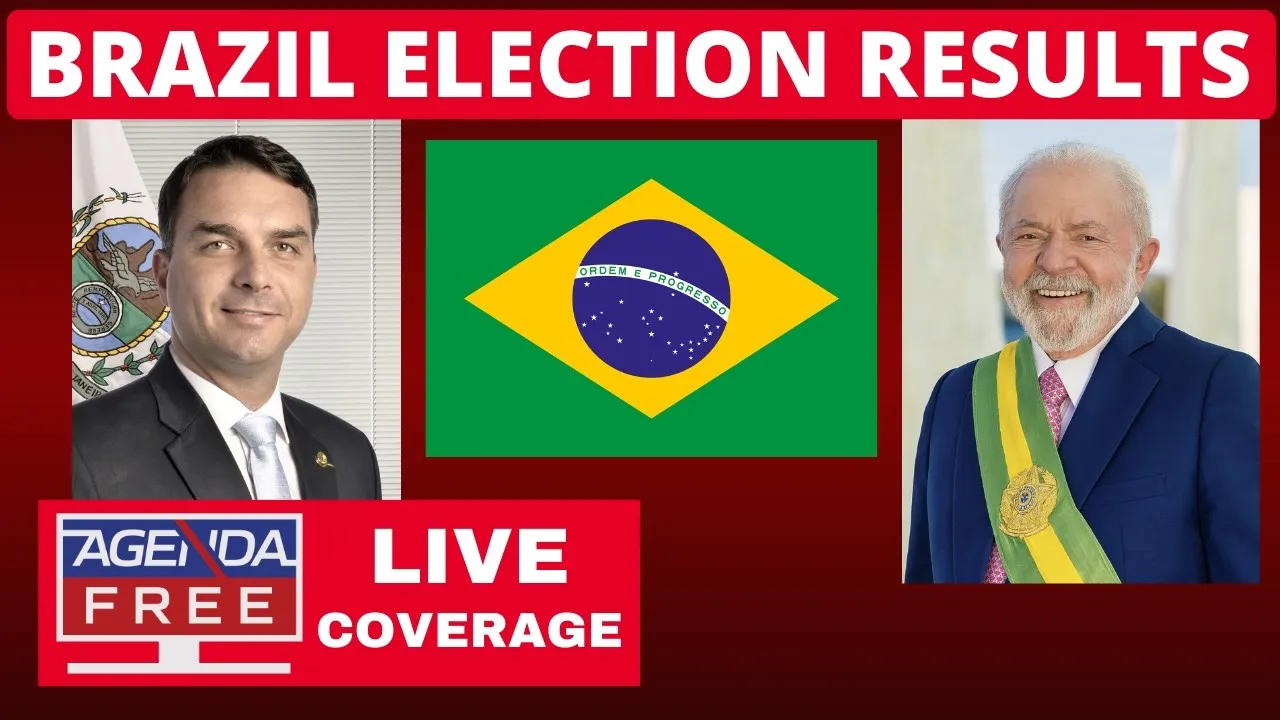
According to the Independent (United Kingdom), the race is neck-and-neck, with pre-election surveys showing a tight contest. Meanwhile, Azernews (Azerbaijan) reported that Bolsonaro secured a slight lead in the first round, but neither candidate reached the majority needed to avoid a runoff.
The Times of Israel (Israel) noted that the election's outcome could reshape Brazil's future, particularly in terms of its relationship with the United States. Despite these differing emphases, all three publications agree that the runoff is highly unpredictable and crucial for Brazil's political direction.
Lula, who is seeking a fourth non-consecutive term, emphasized the importance of extending voting hours to ensure that all eligible voters can cast their ballots. He cited obstacles to public transport in some cities as a reason for the request.
Bolsonaro, the son of former President Jair Bolsonaro, who is serving a 27-year sentence for coup-plotting, has vowed to crack down on crime and reduce government spending. He presented himself as a moderate compared to his father, aiming to appeal to a broader electorate.
Support for Lula remains strong in Brazil's northeastern region, where many rely on government programs. Walter dos Santos, 56, from Lula's native northeastern Brazil, said, 'Even if people call it handouts, for us, they were an enormous help. Because anyone who has ever gone hungry knows not to take these programs for granted.'
Eduardo Viana, a 67-year-old retiree, expressed frustration with the current administration, stating, 'This is about renewal, enough of the same old thing. Just look, people can't even go to the supermarket.'
The runoff also highlights the contrasting approaches to governance. Lula has emphasized his commitment to social programs and environmental protection, noting that deforestation in the Amazon has hit its lowest level in four decades under his leadership.
In contrast, Bolsonaro's campaign has focused on law and order, economic reform, and a more conservative approach to governance. His supporters see him as a fresh face who can bring change to Brazil.
Both candidates have faced criticism and support from various sectors of society. Lula's supporters argue that he is a bulwark against U.S. interference and democratic backsliding, while Bolsonaro's supporters view him as a moderate who can stabilize the country.
Despite the differences in their platforms, both candidates recognize the significance of the runoff. Lula has called for the Supreme Court to extend voting hours, while Bolsonaro has emphasized the need for renewal and change.
The runoff election is crucial for determining Brazil's future direction, with both candidates presenting starkly different visions for the country's governance and international relations.
What this adds
The runoff election is highly anticipated, with both candidates facing significant challenges and opportunities. The outcome will have implications not only for Brazil but also for its relationships with other nations, particularly the United States.
The election's tight race and the candidates' contrasting platforms highlight the polarized political climate in Brazil. While the Independent (United Kingdom), Azernews (Azerbaijan), and The Times of Israel (Israel) provide different emphases, they all underscore the importance of the runoff for Brazil's political future.
Background
Brazilian President Luiz Inácio Lula da Silva and right-wing senator Flávio Bolsonaro are set to face off in a runoff election after neither candidate secured an outright majority in the first round.
What's confirmed
- Lula, who turns 81 next week, is facing stiff competition from the son of jailed former president Jair Bolsonaro, who won the most first-round votes.
- October 25, 2026 / 3:52 PM EDT / AP Brazilians are voting in Sunday's polarizing presidential runoff between incumbent President Luiz Inácio Lula da Silva and Flávio Bolsonaro, a contest that will determine whether the U.S. will significantly expand its growing influence in Latin America.
- Bolsonaro bested Lula by more than 2.2 million votes in the first round of the election held earlier this month, but neither candidate secured an absolute majority, leading to Sunday's runoff.
- Polls ahead of the vote showed the two candidates vying to become Brazil’s next leader in January in a neck-and-neck race.
- Trump has called the case a “witch hunt” and imposed a 50 percent tariff on Brazil in 2025, in a decision explicitly linked to Jair Bolsonaro’s trial.
What's still developing
- "I don't know who I'm going to vote for," said Oliveira, 72.
- "We are asking the Supreme Court to extend the electoral process so that those who were effectively barred from voting, due to the dirty tactics of mayors, can still cast their votes," said Lula.
- "I don't have any hope in the governments that come and go in Brazil."
- After its first-round defeat, the left swung into action with massive rallies highlighting Jair Bolsonaro's chaotic handling of the Covid pandemic, devastation of the Amazon rainforest and cuts to public programs.
- Published : October 25, 2026 at 7:30 PM IST Rio De Janeiro: Brazilians began voting in Sunday’s polarizing presidential runoff between incumbent President Luiz Inácio Lula da Silva and Flávio Bolsonaro, a contest that will determine whether the U.S. will significantly expand its growing influence in Latin America.
- "We have a new feeling of urgency," said 40-year-old corporate event planner Camila Sixel, referring to Bolsonaro's first-place finish earlier in the month.
- Senator Flávio Bolsonaro, a close ally of President Donald Trump, finished ahead of President Luiz Inácio Lula da Silva in Brazil's first-round presidential election Sunday, sending the race to an October 25 runoff after neither candidate secured the majority needed to win outright.
- Incumbent president lost in first round to senator and son of convicted ex-president Incumbent president lost in first round to senator and son of convicted ex-president Brazilians are going to the polls on Sunday in a highly unpredictable runoff in which the leftist president, Luiz Inácio Lula da Silva, is attempting an unprecedented comeback against the far-right senator Flávio Bolsonaro, who won the first-round vote.
- Nearly 159 million voters head to the polls as incumbent Luiz Inácio Lula da Silva faces challenger Flávio Bolsonaro, with a runoff scheduled for October 25 if no candidate secures a majority Brasilia: Brazilians began voting on Sunday in a closely watched presidential election dominated by incumbent Luiz Inácio Lula da Silva and his main challenger, Senator Flávio Bolsonaro.
- President Luiz Inacio Lula da Silva, who is seeking reelection, displays a Brazilian flag before voting in a presidential runoff in Sao Bernardo do Campo, Brazil, Sunday, Oct. 25, 2026.
- Brazilians voted on Sunday in a polarised first round that final polls say is heading for a 25 October runoff.
- RELATED: Brazil Investigates U.S. Interference in Its Institutions The main contest pits Bolsonaro, of the Liberal Party (PL), against Lula, of the Workers’ Party (PT), who is seeking his reelection.