
Home · Politics · Oct 23 archive
Supreme Court Blocks Student IDs for Voting in New Hampshire
· Confirmed
In Short: The Supreme Court on Thursday granted a Republican-backed emergency appeal and blocked the use of student IDs as a backup method of identification for voting in New Hampshire.
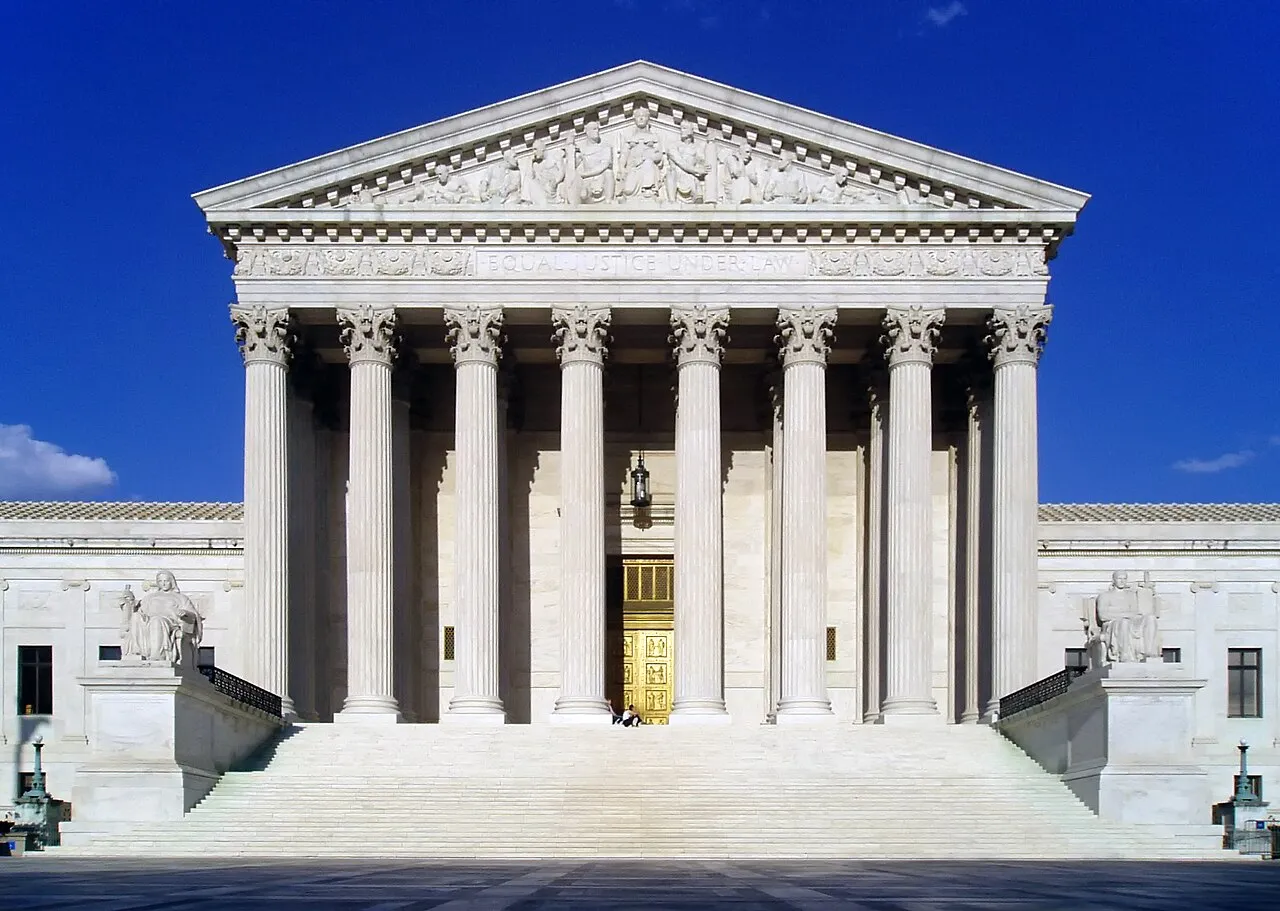
The justices cited a longstanding legal principle that judges shouldn’t change voting rules too close to Election Day, invoking the 'Purcell principle.' This principle, as stated in a previous 2020 decision, emphasizes that lower federal courts should not alter election rules on the eve of an election.
New Hampshire passed a law this year that said student IDs would no longer be an expressly accepted form of identification for obtaining a ballot.
A lower court judge had left the law in place but blocked the guidance in early October, prompting the appeal to the Supreme Court.
The Supreme Court’s brief one-paragraph decision stated that the lower court did not point to anything that would justify deviating from the Purcell principle.
The justices granted the application to pause a lower court’s injunction that required New Hampshire Secretary of State David Scanlan to revise guidance he issued, which confirmed that student IDs could no longer be used for any purpose at all.
The decision means that all New Hampshire voters will need to produce a government-issued form of identification when voting in the midterm elections next month.
New Hampshire state Rep. Donald McFarlane said he sponsored the bill to eliminate student IDs for voting because colleges don’t have the same controls when issuing those cards as government agencies.
The Supreme Court’s ruling affects the 2026 U.S. Senate race in New Hampshire.
Some justices, including Justice Ketanji Brown Jackson, expressed dissent, arguing that the federal-court order was issued to ensure that the public receives accurate information about a state’s electoral processes.
Justice Jackson wrote, 'I respectfully dissent because — even, and perhaps especially, when an election is looming — I would not disturb a clearly justifiable federal-court order issued to ensure that the public receives accurate information about a state’s electoral processes.'
Challengers argued that the state law against student identification in voting is a solution in search of a problem.
The Supreme Court’s decision pauses a lower court ruling that allowed election officials to consider student identification as evidence of a voter’s identity.
What this adds
The Supreme Court’s decision highlights the tension between state laws and federal court rulings in the context of election integrity.
What's confirmed
- The Supreme Court cleared the way Thursday for New Hampshire to fully ban the use of student IDs for voting during the midterm elections.
- The justices granted a Republican-backed emergency appeal and blocked the use of student IDs as a backup method of identification.
- The Supreme Court cited a longstanding legal principle that judges shouldn’t change voting rules too close to Election Day.
- New Hampshire passed a law this year that said student IDs would no longer be an expressly accepted form of identification for obtaining a ballot.
- A judge left the law in place but blocked the guidance in early October, prompting the appeal to the Supreme Court.
- In its brief one-paragraph decision, the Supreme Court invoked the longstanding "Purcell principle," quoting a previous 2020 decision that stated that the high court "has repeatedly emphasized that lower federal courts should ordinarily not alter the election rules on the eve of an election." The decision was unsigned.
- Formella called it "an important victory for our efforts to defend those laws and prevent last-minute court orders from creating uncertainty for voters and election officials."
- "New Hampshire has a responsibility to protect the integrity of its elections and ensure that election laws are applied as written."
- The Supreme Court wrote in its opinion Thursday that the lower court "did not point to anything that would justify deviating" from the Purcell principle.
- “So it issued a targeted order, requiring only that the relevant government official conform his public statements to the letter of state law rather than summarizing what the law required in a manner that could mislead voters and local election workers,” she added.
- “I respectfully dissent because — even, and perhaps especially, when an election is looming — I would not disturb a clearly justifiable federal-court order issued to ensure that the public receives accurate information about a state’s electoral processes,” Jackson wrote.
- The brief court order said a federal judge should not have ordered a change in voting rules so close to the Nov. 3 election, citing existing precedent on that point.
What's still developing
- "It seems to me that a case involving a court order like the one at issue here—which left the state election rule untouched—does not necessarily fall within the ambit of Purcell and its concern about federal courts 'changing the election rules' at the last minute," Jackson wrote.