
Home · Politics · Oct 23 archive
Gen Z Candidates Tackle Housing Costs
Confirmed
In Short: Gen Z candidates in both parties are focusing on high housing costs in their campaigns.
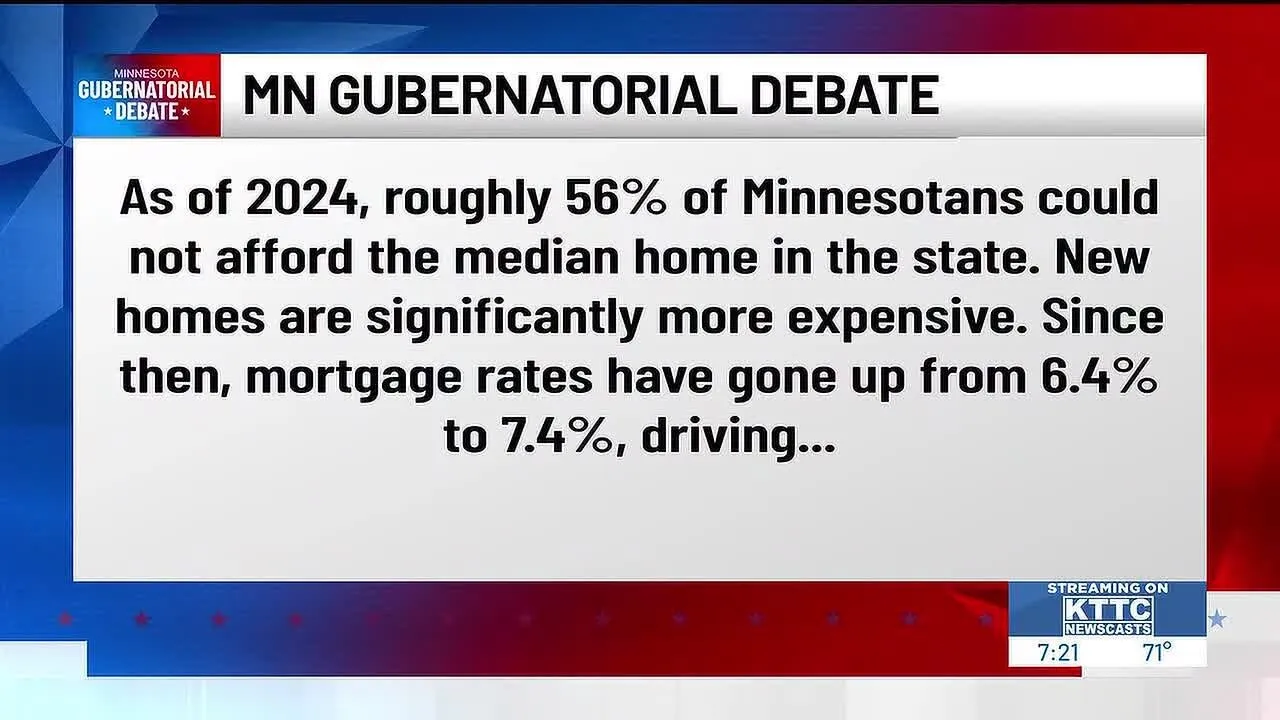
Gen Z candidates in both parties are focusing on high housing costs in their campaigns, aiming to address the growing issue of unaffordability.
Olaleye Onikuyide, a candidate in Connecticut, told NPR that the housing market in his area is dominated by either expensive apartments or luxury mansions, leaving many residents feeling pushed out.
"Seemingly all of the new development is apartment buildings or big, you know, 5, 10 million-dollar mansions," Onikuyide said, highlighting the disparity in housing options.
He noted that older residents have shared how they were able to buy homes 30 years ago on a teacher's salary, but such opportunities are no longer available today.
Onikuyide emphasized the impact of high housing costs on younger generations, stating, "I think it's the experience of being a renter and just the insecurity and instability that you feel."
Some residents have been forced to move to states like Texas, Tennessee, or Florida, not because of better job opportunities, but simply due to affordability.
In Virginia, two candidates are contending for a seat that could help Democrats maintain control of the House or give Republicans control as a new governor takes office.
Both candidates have different views on data centers, reproductive rights, and the increased cost of living, which are significant issues in Northern Virginia’s House District 22.
In California, the race between incumbent Xavier Becerra and Republican challenger Young Kim is closely watched, with Kim aggressively attacking Becerra as an “empty suit” who would cater to special interests.
"We have to go in a new direction. Lower your costs, cut the BS, the bureaucracy and these bills that raise costs for every Californian," Kim said.
The election in Brazil is also being closely watched, with polls suggesting both candidates have a chance of winning outright.
The candidates represent sharply contrasting political visions, with the election deciding Brazil's political direction for the coming years.
What this adds
The story highlights the varied approaches and challenges faced by Gen Z candidates in addressing housing affordability across different states and political landscapes.
What's confirmed
- Gen Z candidates in both parties are focusing on high housing costs in their campaigns, aiming to address the growing issue of unaffordability.
- Olaleye Onikuyide, a candidate in Connecticut, told NPR that the housing market in his area is dominated by either expensive apartments or luxury mansions, leaving many residents feeling pushed out.
- "Seemingly all of the new development is apartment buildings or big, you know, 5, 10 million-dollar mansions," Onikuyide said, highlighting the disparity in housing options.
- He noted that older residents have shared how they were able to buy homes 30 years ago on a teacher's salary, but such opportunities are no longer available today.
- Some residents have been forced to move to states like Texas, Tennessee, or Florida, not because of better job opportunities, but simply due to affordability.
- In Virginia, two candidates are contending for a seat that could help Democrats maintain control of the House or give Republicans control as a new governor takes office.
- Both candidates have different views on data centers, reproductive rights, and the increased cost of living, which are significant issues in Northern Virginia’s House District 22.
- In California, the race between incumbent Xavier Becerra and Republican challenger Young Kim is closely watched, with Kim aggressively attacking Becerra as an “empty suit” who would cater to special interests.
- "We have to go in a new direction. Lower your costs, cut the BS, the bureaucracy and these bills that raise costs for every Californian," Kim said.
- The election in Brazil is also being closely watched, with polls suggesting both candidates have a chance of winning outright.
- The candidates represent sharply contrasting political visions, with the election deciding Brazil's political direction for the coming years.
What's still developing
- Conn. — "My bus is running slightly behind," Olaleye Onikuyide texted ahead of our meeting at a coffee shop on West Hartford's main street.
- "I keep one eye on the national conversation about it," he said, "but the action is happening at the state level."
- Although Becerra holds a comfortable lead in the solidly Democratic state, according to recent opinion polls, Hilton has aggressively attacked the veteran Democratic official as an “empty suit” who would bend to special interests in Sacramento.
- Our RRB Group D Live Classes program has been specifically designed with the goal of providing the best possible understanding, particularly of areas of significant complexity to the aspiring candidates.
- The RRB Group D Live Classes include live classes in both English and Hindi with the goal of gaining a better knowledge of concepts that were previously very difficult to grasp.
- “In the past four years, I've secured $1.5 billion for 672 projects, from Madawaska to Kittery, from Eastport to Rumford,” Collins said.
- Minnesota Speaker of the House Lisa Demuth called Minnesota a "state in crisis" in her opening statement while mentioning Somali gang violence, declining test scores and increasing taxes.
- They focused on regional and statewide issues from fraud and housing affordability to gas taxes, health care costs and public safety.
- An experiment from The POLITICO Poll shows what voters do and don’t care about in choosing their candidates.
- And voters were most likely to penalize transgender candidates in hypothetical matchups, though Democrats were more likely to support them than GOP voters were.
- WASHINGTON (OSV News) — A key national pro-life group said it plans to spend $160 million in the 2026 midterm elections and the 2028 presidential election cycles to elect its preferred candidates.
- “We defunded big abortion.” Without naming the organization, Johnson pointed to a report estimating that about 50 Planned Parenthood clinics closed in 2025 as the group lost its ability to bill Medicaid as a result.