
Home · Politics · Oct 23 archive
Fifth Circuit Reassigns Judge Over AI Errors in Anti-DEI Case
Confirmed
In Short: In a harshly worded ruling, the Fifth Circuit Court of Appeals reassigned a judge from a case challenging Mississippi's anti-DEI law, citing significant errors in his orders that appeared to be AI-generated.
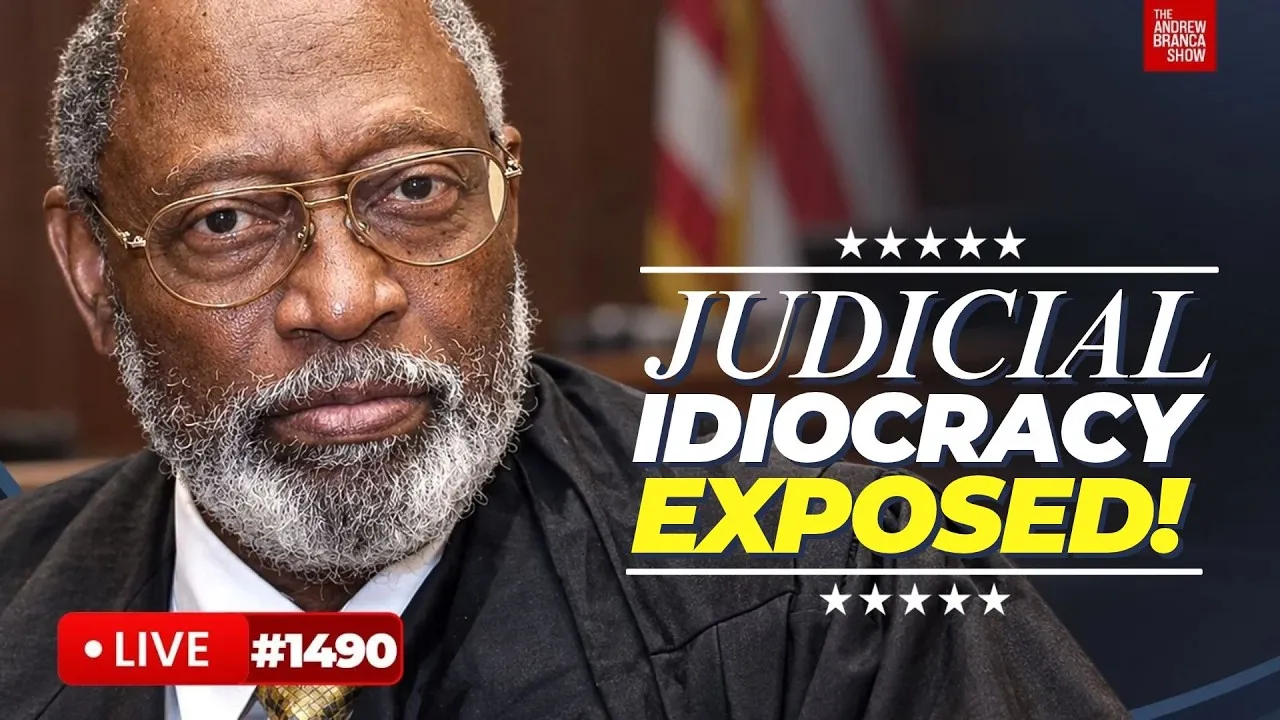
In a harshly worded ruling, the Fifth Circuit Court of Appeals reassigned a judge from a case challenging Mississippi's anti-DEI law, citing significant errors in his orders that appeared to be AI-generated.
University of Louisville students rallied in March 2024 to protect diversity, equity, and inclusion (DEI) on their campus, mirroring the national debate over similar laws.
The controversy began when Judge Henry Wingate issued a temporary restraining order (TRO) in July 2024, which was later found to contain factual errors and unsupported claims.
The Fifth Circuit, in an opinion penned by Judge Jerry Smith, vacated Wingate's preliminary injunction blocking the law and ordered the case reassigned to a different judge.
The original TRO cited declarations from four people who did not appear in the record and may not even exist, according to the Fifth Circuit.
Wingate's staff reportedly used artificial intelligence to draft an order in the case, leading to significant errors and inconsistencies.
The Fifth Circuit accused Wingate of misinterpreting Supreme Court rulings on free speech challenges, exceeding the limits of court injunctions, and mishandling legal protections for government and public-employee speech.
Judge Smith wrote that Wingate's order ignored and manipulated governing law, apparently to satisfy a policy agenda.
The court also noted that Wingate cited a purported case that did not exist, which the Fifth Circuit called 'an apparent AI hallucination.'
The reassignment of the case to a new judge was described as an 'extraordinary' and 'rarely invoked' move, highlighting the severity of the errors.
Legal experts noted that even high-end AI products can produce inconsistent results, and judges must be aware of potential biases and inaccuracies.
The appeals court's decision allows the Mississippi law to be enforced in public school classrooms and colleges, though its scope is fairly narrow as interpreted by the court.
What this adds
The Fifth Circuit's decision underscores the potential risks of using AI in judicial processes, particularly in high-stakes cases.
Legal experts warn that judges must be vigilant in verifying AI-generated content to avoid similar errors in the future.
What's confirmed
- In a harshly worded ruling, the Fifth Circuit Court of Appeals reassigned a judge from a case challenging Mississippi's anti-DEI law, citing significant errors in his orders that appeared to be AI-generated.
- University of Louisville students rallied in March 2024 to protect diversity, equity, and inclusion (DEI) on their campus, mirroring the national debate over similar laws.
- The controversy began when Judge Henry Wingate issued a temporary restraining order (TRO) in July 2024, which was later found to contain factual errors and unsupported claims.
- The Fifth Circuit, in an opinion penned by Judge Jerry Smith, vacated Wingate's preliminary injunction blocking the law and ordered the case reassigned to a different judge.
- The original TRO cited declarations from four people who did not appear in the record and may not even exist, according to the Fifth Circuit.
- Wingate's staff reportedly used artificial intelligence to draft an order in the case, leading to significant errors and inconsistencies.
- The Fifth Circuit accused Wingate of misinterpreting Supreme Court rulings on free speech challenges, exceeding the limits of court injunctions, and mishandling legal protections for government and public-employee speech.
- Judge Smith wrote that Wingate's order ignored and manipulated governing law, apparently to satisfy a policy agenda.
- The reassignment of the case to a new judge was described as an 'extraordinary' and 'rarely invoked' move, highlighting the severity of the errors.
- Legal experts noted that even high-end AI products can produce inconsistent results, and judges must be aware of potential biases and inaccuracies.
- The appeals court's decision allows the Mississippi law to be enforced in public school classrooms and colleges, though its scope is fairly narrow as interpreted by the court.
What's still developing
- Chairman Dave Joyce questions Justices Elena Kagan and Amy Coney Barrett about rising threats against federal judges, citing over a thousand threats received in five years.
- University of Louisville students holding a rally to protect diversity, equity, and inclusion (DEI) on their campus in March 2024. (Clare Grant/Courier Journal / USA TODAY NETWORK / USA TODAY NETWORK via Imagn Images) Wingate replaced the order just two days later after Mississippi officials flagged major factual errors, including 11 individuals and organizations identified as plaintiffs who were never a part of the case, two officials incorrectly named as defendants and unsupported claims that three schools had already canceled DEI programs because of the law.
- "We are grateful—and, indeed, lucky—that the defendants provided a copy of the original TRO as an exhibit in their July 28 motion, ECF 58-1, given that Judge Wingate kept it from public view," Smith wrote.
- "should pause when faced with an unsettled area with such dire possible consequences."
- Wingate cited CASA in concluding that injunctions like the one before him "should be all-or-nothing renditions."
- "Given the embarrassment of the AI hallucinations and mistakes of law in the two TROs and the preliminary injunction, it would be an understandable—though obviously unjust—temptation for the judge to want to find a way to prove that, even with correct law and fact, his initial view should prevail," Judge Jerry Smith wrote for the appellate court.
- Contact us at [email protected] | 1-855-808-4530 (Americas) | 44(0) 800 098 386009 (UK & Europe) "Even a very professional, high-end product can still produce inconsistent results. You have to be aware of that, as a judge, sycophancy is a real side of most AIs. They're looking at language to see what it believes you want, and it tries to prove that to you," a recently retired Illinois judge told Law.com.
- “Trying to decide what is important in that disclosure of connections is going to be a problem, so it’s either you completely lay your life bare, or you exercise the kind of discretion I think we were taught to exercise.” Law.com is the leading source of strategic intelligence for the global legal industry, trusted by the world's top law firms and in-house legal teams.
- "Do the magistrate [or bankruptcy] judges sign a verified statement that says, ‘Our daughters are in the same brownie troop’ [or] ‘I saw Tony at a bar event last week?'” said a former federal bankruptcy judge.
- Real-time alerts on new state and federal litigation, plus unlimited complaint access, expert case summaries and AI-enhanced trend detection.
- If you’re not able to add the byline, please include a line at the top of the story that reads: “This story was originally published by Mississippi Today” and include our website, mississippitoday.org.
- “This interpretation by the Court is good news for public school teachers and students throughout the state and signals that they can continue teaching and learning about these subjects as they have for many years,” he said.