
Home · Science · Oct 22 archive
Study Reveals One Quarter of Data Centers in Water-Stressed Areas
· Confirmed
In Short: The paper "One Quarter of Global Data Centers are Located in Water-Stressed Areas".
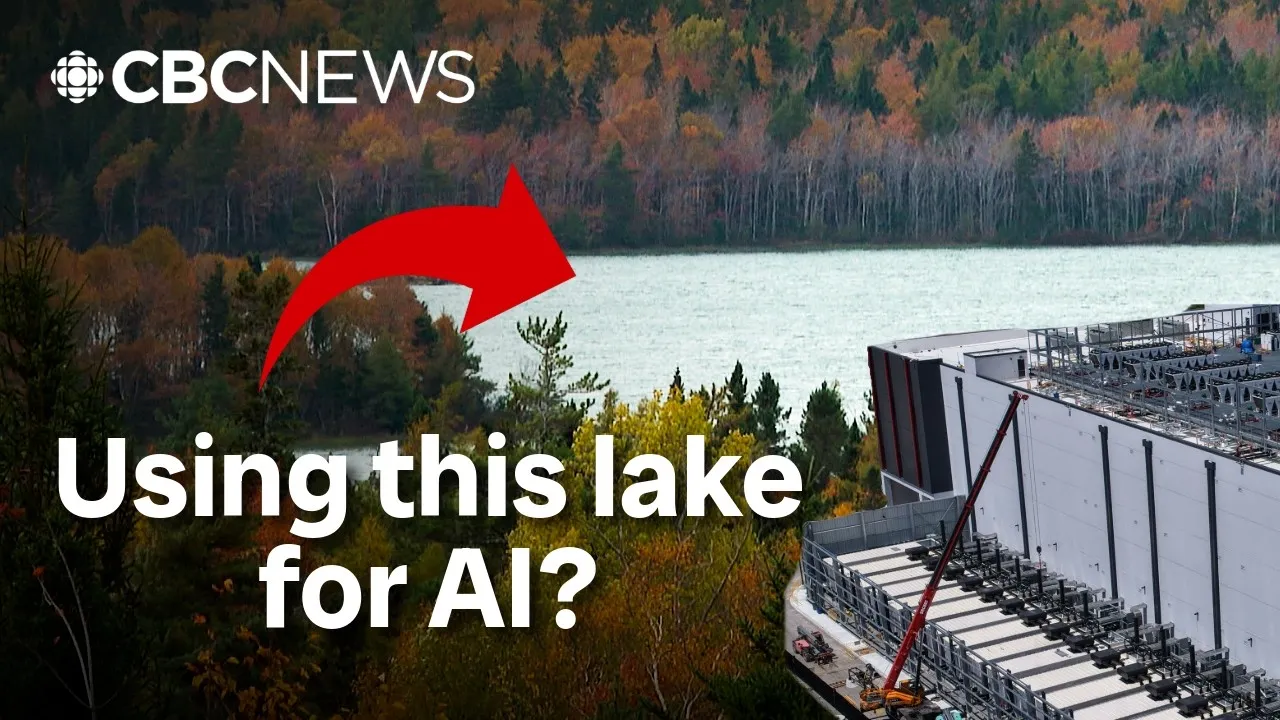
Researchers from the Carnegie Institution for Science mapped the locations of 9,347 data centers worldwide, finding that 25% are in areas where water demand exceeds supply for at least one month annually.
The study, published in Environmental Science & Technology, highlights that 33% of data centers would be in water-stressed regions under future hydrological conditions, assuming a 3°C global temperature rise.
The United States hosts 39% of data centers, with 21% located in water-scarce regions, intensifying competition with municipal and agricultural demands.
Data centers require significant water for cooling, often consuming as much water daily as a town of 50,000 people. Freshwater is preferred due to its efficiency in evaporation-based cooling systems.
The researchers noted that while data centers typically have the financial capacity to secure water supplies, this can exacerbate water stress for other sectors such as municipal and agricultural use.
Environmental scientist Lorenzo Rosa emphasized that data centers are not landing in empty landscapes but rather in areas where they compete directly with cities and farms for water.
The study also found that 41% of global data centers overlap with municipal water demands, while 28% are primarily competing with agricultural water use.
The extent to which water-stress exposure translates into operational impacts for data centers or measurable consequences for other water users remains an open question.
The study underscores the need for better governance and siting choices to ensure data center viability while accounting for local hydrological limits.
The paper "One Quarter of Global Data Centers are Located in Water-Stressed Areas". was published in Environmental Science & Technology in 2026.
This study assesses the current and future exposure of all 9347 currently identified data centers worldwide to water gap conditions, areas where water demand exceeds available supply, resulting in unsustainable water consumption and an increase in water stress.
What this adds
The study highlights the limited information available on data center water usage, with tech companies often reluctant to share exact demand levels.
The research suggests that most data centers pushed beyond the water gap threshold by temperature rises would be in the US, with minimal changes in countries like the UK and Germany.
Background
As data centers expand across the country, they are becoming a contentious issue, with both economic benefits and environmental concerns.
What's confirmed
- Ensuring data center long-term viability will require siting and governance choices that account for local hydrological limits.
- Data centers need water to stay cool and functional, and lots of it: The larger facilities can consume as much water a day as a town of 50,000 people, and because much of the cooling involves evaporation, freshwater is often preferred.
- In a new study published in Environmental Science & Technology, researchers led by a team from the Carnegie Institution for Science in the US mapped the location of the 9,347 currently identified data centers worldwide.
- When the local water conditions of all these sites were analyzed, the team found that around 25 percent of data centers are in areas where there's a water gap during at least one month of the year – that's when water demand outstrips supply.
What's still developing
- Abstract The rapid growth of digital services is increasing the demand for high-performance computing within data centers, intensifying the demand for local natural resources, particularly energy and water.
- "Water scarcity is measured locally, inconsistently, and often not at all." "So, we built the map because it did not exist." The map showed that 41 percent of global data centers are competing directly with cities and municipalities for their water, while for another 28 percent of sites the primary water use is for agriculture.
- The researchers note that information on data center water usage remains limited – the giant tech companies involved are reticent to share the exact level of demand these facilities are putting on our natural resources.
- "The energy footprint of data centers has been quantified in detail because electricity is metered and reported," says Rosa.
- "As a result, the primary risk may not be to data center operations themselves but to other water users within the same basins."
- Most data centers pushed beyond the water gap threshold by temperature rises would be in the US, the modeling showed, while in countries such as the UK and Germany there wouldn't be much change.
- It typically needs to be sourced locally, which means the local conditions at sites chosen for data centers really do matter.
- **If you are reading theOrcasonian for free, thank your fellow islanders.
- "They are landing on top of the water supply of cities and farms." While electricity can be spread across long distances through a power grid, the same can't be said for water.
- For 523 facilities – that's a little over 5 percent of the total – there are already water gaps for at least 9 months of the year.