
Home · Health · Oct 20 archive
Late-Night Snacking Linked to Higher Liver Disease Risk
· Confirmed
In Short: A new study links late-night eating to a higher risk of liver diseases, including metabolic dysfunction-associated steatotic liver disease (MASLD) and cirrhosis.
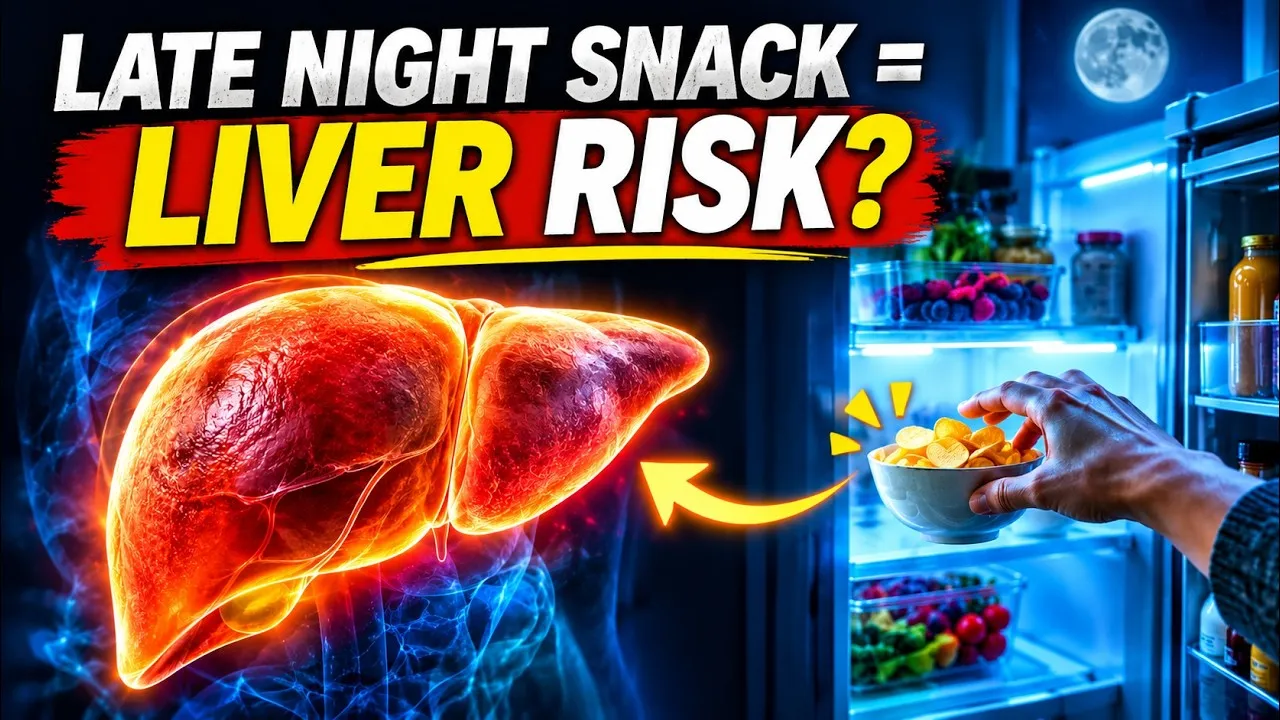
A new study published in Clinical Gastroenterology and Hepatology links late-night eating to a higher risk of liver diseases, including metabolic dysfunction-associated steatotic liver disease (MASLD) and cirrhosis. The research, which analyzed data from nearly 200,000 adults, found that those who reported eating late at night had a 36% higher risk of developing MASLD and a 28% higher risk of developing cirrhosis compared to their peers who did not eat later in the evening.
Late-night eating was defined as eating 'after bedtime' or 'between dinner and bedtime.' To put that increased risk into perspective, cirrhosis remained uncommon, with 315 cases among nearly 200,000 participants over the follow-up period, according to ScienceAlert and Warpbeat.
The study, which analyzed data from 199,155 individuals with a median age of 59, found that late-night eaters were 36% more likely to develop MASLD and 28% more likely to develop cirrhosis than their peers who did not eat later in the evening, as reported by Juta MedicalBrief (South Africa) and Medicalbrief (South Africa).
MASLD, formerly known as nonalcoholic fatty liver disease (NAFLD), often has no symptoms, but when it does, it can result in fatigue, malaise, or pain or discomfort in the upper right belly area, according to People and Warpbeat. The study also found that people who ate late at night had a 31% higher risk of developing MASLD than those who did not, as reported by the Seoul Economic Daily.
The research, led by scientists at Oregon Health & Science University and Massachusetts General Hospital, found that people who reported eating late at night had a 20 to 30% higher risk of liver disease compared to those who did not eat late at night, as reported by Sci.News and other outlets. The study, which is among the first long-term analyses to explicitly draw the connection to fatty liver disease, documents a 20 to 30 percent increase in all forms of liver disease among people who reported late-night eating compared with those who did not.
The liver is closely connected to the body’s circadian rhythms, said lead author Robert Wilechansky, a hepatologist at Oregon Health & Science University, according to bdnews24.com. Dr. Wilechansky explained that the liver is one of the organs especially vulnerable to disruptions in the normal relationship between eating and sleeping, as shown in previous experiments involving animals.
The study, which analyzed data from over 199,000 participants, found that late-night eaters were 36 percent more likely to develop MASLD and 28 percent more likely to develop cirrhosis than their peers who did not eat later in the evening, according to Warpbeat. The liver plays a central role in processing nutrients, regulating blood sugar, and controlling how the body stores and uses energy.
The researchers are continuing to investigate whether changes in eating patterns can reduce the risk of liver disease. Dr. Wilechansky said, 'If there are small things we can do to prevent the progression of fatty liver disease, we'd like to find out what those things are.'
While previous research has shown that snacking before bed can lead to weight gain, late-night snacking can also directly — and negatively — impact liver health, according to a new study, Published in Clinical Gastroenterology and Hepatology, a peer-reviewed medical journal associated with the American Gastroenterological Association, on Saturday, Oct. 10, the new research links late-night eating to a significantly higher risk of liver disease.
Background
A new study published in Clinical Gastroenterology and Hepatology links late-night eating to a higher risk of liver diseases, including metabolic dysfunction-associated steatotic liver disease (MASLD) and cirrhosis.
A new study links late-night eating to a higher risk of liver diseases, including metabolic dysfunction-associated steatotic liver disease (MASLD) and cirrhosis.
What's confirmed
- Reaching for a snack before bed may seem harmless enough, but new research suggests it could be putting your liver health at risk.
- Late-night eaters were 36 percent more likely to develop MASLD, and 28 percent more likely to develop cirrhosis than their peers who didn’t eat later in the evening.
- In a study of nearly 200 000 adults, those who reported eating late at night had a nearly 40% higher risk of metabolic dysfunction-associated steatotic liver disease ( MASLD ), previously called fatty liver disease, than their peers who didn’t eat late.
- They also had a nearly 30% higher risk of cirrhosis, or severe liver scarring.
- Late-night eaters were 36% more likely to develop MASLD, and 28% more likely to develop cirrhosis than their peers who didn’t eat later in the evening.
- While previous research has shown that snacking before bed can lead to weight gain, late-night snacking can also directly — and negatively — impact liver health, according to a new study, Published in Clinical Gastroenterology and Hepatology, a peer-reviewed medical journal associated with the American Gastroenterological Association, on Saturday, Oct. 10, the new research links late-night eating to a significantly higher risk of liver disease.
- Among people who reported late-night eating, the study found a 20% to 30% increase in all forms of liver disease compared to those who did not eat late at night.
- MASLD, formerly known as nonalcoholic fatty liver disease (NAFLD), “often has no symptoms,” but when it does it can result in fatigue, malaise, or pain or discomfort in the upper right belly area.
- A severe form of the disease, called metabolic dysfunction-associated steatohepatitis, can cause liver swelling and damage.
- Fatty liver disease occurs when too much fat builds up in the liver.
- A new study has linked late-night snacking to an increased risk of fatty liver disease.
- "A few studies have hinted at this idea, but this is among the first long-term analyses to explicitly draw the connection to fatty liver disease," said lead author Robert Wilechansky, M.D., a hepatologist at OHSU who specializes in liver transplantation.
What's still developing
- That late-night snack might have consequences beyond extra calories.
- "This relationship is biologically plausible; higher evening caloric intake may lead to obesity and metabolic derangement via decreased insulin sensitivity and lower energy utilization at night."
- "Confirmation of these results would have the potential to impact best practices in nutrition for chronic liver disease."
- Federal data show that chronic liver disease causes more than 52,000 deaths in the United States each year.
- New research led by scientists at Oregon Health & Science University suggests that eating after dinner, or even after going to bed, is associated with a substantially elevated risk of liver disease, adding a major organ to the growing list of body systems that appear to suffer when human behavior drifts out of sync with the internal biological clock.
- His motivation, he explained, came from a striking epidemiological fact: as much as 30 percent of the U.S. population is affected by fatty liver disease, a prevalence that has climbed alongside rising rates of obesity and metabolic syndrome.
- MORE: Raw milk consumption has become more popular, but a prominent medical group wants sales to be banned Prior research has found that eating late at night affects how the body burns calories and increases people's risk of obesity.
- A central clock located in the brain coordinates behavior and metabolism, while additional peripheral clocks operate in organs like the liver and pancreas.
- The Independent noted that previous studies have also linked sugary drinks and ultra-processed snacks, including cookies and crisps, to liver disease.
- Rather than analyzing individual nutrients or total caloric intake, the investigators grouped participants according to their eating behaviors, with particular attention to whether food was consumed after dinner or after bedtime, and then searched for correlations between those behavioral patterns and reports of fatty liver disease or cirrhosis.
- The Liver Keeps Its Own Clock: Late-Night Meals Linked to Fatty Liver Disease and Cirrhosis A late-night trip to the refrigerator may do more than disturb your sleep.
- The finding is notable because previous work had already tied late-night snacking to obesity and heart disease, but a clear signal connecting meal timing to liver pathology had remained elusive.