
Home · Science · Oct 20 archive
Heat Wave Kills 50,000 in Europe, Climate Change Blamed for Two-Thirds
· Confirmed
In Short: A study in Nature Health finds that 50,391 people died from warmer temperatures during Europe's summer heat waves, with climate change responsible for 65% of those deaths.
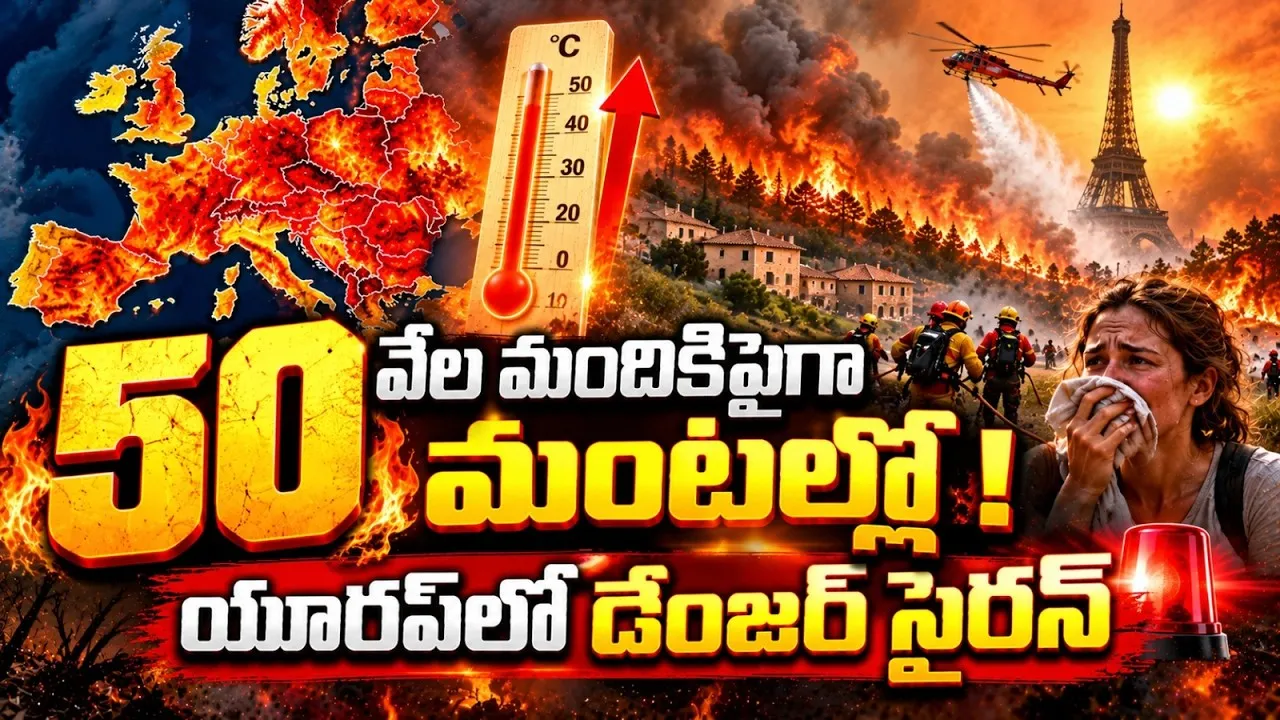
Researchers modeled heat-related deaths in 854 European cities during the summer of 2026, finding that 50,391 people died from warmer temperatures, and 32,619 of those deaths were directly linked to the burning of fossil fuels.
The percentage of heat deaths attributable to global warming has risen from about 45% in the early 2000s to 65% now, according to study co-author Dr. Garyfallos Konstantinoudis.
More than half of the people who died were over 85 years old, but the heat also claimed over 800 lives between the ages of 20 and 44.
The study's figures are considered underestimates as they do not include deaths from a deadly heat wave in May and only cover about 40% of Europe's population.
The most intense heat wave occurred from June 17 to July 1, when temperatures were 9.5 degrees Fahrenheit above normal, contributing to about one-third of the total deaths.
Rome had the highest heat death total from 2000 to 2025 among European capitals, according to the study.
The European Commission is stepping up efforts in surveillance, infrastructure, and military mobility in the Arctic to protect its interests in the face of growing influence from Russia and China.
German business morale rose more than expected in September, signaling that Europe's largest economy is weathering the energy price shock.
Four of Europe's 10 most intense heatwaves occurred during the summer of 2026, with conditions exceeding 38 degrees Celsius for a record 41 days.
The UK experienced its hottest summer since records began in 1884, with climate change making such extreme heat 130 times more likely.
Tourists in Rome faced the joint-hottest month ever recorded, tying with July 2023, according to Copernicus.
What this adds
The study in Nature Health provides new insights into the direct impact of climate change on heat-related deaths in Europe.
The Arctic region's strategic importance to the EU is highlighted by the updated strategy focusing on security and climate resilience.
Background
A new study published in Science News reveals that redwood trees, known for their resilience, face significant threats from extreme heat due to climate change.
A new study published in Science News reveals that redwood needles can reduce their net photosynthesis by roughly half when temperatures spike, highlighting the trees' vulnerability to extreme heat.
What's confirmed
- Researchers modeled heat-related deaths in 854 European cities during the summer of 2026, finding that 50,391 people died from warmer temperatures, and 32,619 of those deaths were directly linked to the burning of fossil fuels.
- The percentage of heat deaths attributable to global warming has risen from about 45% in the early 2000s to 65% now, according to study co-author Dr. Garyfallos Konstantinoudis.
- More than half of the people who died were over 85 years old, but the heat also claimed over 800 lives between the ages of 20 and 44.
- The study's figures are considered underestimates as they do not include deaths from a deadly heat wave in May and only cover about 40% of Europe's population.
- The most intense heat wave occurred from June 17 to July 1, when temperatures were 9.5 degrees Fahrenheit above normal, contributing to about one-third of the total deaths.
- Rome had the highest heat death total from 2000 to 2025 among European capitals, according to the study.
- The European Commission is stepping up efforts in surveillance, infrastructure, and military mobility in the Arctic to protect its interests in the face of growing influence from Russia and China.
- German business morale rose more than expected in September, signaling that Europe's largest economy is weathering the energy price shock.
- Four of Europe's 10 most intense heatwaves occurred during the summer of 2026, with conditions exceeding 38 degrees Celsius for a record 41 days.
- The UK experienced its hottest summer since records began in 1884, with climate change making such extreme heat 130 times more likely.
- Tourists in Rome faced the joint-hottest month ever recorded, tying with July 2023, according to Copernicus.
What's still developing
- The team's methods for May and June British heat waves calculated 2,700 excess deaths and the United Kingdom health statistics agency said it was 2,800, he said.
- As more and more of Europe's energy mix is composed of variable energy sources, energy waste and negative energy prices are becoming increasingly common at peak production hours, risking the economic and physical stability of the continent's energy systems.
- “Surging investment in solar over the past 15 years has created a glut of electricity so large that Spain's energy prices have increasingly fallen well below zero during peak times,” Bloomberg reported in a recent article.
- However, in April 2025, Spain was also ground zero for “the most severe and unprecedented blackout that had occurred in Europe in the past 20 years.” Set OilPrice.com as a preferred source in Google here.
- Much of this buildout has been in the form of wind and solar energy, which is great news for energy independence and the bloc's climate goals, but poses key challenges in terms of energy security.
- European Commission President Ursula von der Leyen said that the Arctic is Europe's northern neighborhood.
- The strategy outlines a framework for political cooperation with like-minded partners, focusing on people, security, climate, and well-being.
- In cooperation with member states and Arctic partners, and to complement NATO's activities, the EU plans to enhance the region's preparedness, protect critical infrastructure, and strengthen Europe's capacity to operate in Arctic conditions.
- As Denmark, Finland, and Sweden are EU member states in the Arctic, and given their close ties with Norway, Iceland, the United Kingdom, Canada, and the United States, developments in the Arctic directly impact European security, climate, and the well-being of its people.
- Fuelled by climate change, Europe – the fastest-warming continent in the world – endured a succession of heatwaves that began unusually early in the year, breaking temperature records and contributing to tens of thousands of excess deaths.
- Around 80 percent of the continent experienced “strong” heat stress, with feels-like temperatures exceeding 32C.
- Copernicus found that 52 percent of Europe was exposed to “ very strong ” heat stress – conditions in which the temperature feels hotter than 38C.