
Home · Science · Oct 19 archive
Orionid Meteor Shower Peaks This Week
· Confirmed
In Short: The Orionid meteor shower, active from October 2 to November 7, peaks overnight from October 21 to 22.
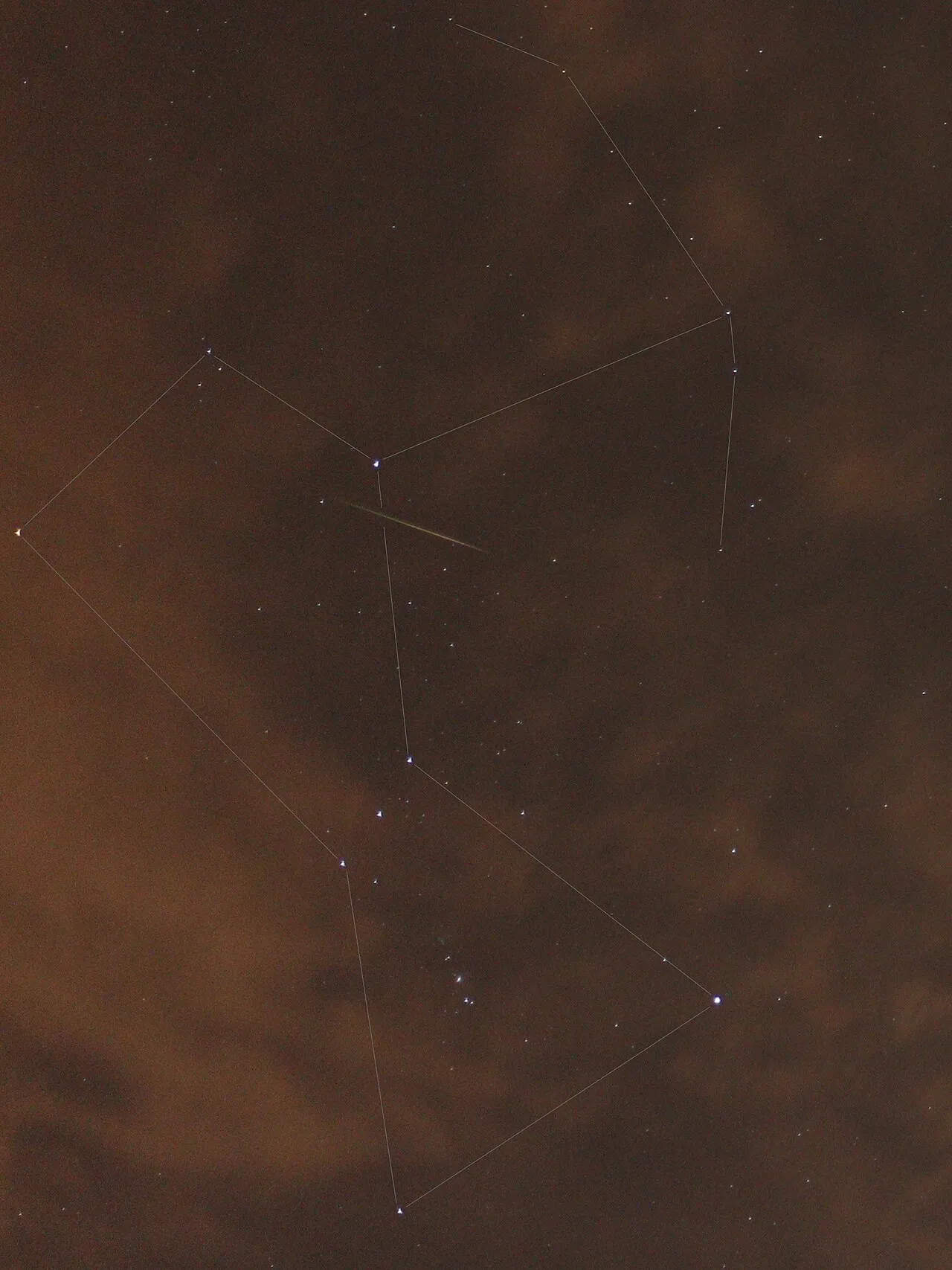
The Orionid meteor shower, one of the year's most anticipated celestial events, is set to peak overnight from October 21 to 22, according to reports from BBC (United Kingdom) and Tempo.co English (Colombia). Both outlets agree that the shower will be visible until November 7, with the peak offering the best viewing conditions.
BBC (United Kingdom) and Tempo.co English (Colombia) both report that the best time to spot the meteors will be between midnight and dawn, when the sky is at its darkest. Richard Covey, an amateur astronomer and astrophotographer from Canada, echoed this advice in an interview with play 103.7 (Canada), emphasizing the importance of finding a dark location away from street lights.
The Orionids are known for their speed, with meteors entering the Earth's atmosphere at around 41 miles per second, as reported by BBC (United Kingdom) and Tempo.co English (Colombia). This rapid entry causes the meteors to heat up and produce streaks of light visible across the night sky.
Both BBC (United Kingdom) and Tempo.co English (Colombia) note that the Orionids originate from debris left behind by Halley's Comet, which last visited Earth in 1986 and is not expected to return until 2061. This debris produces two meteor showers annually: the Eta Aquariids in May and the Orionids in October.
Under ideal conditions, around 10 to 20 meteors can be seen each hour at the shower's peak, according to BBC (United Kingdom) and Tempo.co English (Colombia). The Orionids are particularly fast and can leave glowing trails that remain visible for several seconds.
The meteor shower appears to radiate from the constellation Orion, giving it its name, although meteors can be seen across the night sky, as reported by BBC (United Kingdom) and Tempo.co English (Colombia).
While BBC (United Kingdom) and Tempo.co English (Colombia) agree on the peak viewing times and the origin of the meteors, they differ slightly on the exact number of meteors visible per hour. BBC (United Kingdom) suggests 10 to 20 meteors, while Tempo.co English (Colombia) mentions 15 to 18 shooting stars per hour.
Despite these minor discrepancies, both publications concur that the Orionid meteor shower is a spectacular event, offering a rare glimpse of cosmic debris from Halley's Comet. The best viewing conditions will be available between midnight and dawn, with clear skies and minimal light pollution providing the optimal environment for stargazers.
The Orionids are known for their speed and brightness, making them one of the year's most exciting meteor showers. Stargazers are encouraged to find a dark location and allow their eyes to adjust to the darkness for the best viewing experience.
In addition to the Orionids, the month of October also features other celestial events, such as the Draconids meteor shower and the possibility of viewing the northern lights, as noted by Nationalgeographic.
The Orionid meteor shower is a testament to the enduring legacy of Halley's Comet, allowing observers to witness a piece of history streaking across the night sky.
The Orionid meteor shower is a must-see event for astronomy enthusiasts and casual observers alike, providing a stunning display of cosmic debris and a rare opportunity to witness the legacy of Halley's Comet.
What this adds
The Orionid meteor shower is a significant event in the annual celestial calendar, offering a unique opportunity to observe meteors at high speeds and in large numbers.
What's confirmed
- One of the best-known meteor showers of the year is returning to our skies this week, as the Earth passes through debris left behind by Halley's Comet.
- The Orionid meteor shower is active from 2 October until 7 November and will peak overnight from 21 to 22 October.
- As tiny particles from the comet enter the Earth's atmosphere at high speed, they heat up and produce streaks of light across the night sky that we see as meteors.
- The Orionids are particularly fast, entering the atmosphere at around 41 miles per second and can leave glowing trails which remain visible for several seconds.
- But while the comet itself is a rare visitor, the Earth encounters material left behind by it twice a year, resulting in the Eta Aquariid meteor shower in May and the Orionids in October.
- Halley's Comet is not expected to be visible from Earth again until 2061, but its debris will continue to produce meteor showers each year Under ideal conditions, around 10 to 20 meteors can be seen each hour at the shower's peak.
- The meteors appear to radiate from the constellation of Orion, which is where the shower gets its name, but they can appear anywhere across the night sky.
- Under ideal conditions, around 10 to 20 meteors can be seen each hour at the shower's peak.
- This meteor shower is called the Orionids, because the radiant point of the shower is near the constellation Orion.
- The last time the comet visited our solar system was back in 1986.
What's still developing
- This month brings two meteor showers, an eerie orange-tinted full moon, and one of the year’s last chances to glimpse the Milky Way’s luminous core.
- With streaking meteors and exceptional planet sightings, October provides plenty of reasons to stay up and stargaze.
- Seeing an Orionid is, in a very real sense, witnessing a piece of a comet that has been observed by humanity for millennia.
- NASA Imagery Shows High Carbon Monoxide Levels in Indonesia Two Earthquakes Hit Bogor and Sukabumi in West Java, BMKG Reports SpaceX Launch Lights up US East Coast with 'Space Jellyfish' Orionid Meteor Shower Peaks Oct. 21: How to Watch in the US The Orionid meteor shower peaks before dawn on October 21 and is best seen after the moon sets, with about 15 to 18 shooting stars an hour expected.
- Nevertheless, conditions improve during the early hours of the morning.
- Credit: Stellarium In 2026, the Moon is waxing gibbous at the Orionids' peak, just 5 days prior to the Full Hunter’s Moon on October 26th.
- Jupiter seems to play a role in modifying the Orionid meteor stream, and we tend to see an enhanced uptick from the shower about mid-decade or so, as last occurred in 2006.
- If the skies over Northern Illinois follow along with what meteorologists are predicting, we should have some very clear skies when we get the chance to check out not one, but two comets and a spectacular meteor shower within the next couple of weeks.
- Two newly discovered comets ( C/2025 A6 Lemmon and C/2025 R2 SWAN ) will make their closest approaches to Earth, coinciding with the peak of the Orionid meteor shower.
- With the recent solar eclipse having captivated residents across the city alongside vibrant Northern Lights displays lighting up local imaginations, the Orionid Meteor Shower is the latest space phenomenon heading for West Yorkshire, promising up to 20 shooting stars per hour.
- Friday, October 16 Pluto is stationary in Capricornus at 7 A.M.
- Note that Dione is moving closer to Saturn’s southeastern limb — it will disappear behind the planet in an occultation just before 12:45 A.M.