
Home · Science · Oct 19 archive
Japan Launches Mission to Mars Moon Phobos
· Confirmed
In Short: The BBC (United Kingdom) and LBC (United Kingdom) reported that the spacecraft, part of the Mars Moons Exploration (MMX) mission led by the Japanese Space Agency (JAXA), is scheduled to arrive at Phobos in August 2027.
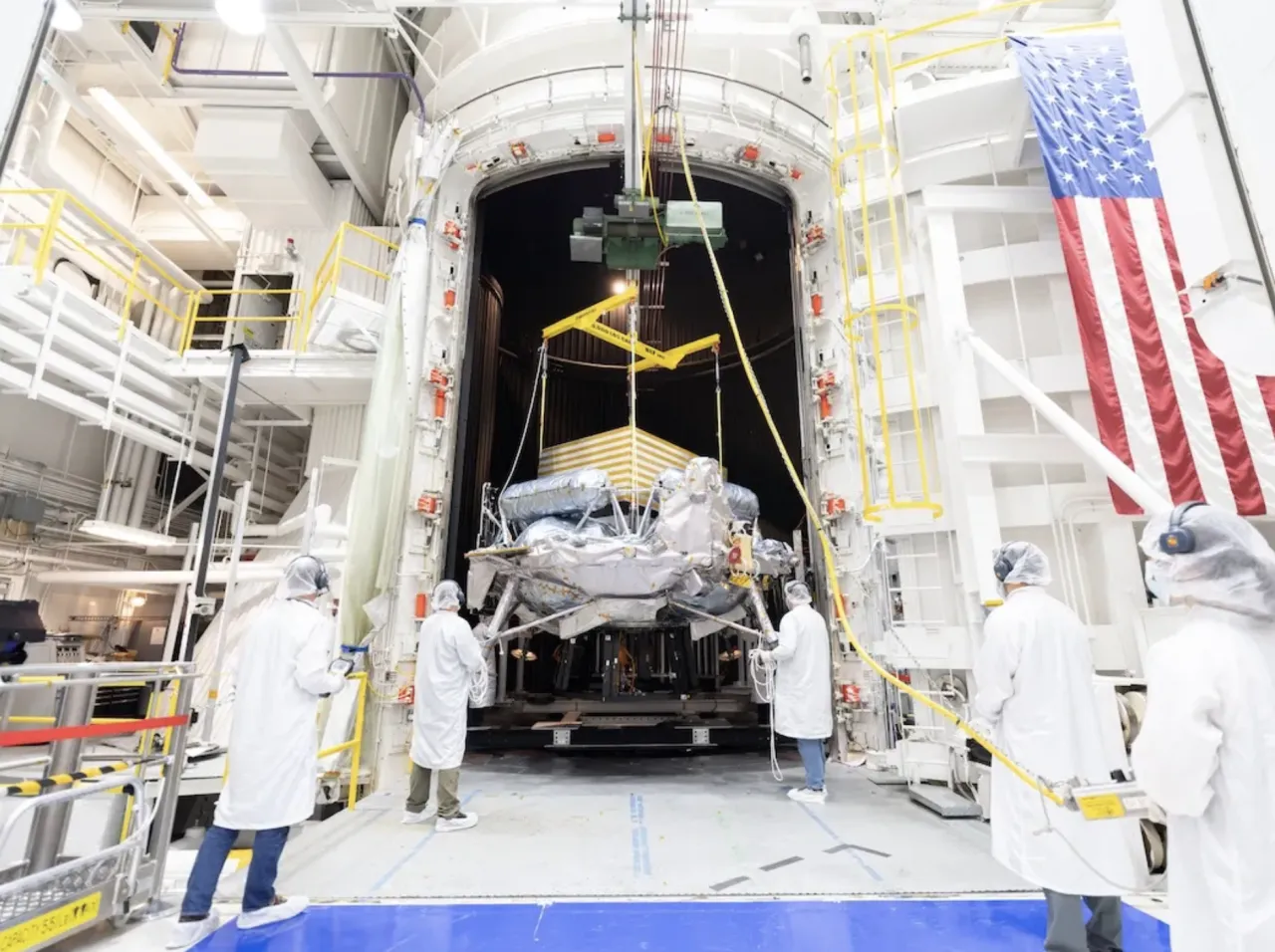
A spacecraft launched from Japan's Tanegashima Space Center on October 20, 2026, at 4:41 am Japan time, aiming to collect samples from Mars' moon Phobos and return them to Earth. The BBC (United Kingdom) and Indiatoday (India) reported the launch, with both outlets noting the mission's significance in space exploration.
The BBC (United Kingdom) and LBC (United Kingdom) reported that the spacecraft, part of the Mars Moons Exploration (MMX) mission led by the Japanese Space Agency (JAXA), is scheduled to arrive at Phobos in August 2027. Both outlets highlighted the mission's goal to solve the mystery of Phobos' formation and provide insights into Mars' history.
According to the BBC (United Kingdom), the mission will attempt to collect at least 10 grams of subsurface material from Phobos, which could contain grains of Mars. The BBC noted that the samples could offer direct information about Mars' composition and history.
The BBC (United Kingdom) and IFLScience reported that the mission will also observe Mars' other moon, Deimos, but will not land on it. The BBC quoted Dr. Chrysa Avdellidou from Leicester University, who explained that Phobos has very little gravity, making the mission challenging.
The BBC (United Kingdom) and Nature World News reported that the spacecraft will use high-pressure nitrogen gas to blast and collect soil from Phobos. The BBC also noted that the mission's success would mark the first time a sample has been returned from Mars or its moons.
The BBC (United Kingdom) and The Conversation reported that the mission will deploy a lander and rover on Phobos. The BBC quoted MMX project manager Yasuhiro Kawakatsu, who said the samples could help establish whether Phobos formed from debris created by a collision or was captured by Mars' gravity.
The BBC (United Kingdom) and NASA reported that the mission will also study the potential of using a Martian moon as a base for future manned missions to Mars. NASA's Charles Whetsel highlighted the agency's support for the mission, noting its contributions to environmental testing.
The BBC (United Kingdom) and Asianews reported that the mission's cost exceeds 55 billion yen, or approximately 12 billion baht. The BBC noted that the mission's primary goal is to land on Phobos and collect at least 10 grams of subsurface material.
The BBC (United Kingdom) and New Scientist reported that researchers have debated for over a century whether Phobos and its smaller sibling, Deimos, are captured asteroids or formed from an impact on Mars.
The BBC (United Kingdom) and Popsci reported that the mission's success would provide paradigm-shifting science on the Mars system, especially as NASA prepares to send the first humans to Mars.
The BBC (United Kingdom) and Science News reported that the mission aims to resolve the long-standing mystery of how Mars got its two odd moons by delivering a sample of Phobos to Earth in 2031.
Despite the differing details, all outlets agreed that the MMX mission is a significant step in space exploration, aiming to return the first samples from Mars' moons to Earth, providing valuable insights into Mars' history and the formation of the solar system.
What this adds
The mission's success would mark the first time a sample has been returned from Mars or its moons, providing unprecedented insights into the Martian system.
What's confirmed
- The spacecraft is scheduled to arrive at Phobos in August 2027.
- "The moon itself doesn't have very much of its own gravity," she explained.
- NASA Details Contributions to Japan’s Martian Moons Mission Ahead of 19 October Launch NASA and the Japan Aerospace Exploration Agency (JAXA) are preparing to launch a mission to Mars’ two moons, Phobos and Deimos, with plans to return the first samples from a moon other than Earth’s to laboratories in 2031.
- NASA's mission is to pioneer the future in space exploration and scientific discovery.
- PHOTO: AFP BANGKOK – The Japan Aerospace Exploration Agency (JAXA) plans to launch a mission from Tanegashima Space Center on Tuesday (October 20, 2026), aiming to return the first samples from Phobos, one of Mars’s two moons, to Earth.
What's still developing
- Watch: Spacecraft heading to Mars' moon Phobos lifts off from Japan A spacecraft has launched from Japan headed for Mars' moon Phobos, where it will attempt to grab some moondust and bring it back to Earth.
- They are also irregularly shaped, looking a bit like space potatoes.
- But a second Nasa/ESA mission, called Mars Sample Return, that would have picked up and returned these canisters, has been effectively cancelled, after its funding was halted by the US Congress.
- Five of the world's space agencies joined forces for the five-year mission that will attempt to land a robotic prospector plus a rover on Phobos, the larger and closer of Mars' two pint-sized moons.
- Supporters argued the project had brought industries together behind a single planetary mission.
- “NASA JPL’s Environmental Test Laboratory has been putting robotic explorers to the test since the Ranger program gave us NASA’s first up-close views of the Moon’s surface in the mid-1960s. We’re proud to provide our expertise and facilities to support this new phase of commercial lunar exploration,” said Charles Whetsel, manager, Exploration Systems Development Office at JPL.
- Japan’s ambitious mission to unlock the mysteries of Mars’ moons began its journey into deep space after a picture-perfect launch aboard the H3 rocket from the Tanegashima Space Centre.
- The MMX flight plan allows about one year to reach the vicinity of Mars, followed by three years of observations and exploration.
- The SpaceX Dragon capsule Crew 11 returns early to Earth from space due to an astronaut’s medical issue as seen during reentry over Los Angeles, California on January 15, 2026 carrying four International Space Station (ISS) NASA astronauts Mike Fincke and Zena Cardman, Japan Aerospace Exploration Agency (JAXA) astronaut Kimiya Yui, and Roscosmos cosmonaut Oleg Platonov.
- MMX plans to collect material beneath Phobos’s surface JAXA plans to land MMX on Phobos and use its sampling equipment to retrieve at least 10 grams of material from a depth of two centimetres or more beneath the surface.
- They present it in a research letter titled " The dynamical surface of Phobos: A morphodynamic atlas," published in Earth and Planetary Science Letters.