
Home · World · Oct 18 archive
Search for Amelia Earhart's Plane Resumes After Weather Delay
Confirmed
In Short: A search for Amelia Earhart's missing plane has resumed on Nikumaroro after severe weather delayed the expedition.
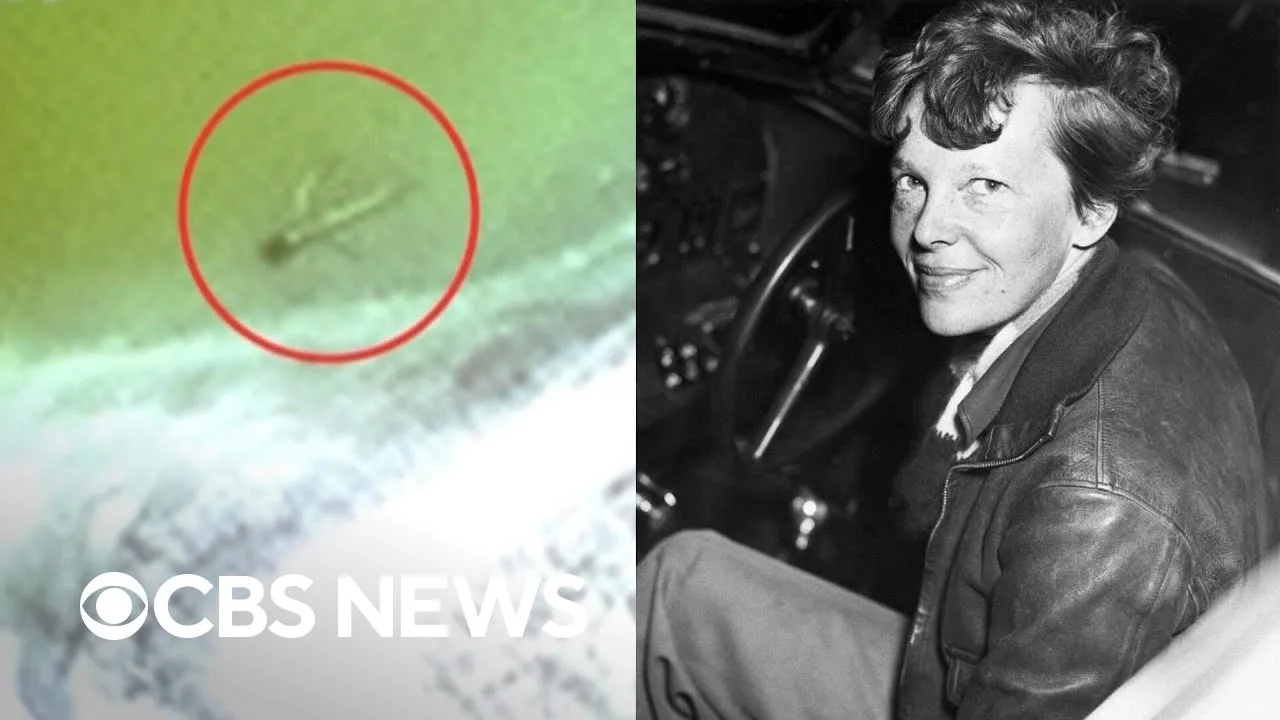
Sirisha Bandla, a technology specialist on the expedition, expressed excitement as the team resumed their search for the wreckage of Amelia Earhart's plane on Nikumaroro, a remote island in the Pacific Ocean.
The expedition, led by Steve Schultz from Purdue University and Rick Pettigrew from the Archaeological Legacy Institute, had to halt operations due to rough seas and strong winds caused by El Niño conditions.
Bandla said, "We're working to get everything done today if we can," as the team prepared to land on Nikumaroro after being confined to their research vessel for three days.
The search is part of a broader effort to solve the mystery of Earhart's disappearance, which occurred on July 2, 1937, while she was attempting to fly around the world.
Previously, the team had found evidence of a human presence on the island around the time of Earhart's disappearance, but recent investigations have cast doubt on the nature of a mysterious object known as the Taraia Object.
According to the researchers, the Taraia Object, initially thought to be part of Earhart's plane, was likely a collection of large trees deposited along the peninsula's sandspit.
"Evidence gathered at the Taraia Peninsula on Nikumaroro confirmed that the visual anomaly first seen in satellite imagery in 2020 was likely a collection of large trees deposited along the peninsula's sandspit," the researchers said.
Despite the setback, the team remains committed to their search, driven by Earhart's spirit of courage and curiosity.
"Amelia Earhart never gave up — she kept pushing boundaries and flying into the unknown," said Schultz.
"That same fire fuels our search. She kept flying, and we will keep searching," added Pettigrew.
The expedition has extended its time on the island to complete its fieldwork, but as of now, they have not found any promising evidence of Earhart's plane.
"We accomplished our goal to determine what the Taraia Object was, and we’re deeply grateful to the private donors who shared our vision and made this journey possible. Our team remains in great spirits and proud of what was accomplished," said Pettigrew.
What this adds
The expedition's findings have ruled out a leading theory about possible wreckage on Nikumaroro, dealing a setback to efforts to solve the mystery of Amelia Earhart's disappearance.
What's confirmed
- Sirisha Bandla, a technology specialist on the expedition, expressed excitement as the team resumed their search for the wreckage of Amelia Earhart's plane on Nikumaroro, a remote island in the Pacific Ocean.
- The expedition, led by Steve Schultz from Purdue University and Rick Pettigrew from the Archaeological Legacy Institute, had to halt operations due to rough seas and strong winds caused by El Niño conditions.
- Bandla said, "We're working to get everything done today if we can," as the team prepared to land on Nikumaroro after being confined to their research vessel for three days.
- The search is part of a broader effort to solve the mystery of Earhart's disappearance, which occurred on July 2, 1937, while she was attempting to fly around the world.
- Previously, the team had found evidence of a human presence on the island around the time of Earhart's disappearance, but recent investigations have cast doubt on the nature of a mysterious object known as the Taraia Object.
- According to the researchers, the Taraia Object, initially thought to be part of Earhart's plane, was likely a collection of large trees deposited along the peninsula's sandspit.
- "Evidence gathered at the Taraia Peninsula on Nikumaroro confirmed that the visual anomaly first seen in satellite imagery in 2020 was likely a collection of large trees deposited along the peninsula's sandspit," the researchers said.
- Despite the setback, the team remains committed to their search, driven by Earhart's spirit of courage and curiosity.
- "Amelia Earhart never gave up — she kept pushing boundaries and flying into the unknown," said Schultz.
- "That same fire fuels our search. She kept flying, and we will keep searching," added Pettigrew.
- The expedition has extended its time on the island to complete its fieldwork, but as of now, they have not found any promising evidence of Earhart's plane.
- "We accomplished our goal to determine what the Taraia Object was, and we’re deeply grateful to the private donors who shared our vision and made this journey possible. Our team remains in great spirits and proud of what was accomplished," said Pettigrew.
What's still developing
- "The crew's really excited." Earhart had already successfully flown from California across South America, Africa and Asia in her twin-engine Lockheed Electra when she arrived in Lae, Papua New Guinea on 2 July 1937.
- Purdue said a 15-year-old in Florida reported hearing Earhart's voice repeating "New York City" over her father's shortwave radio shortly after the aviator vanished.
- But her plane vanished without a trace while trying to reach Howland Island, a remote, uninhabited coral island near Nikumaroro, to refuel.
- One theory is that Earhart unintentionally navigated to Nikumaroro, where she ditched her plane and died a castaway.
- ALI director Rick Pettigrew said the team was aware of the global interest in the expedition and would share its results "as soon as we are able".
- But the weather - powered by strong El Niño conditions in the Pacific - has so far prevented them from beginning a second of three phases, in which underwater objects will be probed to determine their depth and sediment will be dredged.
- The island lies about 400 miles southeast of Howland Island, where Earhart and Noonan were headed when they disappeared during their attempted flight around the world.
- Earhart and her navigator, Fred Noonan, disappeared on July 2, 1937, roughly 22,000 miles into their trip.
- Recently, President Trump ordered the declassification of records related to Earhart.
- Researchers then planned to retrieve the object for identification.
- "By the time the team arrived at the site, a good portion of the debris had fragmented and washed away, leaving only a single Y-shaped segment," which they said is what they had initially hoped was the plane.
- Severe weather kept the research team aboard their ship for three of the five days allotted for the search, while limited fuel and supplies prevented them from extending the expedition.