
Home · Faith · Oct 16 archive
Apple's HomeView Faces EU Restrictions and Content Limitations
· Confirmed
In Short: Apple's new HomeView smart home hub faces EU regulatory hurdles and limitations in running its own premium content services, raising questions about its functionality.
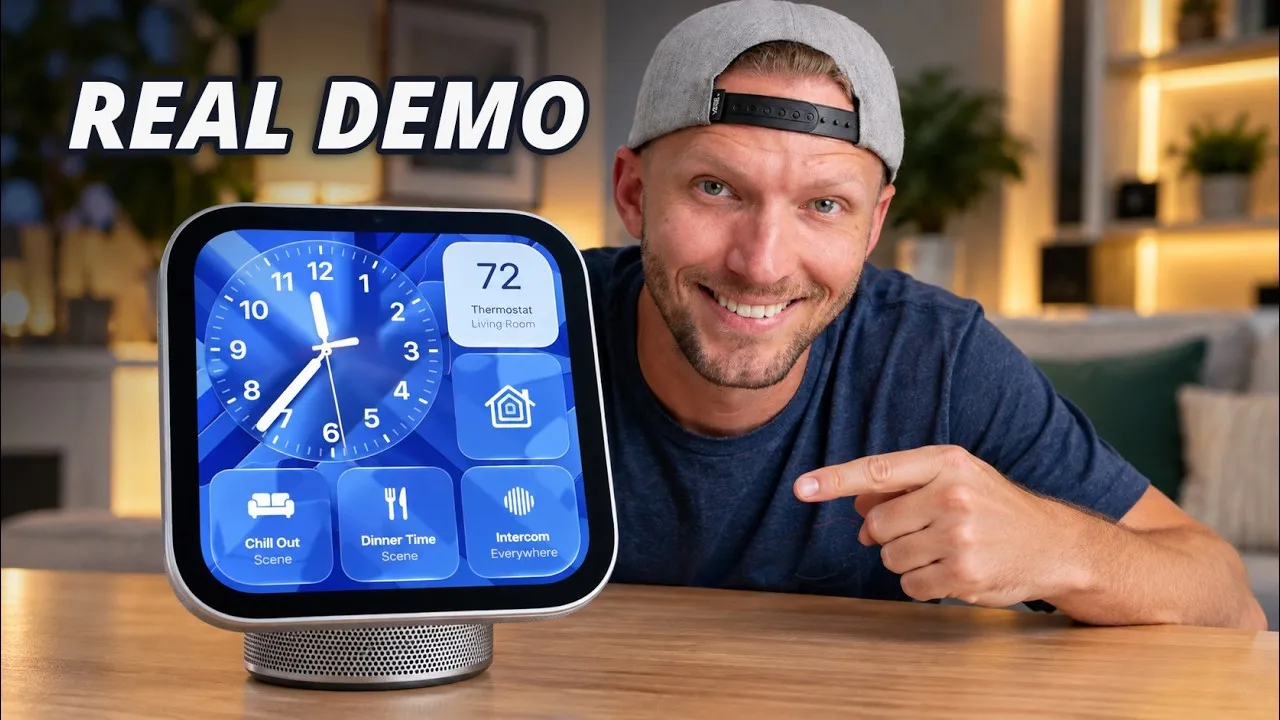
Apple's HomeView, a new smart home hub, is encountering significant challenges in the European Union, where regulatory restrictions are complicating its market entry.
According to Channelnews (Australia), the EU's highest court upheld a ruling requiring Ireland to recover approximately €13 billion from Apple, equivalent to roughly A$22.8 billion, in unlawful tax advantages granted to the tech giant.
These financial issues, combined with European regulatory problems, are threatening Apple's ambitions in the smart home market.
In addition to regulatory hurdles, HomeView faces limitations in running several of Apple's own premium content services independently.
Channelnews (Australia) reports that despite Apple's control over its streaming, music, news, and audiobook services, HomeView appears unable to offer equivalent standalone functionality across these services.
Apple's promotional material depicts Apple TV content playing on HomeView, but it requires users to connect an iPhone to access these services.
This requirement undermines one of HomeView’s central selling points, as consumers are being asked to invest in yet another connected device.
The limitations are particularly embarrassing given Apple's long-standing promotion of seamless integration between its hardware, software, and services.
HomeView is pitched as a device that consumers can use to watch entertainment, listen to music, and manage connected appliances while moving around their homes.
MacRumors reports that both HomeView models cost $299 in the United States and launch on November 13, with technical specifications confirming the inclusion of temperature and humidity sensors.
However, accuracy may decrease when HomeView plays audio at high volume for an extended period.
The restrictions leave Apple exposed to competitors that have spent years developing smart displays capable of accessing entertainment services without requiring consumers to own another device.
What's confirmed
- Apple's HomeView, a new smart home hub, is encountering significant challenges in the European Union, where regulatory restrictions are complicating its market entry.
- According to Channelnews (Australia), the EU's highest court upheld a ruling requiring Ireland to recover approximately €13 billion from Apple, equivalent to roughly A$22.8 billion, in unlawful tax advantages granted to the tech giant.
- These financial issues, combined with European regulatory problems, are threatening Apple's ambitions in the smart home market.
- In addition to regulatory hurdles, HomeView faces limitations in running several of Apple's own premium content services independently.
- Channelnews (Australia) reports that despite Apple's control over its streaming, music, news, and audiobook services, HomeView appears unable to offer equivalent standalone functionality across these services.
- Apple's promotional material depicts Apple TV content playing on HomeView, but it requires users to connect an iPhone to access these services.
- This requirement undermines one of HomeView’s central selling points, as consumers are being asked to invest in yet another connected device.
- The limitations are particularly embarrassing given Apple's long-standing promotion of seamless integration between its hardware, software, and services.
- HomeView is pitched as a device that consumers can use to watch entertainment, listen to music, and manage connected appliances while moving around their homes.
- MacRumors reports that both HomeView models cost $299 in the United States and launch on November 13, with technical specifications confirming the inclusion of temperature and humidity sensors.
- However, accuracy may decrease when HomeView plays audio at high volume for an extended period.
- The restrictions leave Apple exposed to competitors that have spent years developing smart displays capable of accessing entertainment services without requiring consumers to own another device.
What's still developing
- Plus, why the largest pro-AI super PAC network is funneling millions into shadowy LLCs, how Apple’s new HomeView underwhelmed us, and a study that found men tend to overestimate how much they actually know about AI.
- You can also download an app like Overcast or Pocket Casts and search for “uncanny valley.” We’re on Spotify too.
- "This cuddly agent that everyone can't stop talking about, will it sext me back?"
- "Oh, we figured out a clever way to make an agent do something it wasn't supposed to do. We were able to jailbreak it or otherwise work around its prompts to make it do this."
- And so when I was testing the number one AI app right now—it's still dominating the software download charts—I wanted to see like, "Can you sext?"
- “We often hear that the Bible is more accessible than ever, but we must not confuse availability with access,” said Wybo Nicolai, co-founder of the Bible Access List.
- Of the countries evaluated, 87 met the criteria for the Bible Restrictions List while 81 countries are included in the Bible Shortage List.
- The top five countries on the 2026 Bible Restrictions List are: The top five countries on the 2026 Bible Shortage List are: “The annual assessment is more than a picture of the problem but a roadmap for showing where intentional, strategic action is needed,” said Ken Bitgood, founder and CEO of Digital Bible Society, co-founder of the Bible Access List.
- The Initiative’s primary objective is to provide Bible agencies, mission organizations and churches with a comprehensive and reliable overview of restrictions on Bible access and shortages experienced across different countries.
- According to Apple, the LG and Schneider Electric thermostats in the " Apple Home Collection " can obtain temperature and humidity readings from multiple rooms using sensors built into HomeView, HomePod, and HomePod mini, as well as dedicated sensors from either manufacturer.
- Apple's new HomeView includes temperature and humidity sensing, allowing the smart home hub to monitor indoor conditions and supply readings to the new thermostats developed with LG Electronics and Schneider Electric.
- There are several limitations for the HomeView's readings.