
Home · Politics · Oct 15 archive
Trump Cancels Plan to Livestream Hasan's Execution
Confirmed
In Short: The decision to cancel the livestream came after a wave of bipartisan criticism and concerns over the ethical implications of such a public execution.
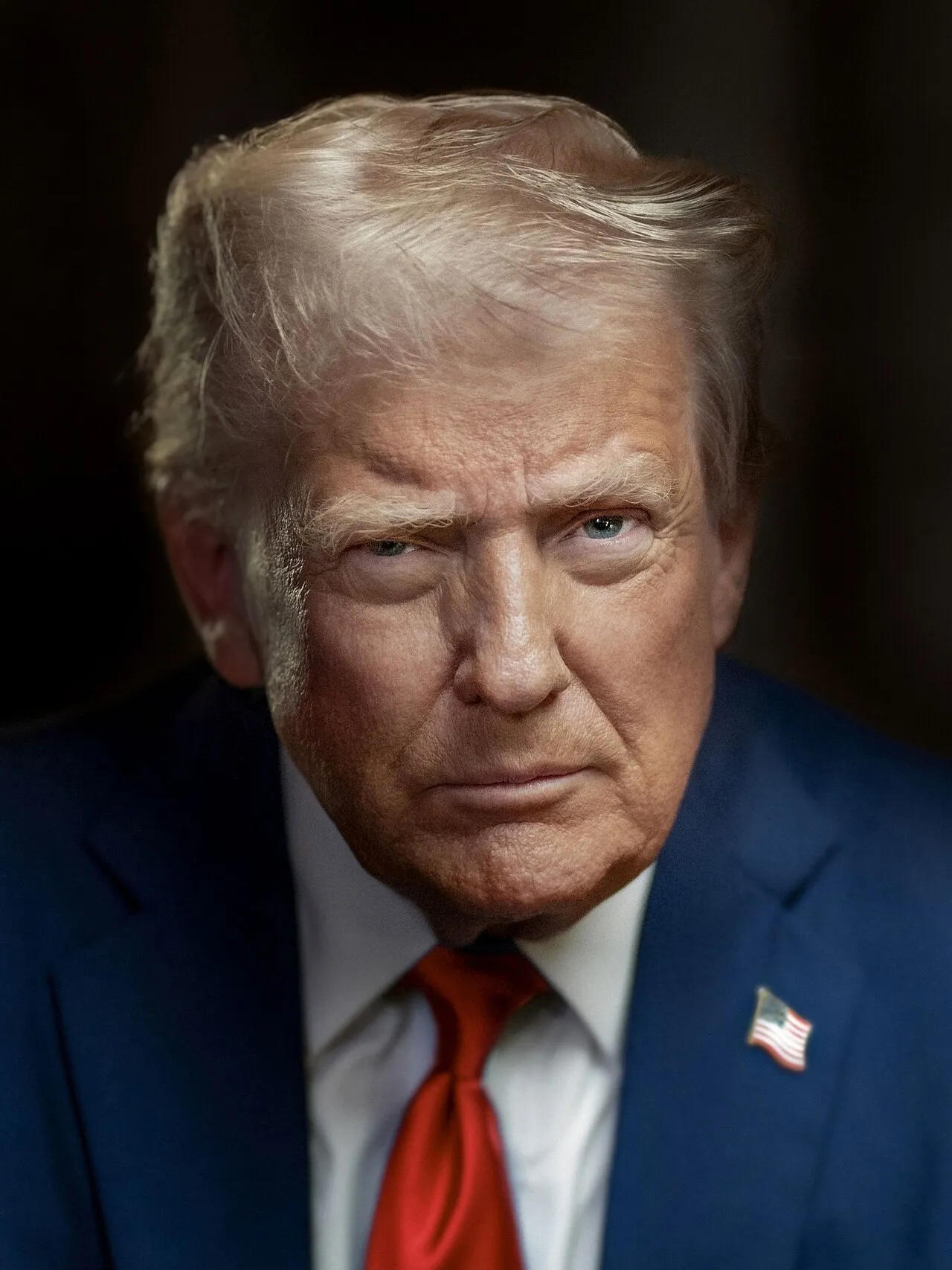
President Donald Trump announced Thursday that the Pentagon will no longer livestream the firing squad execution of Nidal Malik Hasan, the Fort Hood shooter, after the plan faced widespread criticism.
Hasan, an Army psychiatrist, was convicted and sentenced to death in 2013 for the 2009 shooting at Fort Hood that left 13 dead and dozens wounded.
Defense Secretary Pete Hegseth had initially announced the plan to make the execution public during an interview with conservative television outlet Real America’s Voice, stating, 'We’ll make sure that people are able to watch it, that it's public, because people need to understand that there's serious consequences for these types of things.'
The execution, if it proceeds, would be the first US military execution since 1961 and the first by firing squad since 1945.
Critics, including some religious leaders, expressed concern over the plan. Julie Ingersoll, a professor of religion at the University of North Florida, said, 'I think one of the most worrisome parts of this development is that it pushes the boundaries of what's acceptable.'
Sen. Chris Murphy, D-Conn., called the decision to livestream the execution 'disgusting,' while Sen. Patty Murray, D-Wash., said it would glorify violence. Sen. Thom Tillis, R-N.C., compared the execution to practices in 'oppressive dictatorships like Iran and Afghanistan.'
Vice President JD Vance also stated he wouldn’t watch the execution, saying, 'Whatever the controversy is about the method of the execution, I hope that people don't forget that this is a guy who brutally murdered a lot of innocent people.'
Archbishop Timothy P. Dolan of New York said, 'The public execution even of one who has done grave harm will only further undermine the moral fabric of our nation and be a blight on the conscience of its people.'
The execution, if carried out, would be the first public military execution in the US since 1938, when public hangings were outlawed.
Some religious scholars noted that the plan reflects a fringe position within American Christianity. Taylor, a professor, said Hegseth's idea represents 'an outlier position within American Christianity, including, he said, within right-wing Christianity.'
What this adds
The decision to cancel the livestream was made after significant backlash, but the ethical and moral implications of the execution itself remain a subject of debate.
What's confirmed
- "We'll make sure that people are able to … watch it, that it's public, because people need to understand that … there's serious consequences for these types of things," Hegseth said in an interview with Real America's Voice, a right-wing streaming network.
- Now, Hegseth is making clear the public will be able to watch it.
- Credit: AP/Alex Brandon WASHINGTON — President Donald Trump said Thursday that the Pentagon will no longer livestream the firing squad execution of Fort Hood shooter Nidal Malik Hasan, after the announcement faced bipartisan criticism and Vice President JD Vance said he wouldn’t watch it.
- “I think streaming the execution for all to see might have been a strong deterrent for the World to witness how America deals with Terrorists and SCUM like Hasan,” Trump wrote.
What's still developing
- "The question is, why is he being punished differently than everyone before him?"
- "There is an idealization of the Christendom of the medieval period," she said.
- "The religious community from which Hegseth comes is very comfortable, shall we say, with the death penalty. There's a pretty much unanimous endorsement of it," Ingersoll said.
- Today, Ingersoll said, a term often used to describe this project is "dominionism."
- Hasan’s attack left 13 dead and numerous others wounded as he shouted, “Allahu Akbar,” while committing the atrocity.
- Hasan, an Army psychiatrist who held the rank of major, walked into a medical building on Nov. 5, 2009, where soldiers were waiting in long lines to receive immunizations and medical clearance for deployment.
- Anesthesiologist Joel Zivot joins Bill Hemmer to discuss the legal fallout after a judge ordered Tennessee officials to preserve evidence from the botched execution of Christa Pike.
- Johnson Rehabilitation Center, where she has been housed for more than 30 years, according to a joint statement from her legal team.
- NASHVILLE, Tenn. (AP) — Christa Pike, who survived Tennessee’s attempt to execute her by lethal injection, has been moved back to prison, her attorneys said Saturday.
- “She is grateful to the first responders and her medical team for their care in these extraordinary circumstances. She is continuing to receive medical care at the prison, and we will continue to track her recovery,” the statement said.
- Why execution in the trenches may be the real key to AI readiness After announcing the latest flagship iPhone 18 Pro models and the first-ever iPhone Fold last week, Apple is gearing up to launch Apple Pay Services in India by October 2026.
- Apple has already sought regulatory approvals for the launch, and Apple Pay may compete directly with UPI payments amid the government’s current UPI MDR rules, which have already sparked significant controversy.