
Home · World · Oct 15 archive
Ethiopia and Eritrea Sever Diplomatic Ties Amid Tigray Conflict
Confirmed
In Short: Ethiopia and Eritrea have severed diplomatic ties, with each accusing the other of military incursions and backing rebels in the Tigray region.
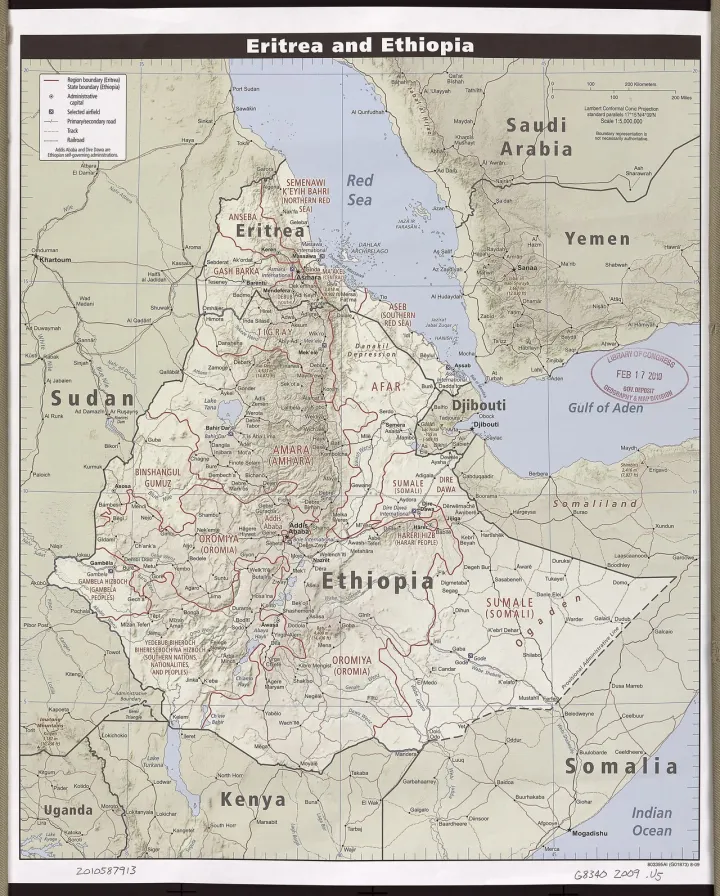
Ethiopia and Eritrea have severed diplomatic ties, with each accusing the other of military incursions and backing rebels in the Tigray region. According to Courthouse News and The Africa Report, Ethiopia claims that Eritrean troops have advanced into Ethiopian territory, while Eritrea has asked the United Nations to take 'deterrent measures' against what it calls Ethiopia's 'declaration of war.'
Courthouse News reported that eyewitnesses observed a 'substantial convoy of tanks and heavy weaponry advancing' from the south toward Zalambessa, a town in Tigray. Meanwhile, The Africa Report noted that Tigray rebels are not in a position to wage war against the federal government, suggesting that the Tigray People’s Liberation Front (TPLF) and Tigrayans are exploring areas of cooperation.
Al Jazeera (Qatar) and Middleeastmonitor (United Kingdom) reported conflicting distances of Eritrean troop advances. Al Jazeera cited a 60-kilometer advance, while Middleeastmonitor reported a 38-mile advance. Both outlets agreed that Ethiopia has accused Eritrea of launching an 'all-out invasion.'
The Africa Report and The Bulwark highlighted the broader context of the conflict, noting that tensions have escalated since the end of Ethiopia's 2020-2022 civil war. The Africa Report emphasized that the TPLF and Tigrayans are very isolated, while The Bulwark questioned the potential for refugee flows into Djibouti.
AFP reported that Tigray rebels were abandoning their regional capital, as pro-government forces advanced on the city. This development underscores the fluid nature of the conflict and the shifting dynamics between the TPLF and the Ethiopian government.
Courthouse News and Horn Review provided eyewitness accounts of the situation on the ground. Courthouse News cited residents who reported that shops and restaurants were closed, and streets were nearly empty. Horn Review noted that the present escalation follows years of tension that set in as the previous conflict in Tigray drew to a close.
The Africa Report and Middleeastmonitor both emphasized the risk of miscalculation and escalation, given the closed communication channels between Ethiopia and Eritrea and the mistrust among neighboring states.
Al Jazeera and Africanews reported that Eritrean troops have deployed around a town in Ethiopia's northern Tigray region, with Africanews adding that Eritrea was 'deliberately deploying its forces so that the fighting takes place inside Tigray rather than spilling into Eritrea.'
Despite the conflicting reports on troop movements and distances, all outlets agreed that Ethiopia and Eritrea have severed diplomatic relations, with each accusing the other of incursions and backing rebels in the Tigray region. The situation remains tense, with the potential for further escalation and regional destabilization.
What this adds
The current conflict marks a significant escalation since the end of Ethiopia's 2020-2022 civil war, and the severing of diplomatic ties represents one of the most serious breakdowns between the two neighbors since their historic rapprochement in 2018.
Background
Eritrea responded by asking the United Nations to take “deterrent measures” after what it called Ethiopia’s “declaration of war” in the conflict over the Tigray region.
What's confirmed
- Ethiopia accuses Eritrea of backing the rebel Tigray People’s Liberation Front, which launched a major offensive against government forces on Sept. 23.
- The group said eyewitnesses had observed a “substantial convoy of tanks and heavy weaponry advancing” from the south toward Zalambessa.
- On Friday, Ethiopian Foreign Minister Gedion Timothewos wrote to the U.N. Security Council, citing Article 51 of the U.N. Charter, to say Eritrean troops had advanced up to 38 miles into Ethiopia’s northern Tigray region and that Ethiopia would defend itself against the incursion.
- Ethiopia lost access to the sea when Eritrea became independent in 1993, and Abiy has spoken of the loss of the Eritrean port of Assab as a mistake “that will be corrected tomorrow.” Ethiopian officials often clarify that they seek access through peace and dialogue.
- Eritrea has asked the United Nations to take “deterrent measures” after what it called Ethiopia’s “declaration of war” in the conflict over the Tigray region.
- Eritrea’s request comes a day after Addis Ababa, in a letter to the Security Council, accused Asmara of launching an “all-out invasion”, saying Eritrean troops had advanced up to 60 kilometres (37 miles) into Ethiopia’s Tigray.
What's still developing
- It has become shorthand for a growing fear inside Ethiopia’s leadership that some of the actors who found themselves on opposing sides during the Tigray war may now be exploring areas of cooperation.
- Tigray is not in a position to wage war against the federal government For William Davison, founder of Ethiopia Insight and former senior Ethiopia analyst at the International Crisis Group, a similar logic is at work, saying the TPLF and Tigrayans found themselves “very isolated” during the 2020-2022 war.
- Eritrea’s intervention in the Tigray conflict was brutal and, the Ethiopian prime minister told parliament in February this year, was a major cause of the rupture between the two capitals.
- The TPLF ruled all of Ethiopia from 1991 to 2018, when they were marginalised with the rise of Prime Minister Abiy Ahmed, who hails from the Oromia region.
- The latest clashes represent the most significant escalation since the end of Ethiopia's devastating 2020–2022 civil war.
- Units of Ethiopian army patrol the streets of Tigray region, in northern Ethiopia on 7 March 2021 [Minasse Wondimu Hailu/Anadolu Agency] Eritrea announced on Thursday that it was severing all diplomatic relations with Ethiopia after Addis Ababa decided to close its embassy in Asmara and declared 10 Eritrean diplomats personae non gratae.
- Earlier on Thursday, Ethiopia announced the closure of its embassy in Asmara and declared 10 Eritrean diplomats in Addis Ababa personae non gratae, giving them 48 hours to leave the country.
- Throughout August and September, the region of Tigray – Ethiopia’s northernmost constituent state, with an estimated population of roughly 7 million – has been subjected to federal air and drone attacks.
- As hostilities have intensified in the last few days in Ethiopia's northern Tigray region, Pope Leo made an appeal for peace.
- Join the top leaders who read The Africa Report every day Drone strikes likely caused explosions at the army headquarters in Addis Ababa this week, a diplomatic source said Friday, as the conflict with rebels triggered a breakdown in Ethiopia’s relations with Eritrea and Egypt.
- He said Ethiopia’s action would cause “huge devastation to the peoples of both countries and destabilise the whole region”.
- “Shops, restaurants and other businesses are closed, and you hardly see anyone on the streets,” said Hadush, 45, who also asked to be identified by only one name.
Sources
- Courthousenewslink
- Hornreviewlink
- The Africa Reportlink
- Thebulwarklink
- Theconversationlink
- Responsiblestatecraftlink
- Al Jazeeralink
- AFPlink
- Sunatimeslink
- Middleeastmonitorlink
- Aleteialink
- Theafricareportlink
- Stkittsgazettelink
- Africanewslink
- WarpBeat — background on Ethiopia and Eritrea Edge Toward War Over Tigray Conflict link
- Firstpost — video link