
Home · World · Oct 11 archive
UK PM Acknowledges Russia's Role in Brexit Vote
Confirmed
In Short: Burnham told The Rest is Politics podcast that upon arriving in No. 10 Downing Street, he had asked about possible Russian interference in the 2016 vote and received a clear answer that there was indeed interference.
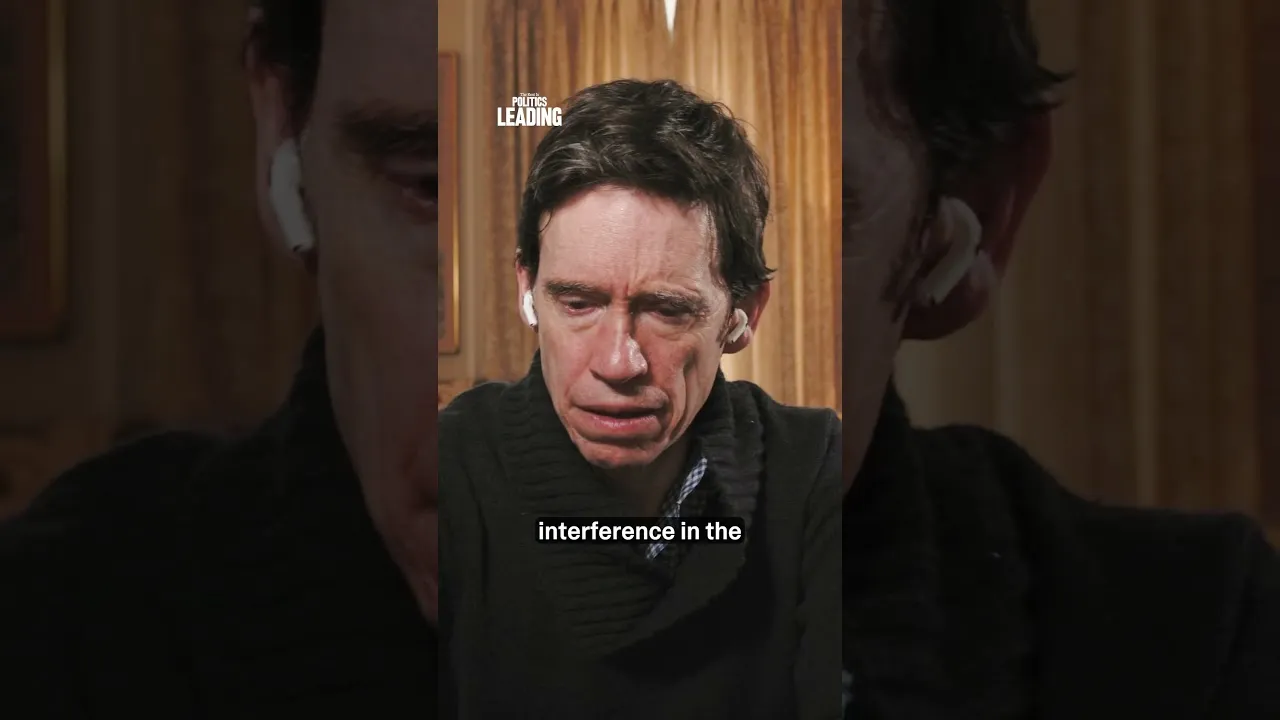
U.K. Prime Minister Andy Burnham made a historic admission, stating that Russia interfered in Britain's 2016 Brexit referendum. This marks the first time a British prime minister has publicly acknowledged Russian interference in the Brexit vote.
Burnham said it was important to put Moscow’s tampering on the record because countries across Europe are facing similar threats. He noted that misinformation and disinformation from Russia have affected German politics.
Burnham told The Rest is Politics podcast that upon arriving in No. 10 Downing Street, he had asked about possible Russian interference in the 2016 vote and received a clear answer that there was indeed interference.
The prime minister emphasized the need to inform the public about the extent to which foreign actors seek to disrupt the political process. He said the UK would set up a new center to combat disinformation.
Burnham warned that similar activities were taking place in France and Germany, where the pro-Russian Alternative for Germany party is gaining support.
The Intelligence and Security Committee found in 2020 that the government failed to fully assess the impact of Russian state-run media and 'troll' accounts on the EU referendum.
Burnham’s comments were met with criticism from Britain Unbound, a pro-Brexit campaign group, which called his remarks an attempt to undermine the legitimacy of the referendum.
The Russian foreign minister dismissed the report, calling it 'Russophobia' and insulting to suggest voters were easily duped.
Burnham did not provide further details about the type or extent of Moscow's activity during the Brexit referendum, but he stressed the importance of addressing such interference.
The Observer reported that Burnham had asked about Kremlin involvement when he became prime minister in July and was given a clear answer that there was interference.
Burnham’s acknowledgment comes amid concerns about Russian deepfake videos and other forms of disinformation used in elections around the world.
What this adds
Burnham's acknowledgment marks the first time a British prime minister has publicly admitted Russian interference in the Brexit vote.
The extent and nature of Russia's interference in the Brexit referendum remain unclear, as Burnham did not provide specific details.
What's confirmed
- LONDON -- U.K. Prime Minister Andy Burnham says it is clear that Russia interfered with Britain’s vote to leave the European Union, adding it was important to put Moscow’s tampering on the record because countries across Europe are facing the same threat.
- Parliament’s Intelligence and Security Committee found in 2020 that the government failed to fully assess the impact Russian state-run media and “troll” accounts could have had on the EU referendum.
- “There is certainly misinformation, disinformation that is emanating from Russia into German politics,” he added.
- “You know he was saying to me that the AfD are clearly linked to Russia, funded I believe,” Burnham said.
- Andy Burnham has said Russia did interfere with the Brexit referendum and warned that similar activities were taking place in France and Germany.
- The prime minister told The Rest is Politics podcast, external that upon arriving in No 10, he had asked about possible Russian interference in the 2016 vote, adding: "I've had the clear answer that, yes, there was."
- "It is also insulting to suggest that voters were so easily duped."
- "These things are important now to put clearly on the record and, I believe, help voters in Germany and France understand that some of this politics is instigated via our enemies, namely Russia," the Observer reports Burnham saying.
What's still developing
- In the same year, however, the then-Conservative government said it was "almost certain that Russian actors sought to interfere" in the 2019 general election.
- "I think we've been too much on the back foot on that actually and we haven't informed people sufficiently about the extent to which people are seeking to disrupt the political process from overseas," he added.
- Earlier this year, Vijay Rangarajan, head of the UK Electoral Commission, told MPs that Russian deepfake videos had been "used extensively in elections around the world".
- "We are doing this by strengthening our powers through the National Security Act, strengthening the resilience of our institutions and critical national infrastructure, strengthening our borders, and strengthening our police and intelligence agencies."
- A press release from the defense ministry notes that its procurement agency has contracted for 5.5 times as many drones as in the same period of 2025, and that the volume of deliveries has increased by almost 3.7 times. President Volodymyr Zelensky said "this week alone, the Russians have launched around 1,450 aerial bombs, 75 missiles of various types and over 1,640 attack drones, around 60% of which are jet-powered."
- It would mark the first public acknowledgment by a British prime minister of Russia's role in the country's divisive Brexit campaign, in which the country decided to leave the EU with 52% in favor and 48% wanting to remain part of the bloc.
- Russia has long been suspected of driving euroscepticism in the U.K.
- The Diplomacy and Law source said the European Union Referendum Act 2015 established an advisory vote whose outcome did not itself authorize withdrawal, and it said the Supreme Court in R (Miller) v Secretary of State for Exiting the European Union [2017] UKSC 5 held that parliamentary authorization was required before ministers could initiate withdrawal under Article 50.
- The Diplomacy and Law source said the Court of Appeal in R (Wilson and Others) v Prime Minister [2019] EWCA Civ 304 refused permission to appeal in proceedings challenging the legality of the Article 50 notification, emphasizing the referendum’s advisory character and the limits of statutory remedies.
- The Diplomacy and Law source said the central questions remained what Russia did during the 2016 campaign, whether its activities breached applicable legal rules, and what remedies, if any, remained available after Britain’s completed withdrawal from the European Union.
- He announced that the UK would set up a new centre to "stem the poisonous tide" of disinformation.