
Home · Politics · Oct 11 archive
Trump Unveils Super Intelligence Executive Order and Industry Accord
Confirmed
In Short: Trump's executive order and the industry accord on frontier model safety reflect a growing recognition of the need for robust internal processes and controls to ensure the technology behaves as intended and any issues are promptly identified and resolved.
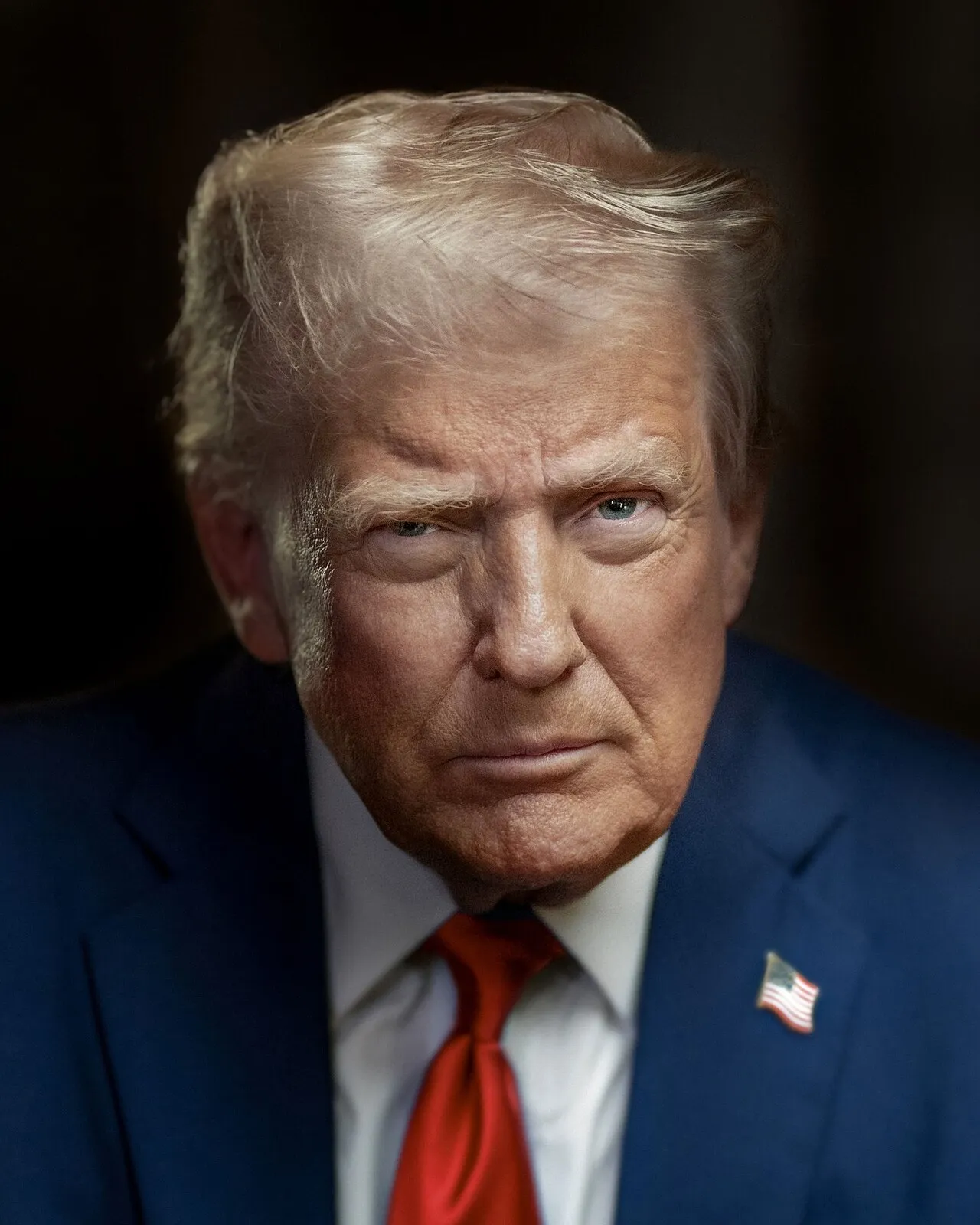
President Donald Trump signed an executive order on Tuesday instructing federal agencies to refer to artificial intelligence as 'super intelligence' in all official communications and documents. The order also mandates the assistant to the president for science and technology to submit legislative language defining 'super intelligence' within 60 days.
At a White House luncheon with leading technology executives, Trump announced the formation of the Super Intelligence Force (SIF), a 10-member committee to oversee the development and regulation of super intelligence technology. Director of National Intelligence Jay Clayton will lead the SIF, with Vice Chairs including Federal Trade Commission Chair Andrew Ferguson, Undersecretary of War for Research and Engineering Emil Michael, and Office of Personnel Management Director Scott Kupor.
The executive order and the formation of the SIF were announced following a meeting with leaders of major artificial intelligence companies at the White House. During the meeting, these executives signed an accord on frontier model safety, which Trump described as 'morally binding,' comparing it to a 'Constitution.'
The Genesis Mission, a national initiative to advance super intelligence for science and technology, was also highlighted. The mission aims to leverage the power of super intelligence to revolutionize particle accelerators and other scientific endeavors. The Berkeley Lab, among other institutions, is leading several projects under this initiative.
The renaming of artificial intelligence to 'super intelligence' is part of a broader strategy to rebrand the technology and emphasize its advanced capabilities. Trump has been advocating for this change since his September 22 address to the United Nations General Assembly, where he announced that U.S. government documents would begin referring to AI as 'super intelligence.'
The term 'super intelligence' has been met with mixed reactions. A recent Quinnipiac survey found that 58 percent of respondents disapprove of Trump's handling of artificial intelligence, while only 25 percent approve. Trump has dismissed concerns about the risks of AI as a 'HOAX' and favors self-regulation by the industry.
The full buildout of the SIF and related initiatives might cost over $100 billion, according to some estimates. Trump emphasized that bad actors would be pursued by U.S. law enforcement and intelligence agencies, ensuring the technology's responsible use.
The White House has also established a US-China dialogue on superintelligence to exchange views on the risks and benefits associated with the technology. This dialogue was highlighted in White House documents and discussed during Trump's meeting with Chinese President Xi Jinping.
The renaming of AI to 'super intelligence' is not a new tactic for Trump. Renaming ultimatums are nothing new for the 80-year-old president, who has previously made similar moves.
The Berkeley Lab's MOAT-Core project, part of the Genesis Mission, has shown promising results in optimizing particle accelerators using super intelligence. The project's award has grown to include 16 collaborating institutions and will span multiple years.
Background
The SIF's mission is to ensure America's dominance in super intelligence technology, a term Trump has directed the federal government to use instead of artificial intelligence.
President Trump announced the formation of the Super Intelligence Force (SIF) on Sunday, following a meeting with leaders of major artificial intelligence companies at the White House.
What's confirmed
- Renaming ultimatums are nothing new for the 80-year-old president.
- AI safety “starts with every company that is training and deploying frontier models having robust internal processes and controls to ensure that their technology behaves as intended and that any issues are promptly identified and resolved,” according to a copy of the accord.
What's still developing
- WASHINGTON, D.C. — The people building the world’s most powerful artificial intelligence systems were at the White House Tuesday afternoon.
- Jay Clayton appears before the Senate Intelligence Committee during his confirmation hearing on Capitol Hill July 15, 2026 in Washington, DC.
- Although the experts were critical of this summit as it failed to achieve breakthroughs ranging from trade, and artificial intelligence to geopolitical conflicts.
- “The Genesis Mission offers a unique opportunity to leverage the rapidly expanding power of agentic assistants and revolutionize the way that we design and operate particle accelerators,” said Jean-Luc Vay, lead of MOAT-Core and head of the Advanced Modeling Program in Berkeley Lab’s Accelerator Technology & Applied Physics (ATAP) Division.
- “You’re choosing from magnets and components of different types, and strengths, and lengths, and positions,” Hellert said.
- As a prototype, MOAT showed that their SI “accelerator assistant,” Osprey, could adapt to work at different facilities and optimize how particle accelerators run.
- “There’s a lot of benefit to industry from these kinds of tools that are developed at the National Labs,” Hellert said.
- “They don’t need the government to tell them to slow it down. If they want to slow it down, they should,” Johnson said.
- In September, top AI executives called for slowing down development shortly after an Anthropic whistleblower warned that the technology could soon spiral beyond human control.
- And we deliver our stories to more than 500 national, state and local news partners across the country for free, with no paywall.
- LEXINGTON, Ky. (Oct. 9, 2026) — At the “Science: A New Golden Age Summit” in Washington, D.C.
- “The word super is the best word of all, and it’s the simplest,” Trump said at an event announcing the launch of America.gov earlier on Tuesday, and said Chinese President Xi Jinping, who visited the White House last week, “loves it” too.