
Home · Science · Oct 7 archive
Study Reveals Restored Oyster Reefs Could Boost Global Health by $12 Trillion
Developing
In Short: A new study published in Frontiers in Marine Science shows that restored oyster reefs could add $12 trillion annually to global health and economic benefits.
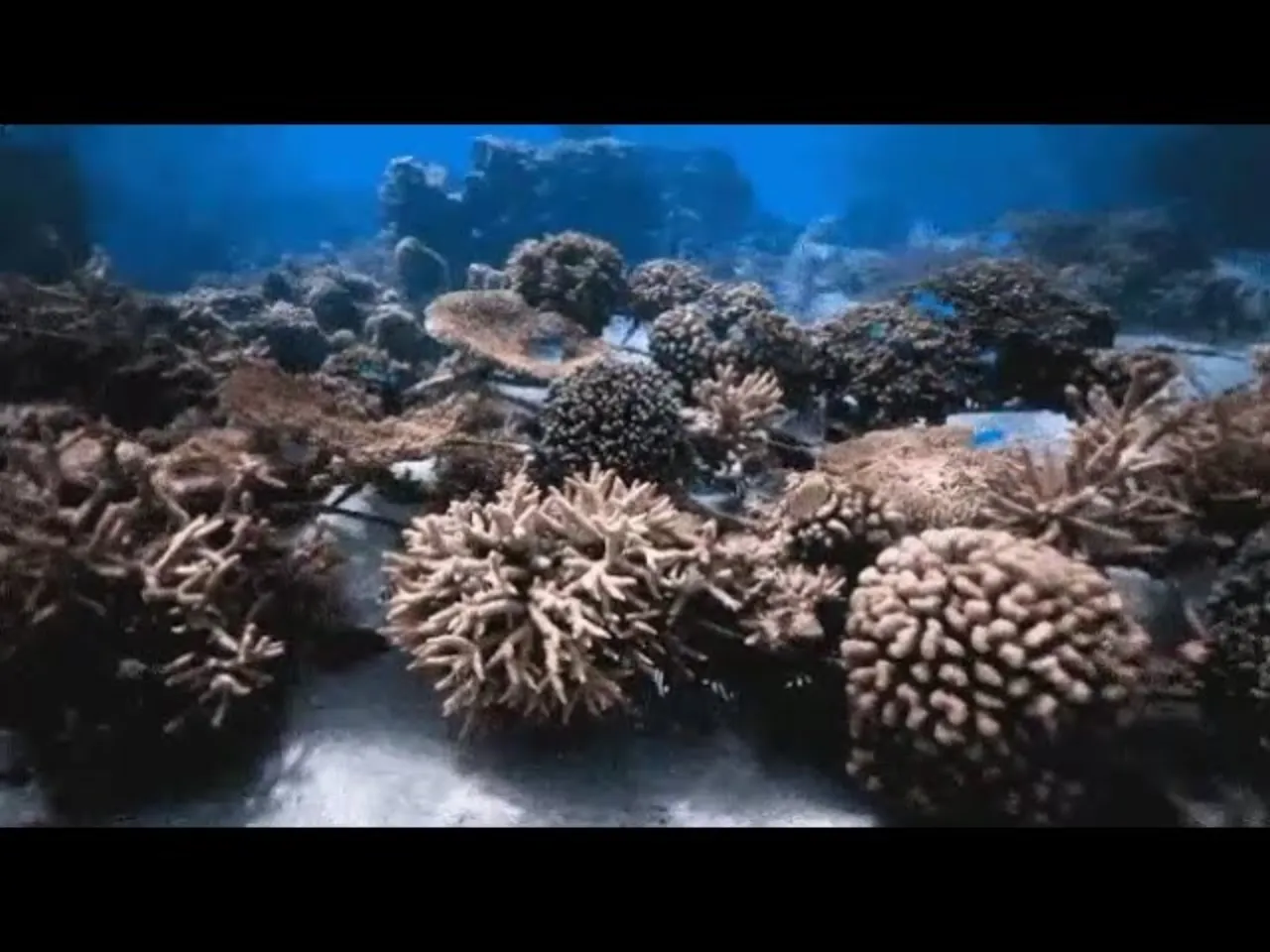
Researchers in China, led by Matteo Convertino and Yuhan Wu, published a study in the journal Frontiers in Marine Science indicating that fully restored oyster reefs in the top ten hotspot countries worldwide could yield a gross ecosystem product (GEP) of $12 trillion annually.
The study identifies nine other 'hotspot countries' with high ecopotential for oyster reefs: China, Australia, Chile, Japan, South Korea, Argentina, France, Germany, and Italy.
Oyster reefs, also known as oyster beds or banks, are crucial for water filtration, shoreline stabilization, and carbon capture, making them significant contributors to both environmental and economic health.
However, over the past century, human-caused pollution, overharvesting, and climate change have led to the degradation or destruction of over 80% of the world’s oyster reefs.
The researchers used public databases to assess where suitable habitats for oyster reefs exist and where reefs could form under restorative circumstances.
They estimated the potential value of the entire 'portfolio' of ecosystem services these reefs could deliver, including water filtration, shoreline protection, nutrient recycling, and carbon sequestration.
In the United States alone, fully restored reefs could provide an annual GEP of over $25 billion.
Convertino and Wu project that some countries may see an expansion of reefs due to more favorable conditions for oyster growth and dispersal, particularly in Australia, Indonesia, South Korea, Japan, and France.
However, Convertino expressed pessimism, stating that if Earth’s current climate trajectory does not improve, the planet could lose roughly 30% of its remaining oyster reefs within a decade.
He warned, “This situation might accelerate quite fast… we could lose all oyster reefs by 2100 if we do nothing.”
What this adds
The study adds new estimates of the economic and environmental benefits of restored oyster reefs, highlighting the potential for significant global impact.
The researchers have not established specific timelines or detailed plans for the restoration of oyster reefs in the identified hotspot countries.
Background
Researchers in China published a study in the journal Frontiers in Marine Science indicating that restored oyster reefs could add $12 trillion annually to global health and economic benefits.
What's confirmed
- “Because global warming generally decreases the habitat quality of oyster reefs, we expect that their global GEP will go down from the current potential value of $12 trillion,” Convertino said in a statement.
- “In other words, the current oyster situation is very suboptimal but there is a huge opportunity, considering the benefits,” he said.
What's still developing
- But authors of a study published Tuesday in the journal Frontiers in Marine Science believe that humans, not just sea critters, stand to gain highly from oyster reef restoration.
- Reefs are currently only found in 10% of the roughly 114,000 square miles worldwide that Wu and Convertino deemed as “suitable” habitat.
- Also known as oyster beds or oyster banks, these large colonies of amassed mollusks formed on rocks or other hard surfaces attract fish, birds, crustaceans and marine flora — much like coral reefs.
- Investing in oyster banks could provide trillion-dollar payoffs towards both the global seafood industry and scientific efforts to counteract the planet’s warming climate, researchers say.
- From there, the researchers estimated ecological values of oyster reef presence, like water filtration and shoreline stabilization, alongside pure monetary value added to the international oyster trade.
- Even the “rich people boxes” were filled, he said.
- “I gotta do a little bit better in the back,” he said.
- “The Democrats are the party of hatred,” Vance said.
- The dubious promise would likely cost more than $1 trillion and require congressional approval, and would further fan inflation concerns and exacerbate the country’s nearly $1.8 trillion annual budget deficit.
- A new study shows that the world's oyster reefs are a precious resource that's vastly underestimated and underutilized.
- The authors set out to calculate the reefs' potential gross ecosystem product (GEP), the ecological counterpart of the gross economic product, and arrived at trillions of dollars of ecosystem goods and services delivered each year to different aspects of planetary health, including human wellbeing.
- But today, oyster reefs—like all coastal ecosystems—are under growing pressure from overexploitation, pollution, and climate change.