
Home · Business · Oct 7 archive
Should I put my nest egg in a 30-year Treasury bond?
Confirmed
In Short: The US Treasury Department proposes new regulations that would revoke tax-exempt status for schools considering race in policies and require citizenship disclosure on tax returns.
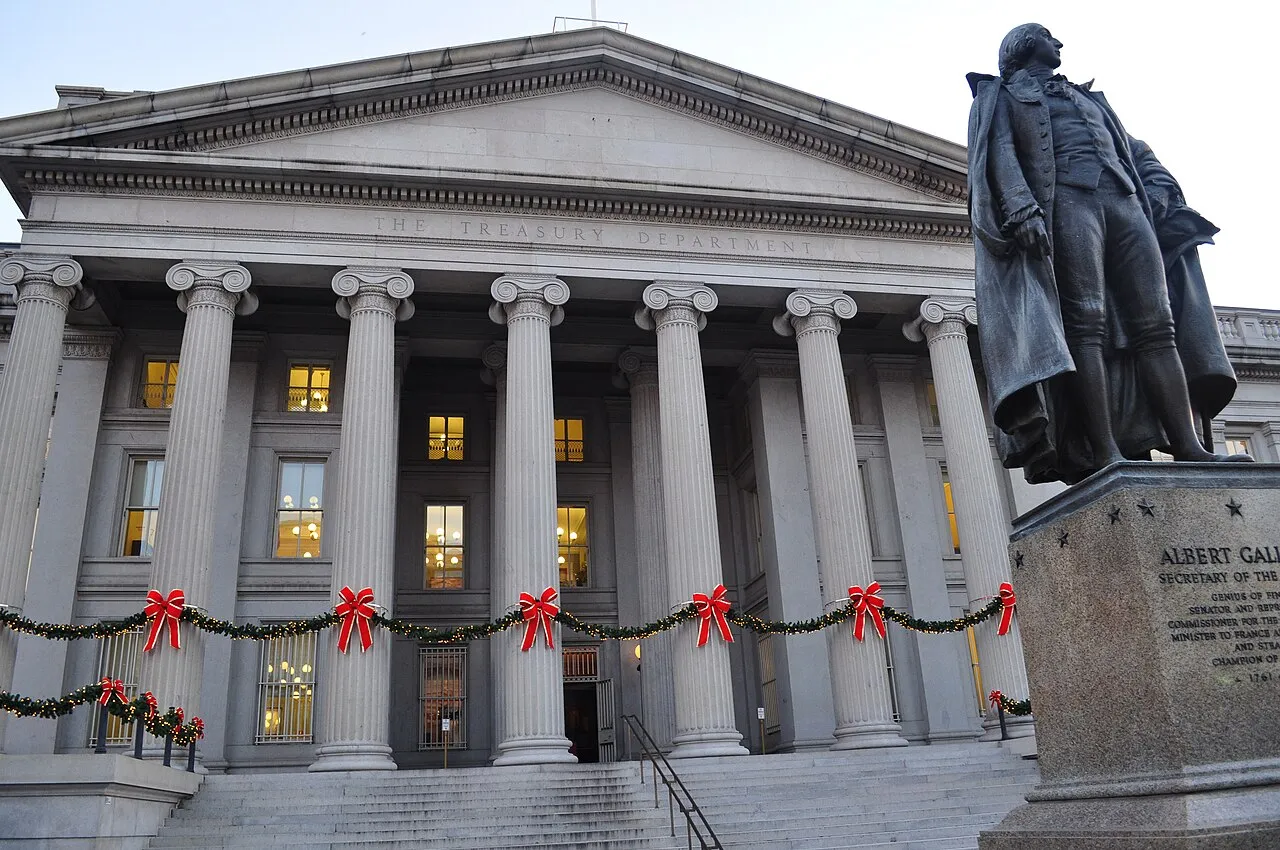
The US Treasury Department has proposed new regulations that would revoke the federal tax-exempt status of private schools and colleges that consider race, color, or national origin in their policies and practices.
These proposed rules, if finalized, would impact private institutions with federal tax-exempt status, requiring them to review their existing policies to ensure compliance and avoid jeopardizing their exempt status.
In a separate move, the Treasury Department announced that tax returns would require individuals to disclose their citizenship status to prevent illegal immigrants from claiming refundable tax credits such as the Earned Income Tax Credit or the Additional Child Tax Credit.
Treasury Secretary Scott Bessent stated that these measures are aimed at reinforcing longstanding federal policies against racial discrimination in education and ensuring tax credits are only claimed by eligible citizens.
Meanwhile, the Treasury Department also announced sanctions against 36 commercial and private airlines and foreign companies providing cargo services to Iran, including Mahan Air.
These sanctions are part of the Economic Outcast operation announced by Washington at the end of August, targeting financial and commercial networks and channels that Iran uses to circumvent sanctions.
Bessent warned that any entity dealing with the remaining Iranian airlines risks being cut off from the global financial system.
The sanctions and regulatory changes come as the US stock market opened lower on Wednesday, September 23, with higher crude oil prices and government bond yields weighing on investor sentiment.
Higher energy prices and rising Treasury yields have added to inflation concerns and affected borrowing costs, impacting the broader market.
Investors are navigating a high-yield environment, with the 10-year Treasury note clearing 5.10% and the 30-year notes yielding up to 5.44%, their highest levels since before the global financial crisis.
Income investors, particularly those on fixed incomes, are advised to carefully consider these factors when making investment decisions.
Background
The benchmark 10-year US Treasury yield note rose to its highest since 2007, reaching 5.041%, and the 30-year Treasury yield also hit a 19-year record, reaching 5.38%, a level not seen since before the global financial crisis nearly two decades ago.
The U.S. 10-year Treasury yield climbed to a new 24-year high on Wednesday, September 30, 2026, surpassing its 2007 intraday peak.
What's confirmed
- The US Treasury Department has proposed new regulations that would revoke the federal tax-exempt status of private schools and colleges that consider race, color, or national origin in their policies and practices.
- These proposed rules, if finalized, would impact private institutions with federal tax-exempt status, requiring them to review their existing policies to ensure compliance and avoid jeopardizing their exempt status.
- In a separate move, the Treasury Department announced that tax returns would require individuals to disclose their citizenship status to prevent illegal immigrants from claiming refundable tax credits such as the Earned Income Tax Credit or the Additional Child Tax Credit.
- Treasury Secretary Scott Bessent stated that these measures are aimed at reinforcing longstanding federal policies against racial discrimination in education and ensuring tax credits are only claimed by eligible citizens.
- Meanwhile, the Treasury Department also announced sanctions against 36 commercial and private airlines and foreign companies providing cargo services to Iran, including Mahan Air.
- These sanctions are part of the Economic Outcast operation announced by Washington at the end of August, targeting financial and commercial networks and channels that Iran uses to circumvent sanctions.
- Bessent warned that any entity dealing with the remaining Iranian airlines risks being cut off from the global financial system.
- The sanctions and regulatory changes come as the US stock market opened lower on Wednesday, September 23, with higher crude oil prices and government bond yields weighing on investor sentiment.
- Higher energy prices and rising Treasury yields have added to inflation concerns and affected borrowing costs, impacting the broader market.
- Investors are navigating a high-yield environment, with the 10-year Treasury note clearing 5.10% and the 30-year notes yielding up to 5.44%, their highest levels since before the global financial crisis.
- Income investors, particularly those on fixed incomes, are advised to carefully consider these factors when making investment decisions.
What's still developing
- You Vote: Do you agree with Trump admin that IRS returns should have to disclose citizenship status?
- Choices Yes, of course No, the forms should not have to reveal citizenship or work authorization status.
- Fitch Ratings adds that rising JGB yields and expected faster policy rate hikes in 2026–2027 should support the Yen and domestic bond demand over time.
- Treasurys have had little immediate market impact, but the headline numbers underscore the risks to U.S.
- The Treasury Department also issued an alert requesting financial institutions to report procurement networks supporting Iran's aviation sector and targeted regional companies that it said had helped Tehran acquire aircraft and sensitive US-origin technology.
- Reuters reported that rising crude prices and government bond yields were putting pressure on Wall Street at the open.
- Gordon Sondland discusses Treasury Secretary Scott Bessent pressing G20 nations for more economic sanctions on Iran and why Europe must choose between the U.S.
- He warns that if Michael should suffer some supposedly random misfortune—an implausible suicide, a fatal accident or even a bolt of lightning—"then I’m going to blame some of the people in this room…" The message was unmistakable: Do not hide an attack behind coincidence, an intermediary or a carefully manufactured lack of proof.
- If a drone mysteriously crosses into the territory of an Eastern European country, we should presume Vladimir Putin is responsible.
- If a power cable is severed beneath the Baltic Sea, we should presume Vladimir Putin is responsible.
- If a government network is crippled, a weapons factory explodes, a railway system is disrupted or a political figure suddenly becomes the beneficiary of a sophisticated disinformation campaign, we should presume Vladimir Putin is responsible.
- According to the Invesco fund fact sheet, these instruments mature exactly like an individual bond on a fixed date — in this case, Dec. 31, 2028.
Sources
- Justthenewslink
- Fxstreetlink
- Thepeninsulaqatarlink
- Sundayguardianlivelink
- Fox Newslink
- 247Wallstlink
- Natlawreviewlink
- Nationalpostlink
- WarpBeat — background on US 10-Year Treasury Yield Hits Highest Since 2007 link
- WarpBeat — background on US 10-Year Treasury Yields Hit 24-Year High link
- PJ FinanceShow — video link