
Home · World · Oct 7 archive
Russian Lab Worker's Death Sparks Global Health Concerns
Confirmed
In Short: Russian authorities are keeping tight control over information regarding the death of a lab worker in Siberia, which has sparked global health concerns over a potential pneumonic plague outbreak.
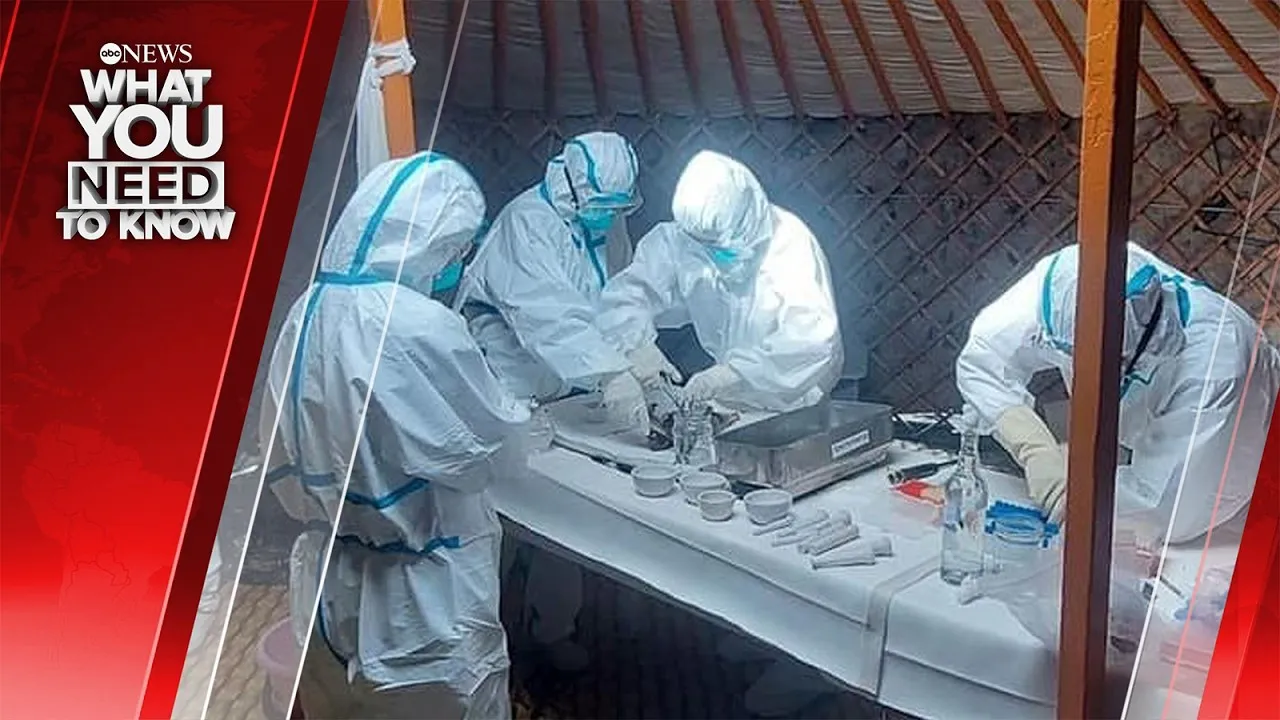
Russian authorities are keeping tight control over information regarding the death of a lab worker in Siberia, which has sparked global health concerns over a potential pneumonic plague outbreak. According to the Seattletimes and Arabnews (Saudi Arabia), Russian officials have not provided a clear explanation for the worker's death.
The worker, identified as 28-year-old Darya Shipilova by the news outlet Lyudi Baikala and confirmed by AFP and Arabnews (Saudi Arabia), was hospitalized with cold symptoms on September 29 and died three days later. Shipilova worked at the Irkutsk Anti-Plague Research Institute of Siberia and the Far East.
Despite the concerns, Russian health authorities have stated that extensive testing found no evidence that the worker's illness was caused by any of the pathogens she worked with. Rospotrebnadzor, Russia’s public health watchdog, reported that the worker was diagnosed with 'pneumonia of unknown etiology,' meaning its origin was not known, according to Arabnews (Saudi Arabia) and Fox News.
The World Health Organization (WHO) has expressed a need for more information from Russia. A top WHO official, as reported by the Seattletimes, urged Russia to provide more details about the case. The CDC, as noted by Al Jazeera (Qatar), is aware of and closely monitoring the situation but stated that the incident poses little risk to the US.
Local Russian media and the Seattletimes reported that Russian health authorities have taken swift and serious measures, including treating the sick, isolating them and their contacts, and looking for new cases. However, Judy Twigg, a professor at Virginia Commonwealth University, noted that officials sought to play down the situation and any statements that strayed from the party line were edited or deleted within hours.
Vasily Vlassov, a professor at Russia’s Higher School of Economics, said the measures taken appeared sensible, focusing on treating the sick, isolating them and their contacts, looking for new cases, and carrying out final disinfection.
The U.S. has offered assistance to Russia amid mounting global concern. The Kremlin welcomed President Trump’s offer to provide assistance, but gave no more details about the case. Secretary of State Mike Pompeo emphasized the seriousness of the situation, noting the potential for a global pandemic if such outbreaks are not handled transparently.
Despite the concerns, Michael Osterholm, an epidemiologist at the University of Minnesota, stated that the case does not cause undue concern, as long as rapid identification and treatment of infected individuals are ensured.
The incubation period for pneumonic plague, the disease’s most virulent form, can be as short as 24 hours, according to the WHO. If left untreated, the death rate of pneumonic plague is almost 100 percent, as noted by Smithsonian Magazine.
In summary, while Russian authorities maintain that the worker's death is not linked to pneumonic plague, global health organizations and experts are calling for more transparency and rapid action to address the situation.
What this adds
The incident highlights the importance of transparent communication in managing public health crises, especially when dealing with highly infectious diseases like pneumonic plague.
What's confirmed
- Russian authorities are keeping a tight lid on information about last week's suspicious death of a lab worker in Siberia that has been surrounded by secrecy and claims that it could have been caused by pneumonic plague.
- It said authorities were completing a "complex of prophylactic measures and medical observation over contacts," adding that so far they have found two cases of COVID-19 and two cases of rhinovirus.
- The news outlet Lyudi Baikala — or "People of Baikal" — identified the dead lab worker as 28-year-old Darya Shipilova and said she first was hospitalized with cold symptoms Sept. 29 and died three days later.
- Asked what the U.S. intelligence community was saying about the case, Trump said the U.S. is in “very deep discussions” on the topic.
- In its tersely worded statements, Russia’s public health watchdog, Rospotrebnadzor, does not link the case to pneumonic plague, saying only that “extensive” testing found no evidence the lab worker’s illness was caused by any of the pathogens she worked with at the Irkutsk Anti-Plague Research Institute of Siberia and the Far East.
- "Anybody that has that kind of a problem, we're always willing to help," he said.
What's still developing
- AFP’S coverage is expanding thanks to its prestigious network of more than 70 photo agencies.
- Rihanna and US rapper ASAP Rocky arrive for the 2026 Met Gala celebrating "Costume Art" Visitors and a virtual reality headset displayed at the AI Impact Summit.
- Agence France-Presse (AFP) is a global news agency that provides reliable, comprehensive, real-time coverage of the stories shaping our daily lives, drawing on a unique network of journalists based in 210 locations around the world.
- “We need to understand exactly what has happened. And we have to assume we may not know the full truth,” he added in a separate post as he echoed the Trump administration’s calls for more transparency from Russia.
- “It is always very good when mutual assistance is offered,” presidential press secretary Dmitry Peskov told journalists.
- "While the circumstances of this reported case remain unconfirmed, plague is a serious bacterial disease that is treatable with antibiotics, particularly when recognized and treated early," a Department of Health and Human Services spokesperson noted in a statement.
- Irkutsk Gov. Igor Kobzev said she died of a “particularly dangerous infection” and everyone who came into contact with her has remained under medical supervision.
- On Monday, Pompeo said in a post on X, "The news of a suspected ‘plague’ outbreak from Russia should be treated with the utmost seriousness, especially considering the source."
- "COVID showed us how the lies and obstruction of authoritarian governments seeking to cover their tracks can turn a containable outbreak into a global pandemic," Pompeo said.