
Home · World · Oct 7 archive
Russian Lab Worker's Death Sparks Global Concerns Over Pneumonic Plague
Confirmed
In Short: Russian authorities are maintaining a tight lid on information surrounding the death of a lab worker in Siberia, which has sparked global concerns over a potential pneumonic plague outbreak.
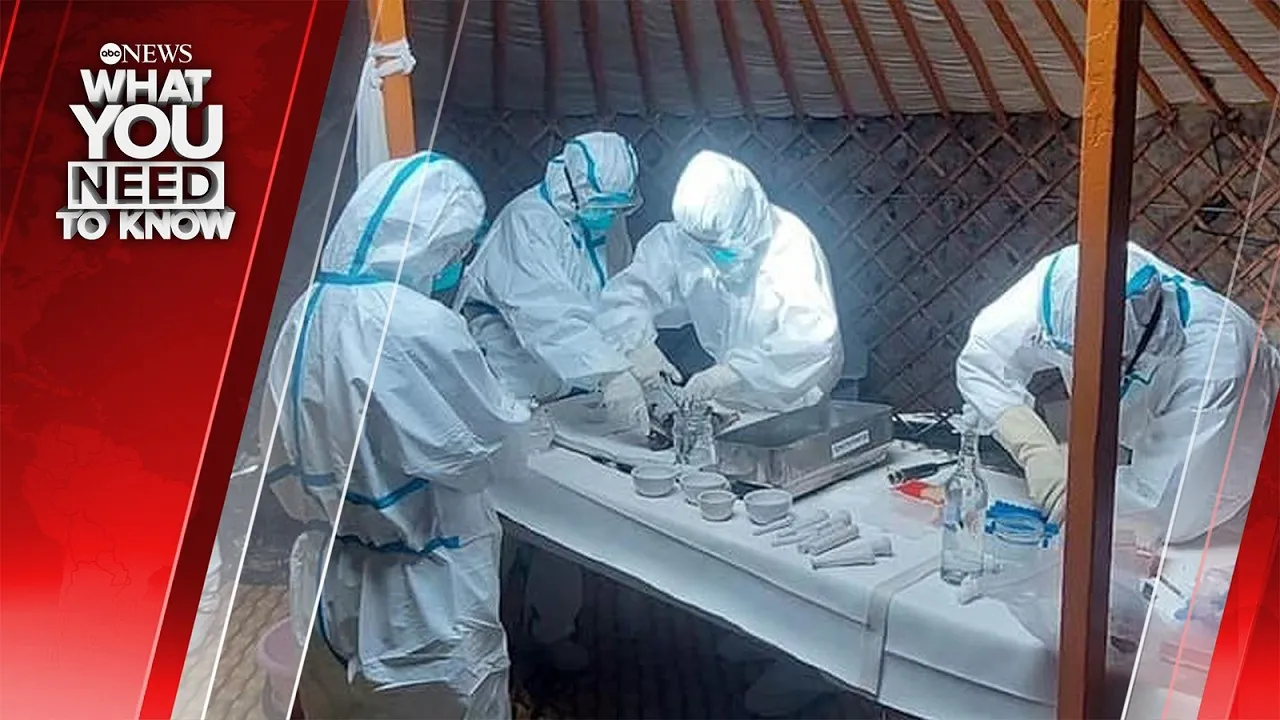
Russian authorities are maintaining a tight lid on information surrounding the death of a lab worker in Siberia, which has sparked global concerns over a potential pneumonic plague outbreak.
The Seattle Times and PBS reported that the deceased lab worker, identified as 28-year-old Darya Shipilova, was first hospitalized with cold symptoms on September 29 and passed away three days later.
According to the Irkutsk Anti-Plague Research Institute, Shipilova was diagnosed with pneumonia of unknown etiology, a term indicating the origin of the illness is not known.
In response to the incident, the U.S. Centers for Disease Control and Prevention (CDC) stated it is 'aware of and closely monitoring' the situation, while the World Health Organization (WHO) urged Russia to provide more information.
Irkutsk Governor Igor Kobzev said Shipilova died of a 'particularly dangerous infection' and that everyone who came into contact with her remains under medical supervision.
The Russian public health watchdog, Rospotrebnadzor, reported that so far, they have found two cases of COVID-19 and two cases of rhinovirus among contacts.
The U.S. intelligence community is reportedly in 'very deep discussions' about the case, reflecting the growing international concern over the incident.
Former Rospotrebnadzor chief Gennady Onishchenko suggested that even if pneumonic plague were confirmed, he did not expect the disease to spread widely.
What this adds
The incident has raised broader concerns about Russia's handling of public health crises and its transparency with international partners.
What's confirmed
- Russian authorities are keeping a tight lid on information about last week's suspicious death of a lab worker in Siberia that has been surrounded by secrecy and claims that it could have been caused by pneumonic plague.
- The news outlet Lyudi Baikala — or "People of Baikal" — identified the dead lab worker as 28-year-old Darya Shipilova and said she first was hospitalized with cold symptoms Sept. 29 and died three days later.
- It said authorities were completing a "complex of prophylactic measures and medical observation over contacts," adding that so far they have found two cases of COVID-19 and two cases of rhinovirus.
- Asked what the U.S. intelligence community was saying about the case, Trump said the U.S. is in "very deep discussions" on the topic.
- In its latest statement Tuesday, the agency said "the sanitary and epidemiological situation in the Irkutsk region, the cities of Irkutsk and Shelekhov is calm."
- READ MORE: What to know about a Russian lab worker's death and speculation about pneumonic plague Russia's public health watchdog, Rospotrebnadzor, said Sunday the lab worker was diagnosed with "pneumonia of unknown etiology," meaning its origin was not known.
What's still developing
- In the wake of Russia’s invasion of Ukraine last February, defense observers became increasingly concerned that China might be inspired to follow suit by invading its wayward neighbor Taiwan.
- “We need to understand exactly what has happened. And we have to assume we may not know the full truth,” he added in a separate post as he echoed the Trump administration’s calls for more transparency from Russia.
- 18, Trump was asked about warnings from Polish leaders expressing concern that Russia could escalate its war by launching attacks against Ukraine’s Western allies.
- “When a threat arises, we warn the Polish people and defend our security. It is only natural that we prepare for worst-case scenarios, while deeply believing that they will never come to pass,” interior minister Marcin Kierwiński told the Rzeczpospolita newspaper.
- “I think Putin needs a pretext for mobilisation, so they might carry out a false-flag attack to tell the Russians, ‘We are under attack, and that is why we must mobilise,’” he added.
- It was not immediately clear who carried out the attack by air and sea drones about 70 miles (112 km) off the coastal town of Byala in eastern Bulgaria, but there are growing concerns about hybrid attacks by Russia as it wages war in Ukraine.
- Ukraine’s Foreign Minister Andrii Sybiha said in a post on X that Russia was creating “a dangerous chain of consequences” through attacks on civilian shipping.
- Air Force Secretary Troy Meink told the Air and Space Cyber Conference in Maryland on Monday that the purpose is to "continue to ensure we remain ready to meet the challenges of evolving threats wherever they exist."
- Meink said the Air Force is expanding its use of autonomous systems and predicted the service would look “radically different” by 2032.
- The bill, authored by the late Senator Lindsey Graham of South Carolina, a staunch supporter of Ukraine, would grant President Donald Trump the authority to impose 100 percent tariffs on the five largest importers of Russian oil and natural gas, as well as on five countries that help Russia evade energy sanctions.
- Kyiv reports new territorial gains in Donetsk as Moldova investigates a suspected drone incursion and Ukraine presses governments to close Russian cultural centers over alleged espionage and propaganda Ukraine struck a Moscow oil refinery with long-range weapons on Sunday, September 20, targeting a facility its military said supplies Russian forces, as Russia held the final day of parliamentary voting and Ukrainian authorities reported deadly Russian attacks around Kyiv.
- “Shandryholove and Derylove have been liberated. Drobysheve is under full Ukrainian control,” Biletskyi said.