
Home · Faith · Oct 7 archive
Pope Leo Urges Church to Support Fragile Families
Confirmed
In Short: Pope Leo XIV caressed a baby as he left after his weekly general audience in St. Peter's Square, emphasizing the church's commitment to supporting families in their weakest moments.
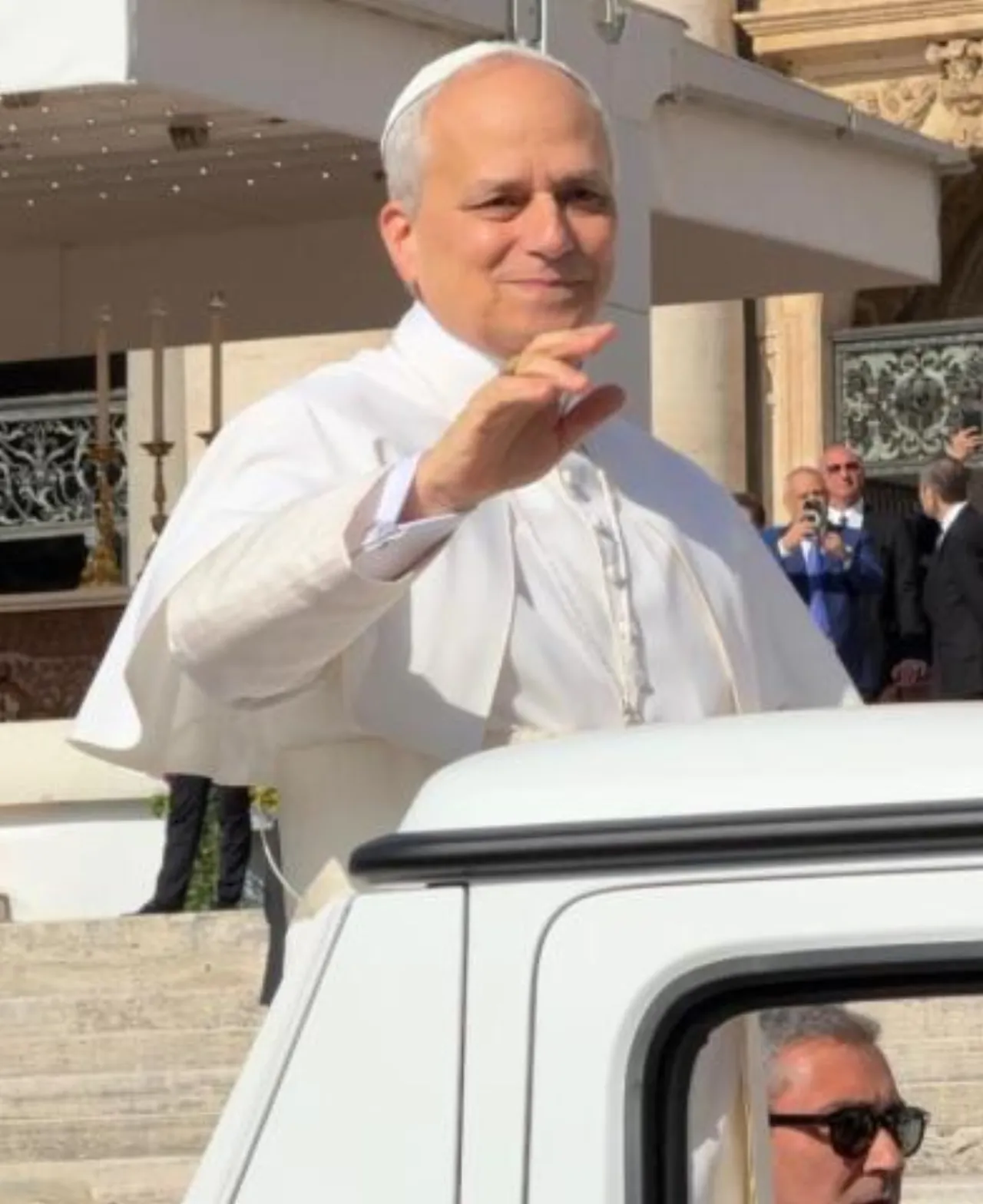
Pope Leo XIV urged Catholic bishops to accompany families facing 'limits, wounds and apparent failure,' continuing the pastoral approach of his predecessor, Pope Francis, at a Vatican gathering marking the 10th anniversary of 'Amoris Laetitia,' Francis' teaching document on marriage and family.
Published in 2016, 'Amoris Laetitia' ('The Joy of Love') was Francis' second apostolic exhortation, reflecting on the importance of accompanying families, especially those in complicated situations.
The Vatican meeting, held from October 7 to 14, brought together presidents of bishops' conferences and heads of Eastern Catholic churches, alongside married couples and experts, to assess the impact of 'Amoris Laetitia' and discuss how the church can better support families.
Pope Leo emphasized the gap between people's aspirations and the reality of their lives, stating that 'we need grace, forgiveness and new beginnings' to renew faith and fidelity in the face of everyday challenges.
Cardinal Pietro Parolin, the Vatican's Secretary of State, underscored the importance of 'building strong and authentically Christian families,' highlighting the role of families in shaping relationships, emotions, faith, and life choices.
Pope Leo XIV stressed that the path started by Francis to address marriage and family issues, marked by a spirit of dialogue and inclusivity, is 'a journey that we are called to continue.'
Sister Helen Alford, president of the Vatican’s social sciences academy, urged the bishops to consider the concept of the 'law of gradualness' in applying church law to difficult family situations.
Pope Leo XIV opened a weeklong and closed-door conference assessing the implementation of Pope Francis' 2016 document, which covers a range of issues affecting Catholic families, including poverty, war, LGBTQ+ children, and divorce.
Despite the document's aim to minister to families, it sparked controversy among conservative Catholics who argued it had sown confusion about the church’s teaching on the indissolubility of marriage.
Pope Leo XIV caressed a baby as he left after his weekly general audience in St. Peter's Square, emphasizing the church's commitment to supporting families in their weakest moments.
Pope Leo XIV greeted cardinals and bishops at the end of his general audience, reinforcing the church's role in listening to and responding to families in need.
What this adds
Church doctrine traditionally held that Catholics who remarried without a church annulment were living in sin and couldn’t receive the sacraments.
Background
ROME — Ten years after Pope Francis issued the controversial document Amoris Laetitia, Pope Leo XIV is inviting church leaders to Rome to discuss its implementation.
Pope Leo XIV honored St. Francis of Assisi during a Sunday address in St. Peter’s Square, marking the eighth centenary of the saint’s death.
What's confirmed
- VATICAN CITY (RNS) — Pope Leo XIV urged Catholic bishops to accompany families facing “limits, wounds and apparent failure,” continuing the pastoral approach of his predecessor, Pope Francis, as he addressed a Vatican gathering marking the 10th anniversary of “Amoris Laetitia,” the late pontiff’s teaching document on marriage and family.
- “The experience of fragility raises the question of whether we are able to remain close to one another when life no longer corresponds to what had been hoped for, and whether we can recognize the work of grace even in situations marked by limits, wounds and apparent failure,” Leo said.
What's still developing
- Leo called the text an “important” step in the church's long tradition of ministering to Catholic families for the sake of passing the faith on to future generations.
- Pope Leo and the various presenters have alluded to the many social, political and cultural changes that have happened since Pope Francis published “Amoris Laetitia” on March 19, 2016, impacting families worldwide.
- Charged with guiding the discussions, the Italian Jesuit stressed that despite similarities in format, the primary goal is to see how the Francis' apostolic exhortation has been received.
- “The experience of families has something to teach everyone, since fragility belongs to our common human condition and therefore also to the life of the Church,” the pope said in his address on Wednesday (Oct. 7).
- Sister Helen Alford, a Dominican nun and president of the Pontifical Academy of Social Sciences, reflected on the story of the Samaritan woman’s meeting with Jesus in her remarks to explain that even those living in fragile and irregular family situations can help proclaim the Gospel.
- The footnote sparked sharp divisions over Francis’ pastoral approach on the family and doctrine, with four cardinals issuing formal questions about the document — or dubia — which the pontiff never directly answered.
- He said the document has now been applied in different cultures, countries and families, allowing the church to learn more about its advantages and challenges.
- Its footnote 351 cautiously opened the door for allowing some divorced and civilly remarried Catholics to receive Communion following the accompaniment of a priest.
- For a variety of reasons, such annulments often can't be obtained, though Francis issued a separate reform to simplify, facilitate and accelerate the process.
- They argued that church doctrine held that Catholics who remarried without a church annulment were living in sin and couldn’t receive the sacraments.
- He urged the bishops to pay specific attention to families in their weakest moments, to listen to them, and to look at whether the church is able to respond to them.