
Home · Science · Oct 7 archive
Nobel Prize in Chemistry Awarded for Solving Life's Asymmetry Mystery
Confirmed
In Short: The Nobel Committee highlighted their contributions to understanding non-linear effects and autocatalysis in asymmetric organic synthesis, which has been a long-standing mystery in chemistry.
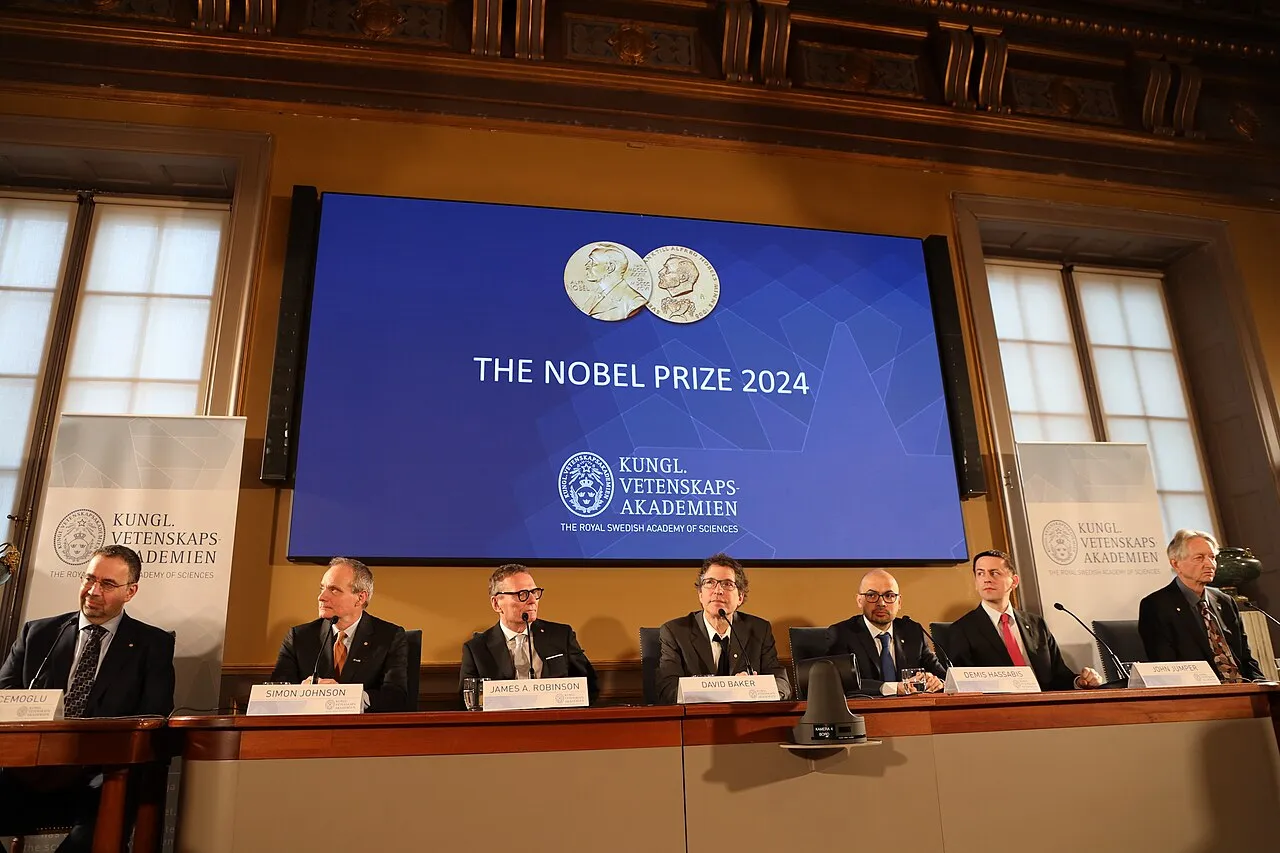
French scientist Henri B. Kagan and Japanese chemist Kenso Soai were awarded the 2026 Nobel Prize in Chemistry for their groundbreaking work on asymmetric organic synthesis, announced at a press conference by the Royal Swedish Academy of Sciences.
Their work specifically addresses the phenomenon of chirality, where molecules can exist in two mirror-image forms, known as left and right-handed molecules.
The Nobel Prize recognizes their discovery of the 'Soai reaction,' a method that has been described as one of the most remarkable chemical experiments ever conducted.
The prize includes a medal and a share of 12 million Swedish Kronor ($1.25 million; £900,000).
Kagan and Soai's research has enabled chemists to design chemical reactions that produce predominantly one form of a molecule, which is crucial for the development of pharmaceuticals.
Professor Kenso Soai expressed his excitement over receiving the news, calling it one of the most exciting days of his life.
The Nobel Committee's chair, Heiner Linke, emphasized the significance of their work, stating that it has provided fundamental tools for chemists and solved one of chemistry's greatest mysteries.
The Nobel Prize in Chemistry was first awarded in 1901 and is considered one of the most prestigious awards in the field.
This year's Nobel Week began with the Nobel Prize in Medicine, awarded to three scientists for their work on using light to understand brain function.
The Nobel Prize in Chemistry 2026 marks the third prize to be announced during Nobel Week, following the awards in Medicine and Physics.
What this adds
The exact details of the third Nobel Prize recipient mentioned in the facts have not been provided.
What's confirmed
- "The chemical reactions they have developed are spectacular."
- Kagan and Kenso Soai have been awarded the 2026 Nobel Prize in Chemistry “for the discovery of non-linear effects and autocatalysis in asymmetric organic synthesis,” the Nobel Prize-awarding body announced on Wednesday.
- BREAKING NEWS The Royal Swedish Academy of Sciences has decided to award the 2026 #NobelPrize in Chemistry to Henri B.
- “Heinrich Kagan and Kenso Soai have provided a solution to a chemical mystery that is over a century old: how homochirality can emerge spontaneously,” said Heiner Linke, chair of the Nobel Committee for Chemistry.
What's still developing
- İsveç Kraliyet Bilimler Akademisinde düzenlenen basın toplantısında, 2026 Nobel Kimya Ödülü'nün sahipleri açıklandı.
- Kagan ve Soai, "asimetrik organik sentezde doğrusal olmayan etkilerin ve otokatalizin keşfine" yaptıkları katkılar dolayısıyla ödülün sahibi oldu.
- "Soai tepkimesi" olarak bilinen bu yöntem, Akademi tarafından bugüne kadar gerçekleştirilen "en dikkat çekici kimya deneylerinden biri" olarak nitelendiriliyor.
- Kagan and Japan's Kenso Soai for providing a solution to the chemical mystery of life's asymmetry.
- The Nobel laureates answered the question: Why does life favour just one of these mirror image molecules over the other.
- The chair of the Nobel Committee for Chemistry Heiner Linke explains how chiral molecules have mirror forms like our hands When it comes to making drugs, this is particularly significant, because each version behaves differently when it interacts with our bodies.
- Explaining their contributions, the Nobel Committee said some molecules, including amino acids, exist in two variants that are mirror images of each other.
- “How chemical asymmetry such as this could have emerged was long a mystery to chemists,” the Nobel Committee said in its statement.
- Life’s chemistry is described as homochiral, a term derived from the Greek words for “same” and “hand”.
- The three researchers were awarded for having discovered metal-organic frameworks, a new architecture in the world of chemistry in which concepts of biology are mixed.
- The award has been granted since 1901, and Chemistry was the most important science in the work of the prize's creator, Alfred Nobel.
- Researchers Kagan and Soai have succeeded in solving this enigma.