
Home · World · Oct 7 archive
French students lead massive protests against education policies
Confirmed
In Short: French high school students continue protests over education policies, clashing with police and disrupting hundreds of schools.
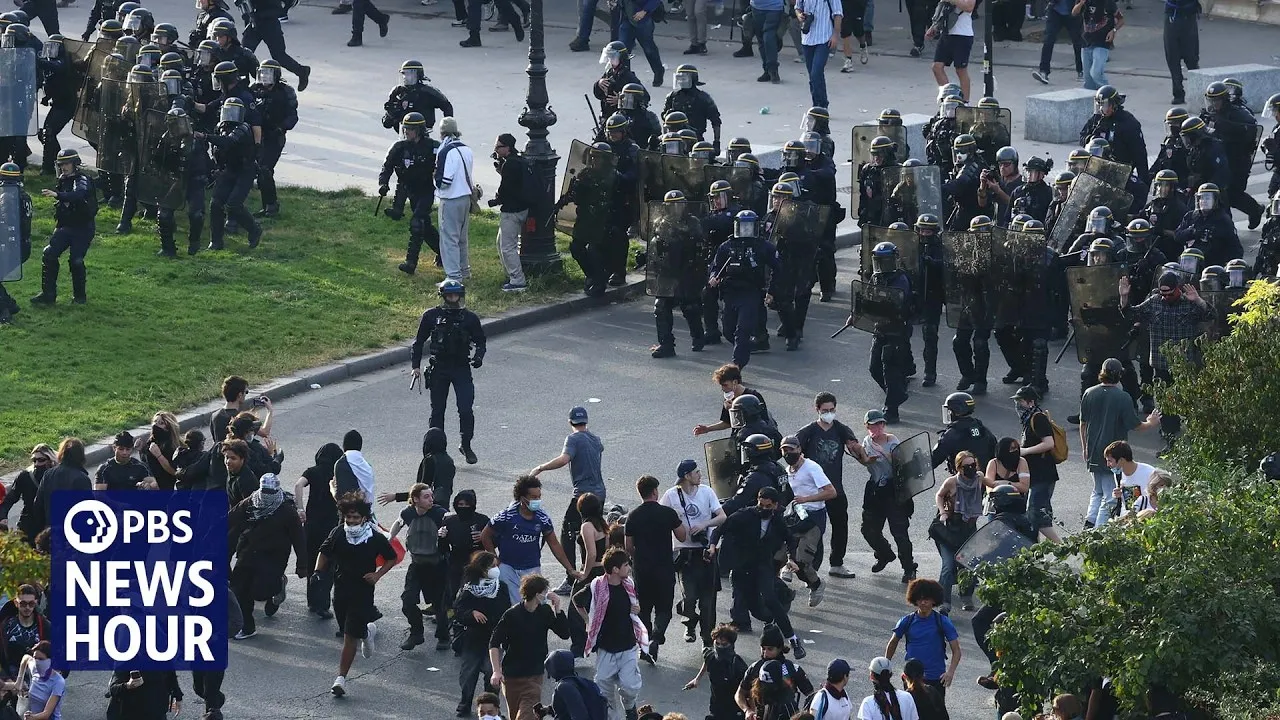
French high school students have continued their protests over education policies, clashing with police and disrupting hundreds of schools across the country, entering their third week of demonstrations. According to Reuters, a 15-year-old protester lost his hand and part of his lower arm after picking up a police dispersal grenade in the town of Lens, as reported by Fox News and Wwbl.
The wave of protests, which began at a single high school, has grown to involve more than a quarter-million people pouring into the streets across France, as reported by PBS. The French government reported that 450,000 protesters took to the streets on October 6, while the French government's count was 250,000, according to The Conversation.
According to The Conversation, the protests have been joined by parents, teachers, and trade unions, bringing together a mass nationwide movement. However, the French government claims that the protests have been hijacked by non-students, as stated by the French Education Minister Édouard Geffray.
The BBC (United Kingdom) reported that up to 500 schools across France will be partially or totally closed on Monday after clashes between riot police and student protesters in recent days. Meanwhile, the French education minister said that 735 of France's 3,700 schools had been affected by violent protests, according to the BBC.
Arabnews (Saudi Arabia) reported that Iran summoned the French ambassador to Tehran over Paris’s treatment of protesters demanding better conditions in schools, following days of clashes with French police. Iran itself suffered major anti-government protests in January, during which the authorities reported more than 3,000 deaths, blaming “terrorist acts” orchestrated by the United States and Israel.
Al Jazeera (Qatar) reported that more than 330 high schools, just under one in ten, were affected by the protests. In the western city of Nantes, teens piled up dozens of bins to prevent entrance to the Lycee Gabriel Guist'hau, while in Paris, there was an uneasy standoff between 30 students and a contingent of police at the Arago school.
The protests have escalated into what the French government has described as “urban violence,” with fires started in at least two French schools and teachers inadvertently splashed with petrol at a third, according to Educationhq. The French education minister said he would meet representative staff unions, parent associations, and student associations on Friday.
The demonstrations have been fueled by frustrations over overcrowded and dilapidated classrooms, unreplaced teachers, exhausting timetables, and the Parcoursup university selection platform, as reported by the World Socialist Web Site. The government is facing pressure to address these issues before the upcoming election to replace outgoing President Emmanuel Macron.
Bishop Matthieu Rougé, who leads the French bishops’ conference’s Council for Catholic Education, condemned the “destructive” violence at student-led protests and encouraged peaceful dialogue to address students’ struggles and concerns, as reported by Ewtnnews.
Despite the disagreements over the number of protesters and the extent of the violence, all outlets agree that the protests have grown significantly in scale and intensity, with widespread disruption to the education system and ongoing clashes with law enforcement.
Background
French high school students, joined by teachers and parents, have continued their protests over education policies, clashing with police and disrupting hundreds of schools.
French high school students and public sector workers have staged protests and strikes over planned budget cuts.
What's confirmed
- The 15-year-old had picked up a police dispersal grenade that detonated in the town of Lens, losing his hand and part of his lower arm, officials said Monday, Reuters reported, as the wave of school protests entered its third week, François-Xavier Lauch, prefect of Pas-de-Calais, said roughly 200 to 250 protesters had been hurling objects at police.
- "As long as they don’t listen to us, we won’t stop this fight." In total, more than 5,000 people have been arrested since the protests began, with 87% of them being minors.
- Education Minister Edouard Geffray said the wave of protests had been declining in recent days and the government would launch a platform for students to express their dissatisfaction.
- The mass nationwide movement led by high school students, joined by their parents, teachers and trade unions, brought together 450,000 protesters on October 6 (250,000, according to the French government).
What's still developing
- Conservative commentator Glenn Beck described the unrest as a “clear warning to the rest of the West,” while right-wing commentator Dave Rubin shared footage of the protests and warned that similar scenes could emerge in the US if Democrats regain power.
- Authorities said 300 hostile individuals attempted to confront officers on a day where 56,000 students, parents, and teachers marched through the French capital.
- In the meantime, it’s worth recalling that in the early days of May 68 in Paris’ Latin Quarter, there were a significant number of young workers who stood alongside students to seek revenge on the police for humiliating them on their council housing estates and in their neighbourhoods by the police, according to French sociologist Gérard Mauger.
- After mass protests against housing in Spain led to the calling of new elections, the government is desperate to prevent the youth movement from spreading further and leading to a general strike by the working class, as in May 1968.
- Outlets did split on French Police Fire Tear Gas And Water Cannons As 266,000 Protesters Demand More Education Funding → Drones sank one merchant ship and damaged another in the Black Sea off the coast of Bulgaria, with Bulgarian Prime Minister Rumen Radev saying the attack came at about 3am (00:00 GMT) and occurred about 70 nautical miles (130km) off Bulgaria’s coast.
- A rapidly expanding protest by high-school students, furious about long hours, teacher shortages and decaying facilities, has escalated into what the French Government has described as “urban violence”.
- The movement is largely made up of secondary school pupils aged 15 to 18, with university students now joining in some areas.
- Protesting students demand accessible education in French-speaking areas of the country.
- Students rallied in the city on Tuesday and Wednesday against overcrowded classrooms and difficulty accessing resources in Belgium’s French-language education system.
- Instead, the Flemish population regulates education in Belgium’s Dutch-speaking Flanders region while French-speaking Wallonia oversees its own curriculum.
- By early October, numerous protests became violent with arsons, lootings, and confrontations with police, leading to millions of dollars in damage and hundreds of injuries.
- Students began holding protests in late September, citing frustrations with education quality and a lack of funding and resources at schools.