
Home · World · Oct 7 archive
Anna Mazepa Politkovskaya: A Witness Russia Could Not Silence
Confirmed
In Short: Her editor at Novaya Gazeta, Sergei Sokolov, told AFP that Politkovskaya had predicted Russia's trajectory under Putin, warning that journalists would have to show 'total servility to Putin' or face death or prison.
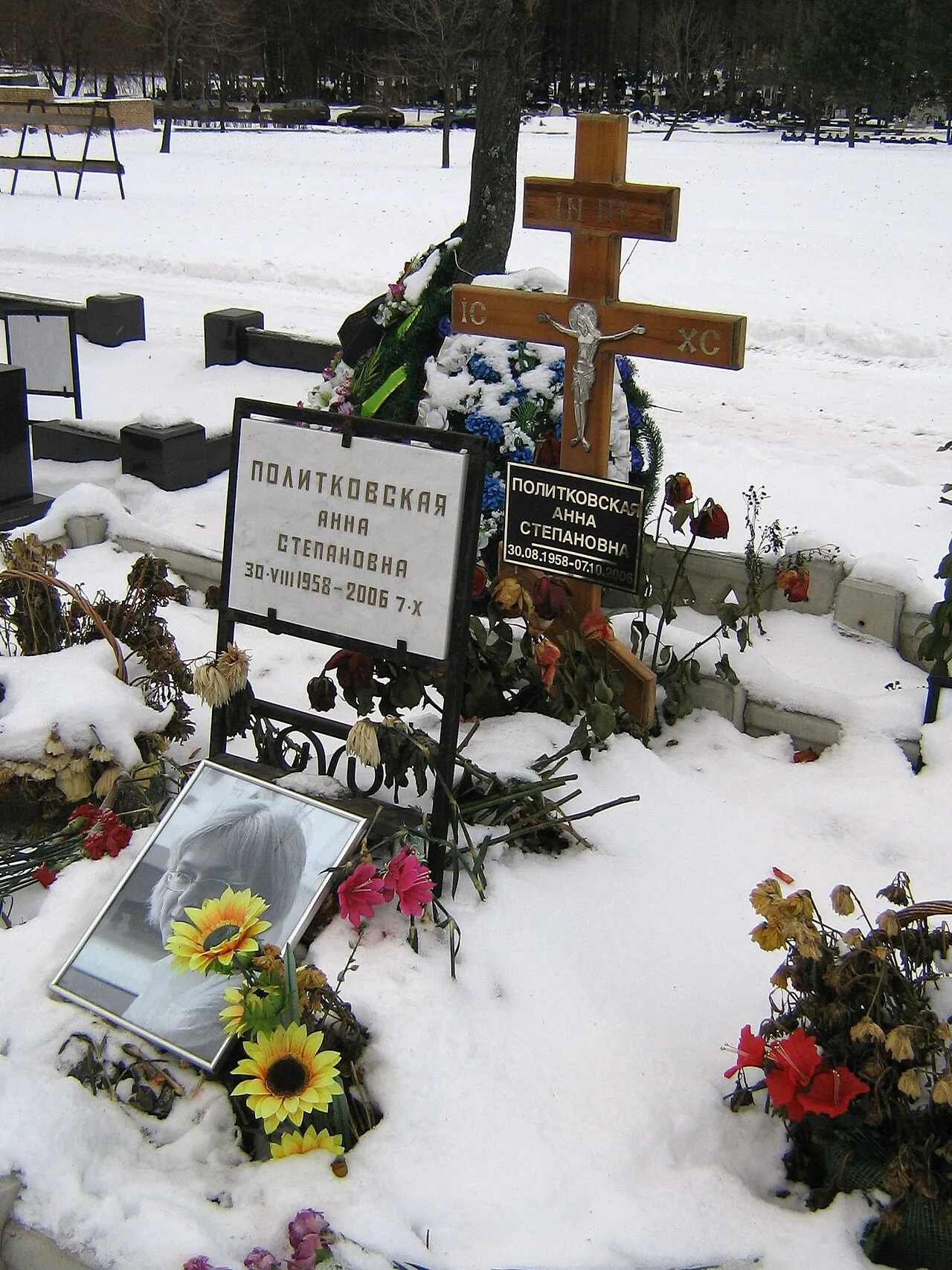
Anna Politkovskaya, an investigative journalist known for her fearless reporting on the war in Chechnya and Vladimir Putin's rise to power, was remembered by colleagues and admirers on the 20th anniversary of her assassination.
Politkovskaya was shot dead outside her Moscow home in 2006, an event that marked a turning point for Russian journalism.
Politkovskaya's reporting on the dangers of Putin's regime was often dismissed as exaggeration at the time, Sokolov said.
'At the time, nobody believed her and they said she was exaggerating the dangers and fears,' Sokolov recalled.
Politkovskaya's work, which included reporting on the war in Chechnya and the human toll of Putin's policies, made her a target.
'She wasn't afraid to speak her mind and say things as they were,' said 18-year-old Vladimir, who attended a memorial for Politkovskaya in Moscow.
Despite her name being virtually erased in Russia's official narrative, Politkovskaya remains an icon for independent Russian journalists.
'Everything that is happening with Russia was predicted by Anna Politkovskaya in the books she published before her death,' Sokolov said.
Politkovskaya's legacy is a constant reminder of the dangers faced by journalists in Russia, where Novaya Gazeta has been labeled a 'foreign agent' by Moscow.
'did not allow human stories to go unnoticed,' said Olga Churakova, another investigative journalist who works in exile.
'a beacon of hope for those fighting for justice and human dignity in Russia,' Churakova added.
What this adds
Politkovskaya's warnings about the dangers of Putin's regime were largely dismissed by readers at the time.
Putin's agencies claimed to have done everything to uncover the crimes related to Politkovskaya's assassination, but her legacy continues to resonate with journalists and human rights advocates.
What's confirmed
- Her killing marked a turning point for Russian journalism.
What's still developing
- Politkovskaya had reported fearlessly on the war in Chechnya and the rise of Putin, warning of his authoritarian tendencies at a time when he was being welcomed and courted in the West.
- As the West embraced Putin in the early 2000s -- a strongman leader cautiously welcomed after the chaos of the previous decade -- Politkovskaya warned Russian journalists would have to show "total servility to Putin" or face death or prison.
- Russia, she said, was "hurling back into a Soviet abyss".
- Politkovskaya had reported about Russia’s war on Chechnya, the bombardment, torture, abduction and fear.
- In a 2004 article, as Western governments embraced a leader who appeared to promise stability after the upheavals of the 1990s, Politkovskaya wrote that journalists would be expected to show “total servility to Putin” or face prison or death.
- Sokolov told AFP that many readers dismissed such warnings as exaggeration.
- Politkovskaya, she recalled, wrote about people abandoned to war, violence, injustice and the system: Chechen families trying to survive, Russian conscripts sent to kill and die, and victims of torture, abduction and corruption.
- Asked about that in 2021, Putin said his agencies "did everything to uncover these crimes".
- In an AFP interview marking the 20th anniversary of her murder, Sergei Sokolov, her editor at Novaya Gazeta, recalled that “nothing could make her stray” from a subject or principle she had chosen.