
Home · Science · Oct 6 archive
NASA Captures Beaver Brown Waters of Rupert Bay
Developing
In Short: NASA used the term 'beaver brown' to describe the rich brown waters flowing into Rupert Bay, Canada, in late September 2026.
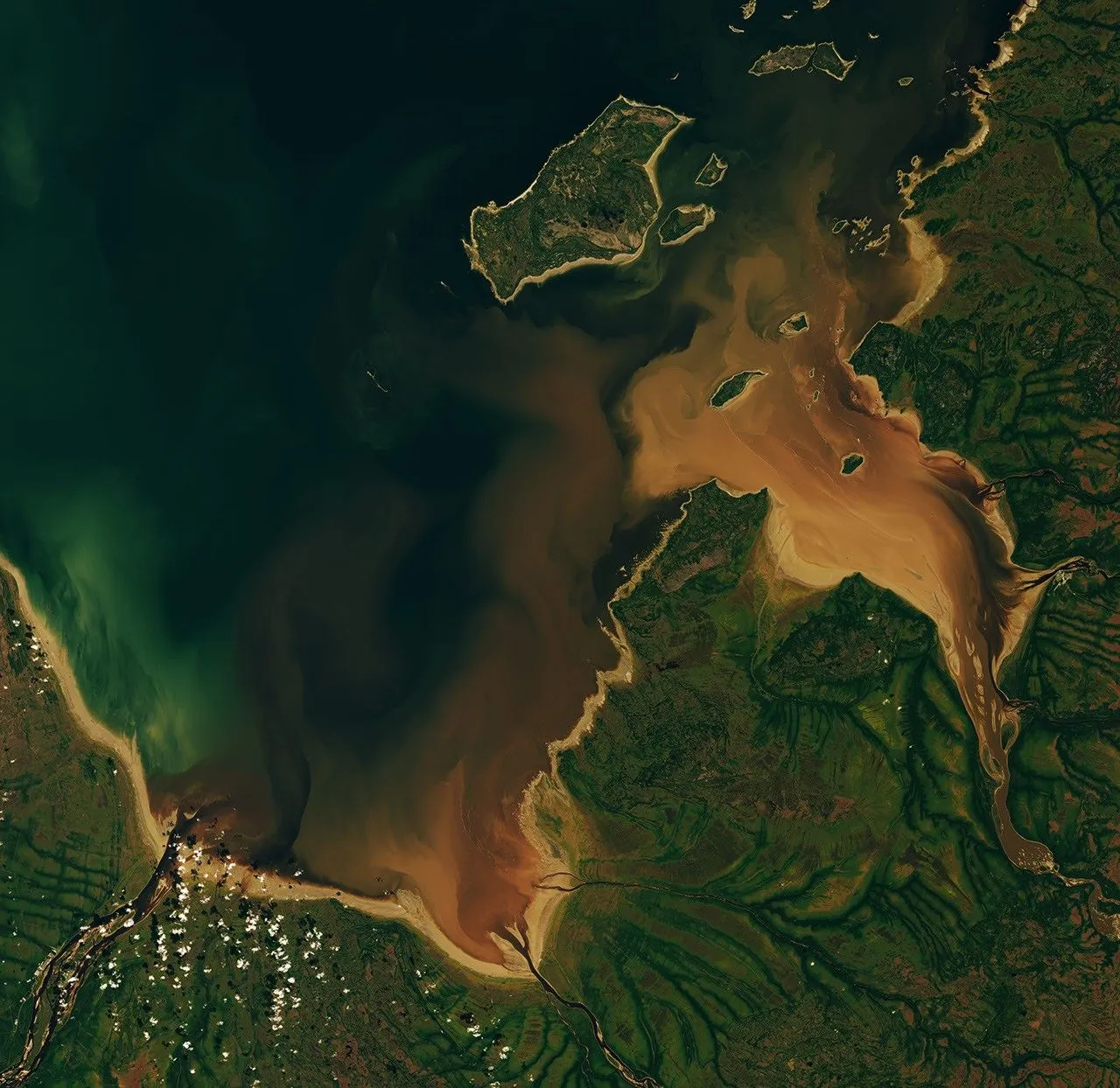
NASA described the waters flowing into Rupert Bay in Canada as 'beaver brown,' a term evoking the rich brown hue of the water and the region's beaver mythology.
The Operational Land Imager (OLI) on Landsat 9 captured the image on September 27, 2026, showing the Moose, Nottaway, and Harricanaw rivers carrying tea-colored water into Hannah and Rupert bays.
The Cree word 'pahtaaunaakun' is particularly apt for describing the distinctive brown hues of the waters that drain into these bays, according to NASA.
The waters' brown color is due to colored dissolved organic matter (CDOM) that absorbs light in the blue and ultraviolet parts of the spectrum, similar to what stains tea brown.
Historical Cree myths, recorded by anthropologist Alanson Skinner, include tales of a giant pursuing a mythical beaver down the Nottaway River, with the beaver escaping into Rupert Bay.
One myth recounts the giant throwing a rock at the beaver, missing it but creating Stag Rock, a distinctive island in the river's mouth.
The mudflats along the shore, a product of the shallow, sloping bathymetry in the southernmost part of James Bay, contribute to the lighter brown plumes of suspended sediment that mix with the incoming river water.
The beaver population on Stag Rock has grown significantly after predators were removed and breeding pairs were introduced to the island, according to historical accounts.
What's still developing
- Nothing material beyond the confirmed record.
Sources
- NASAlink