
Home · Science · Oct 6 archive
NASA Announces PRIMA, a Budget-Friendly Space Telescope
Confirmed
In Short: NASA will develop PRIMA, a new space telescope that will explore the origins of planets and galaxies.
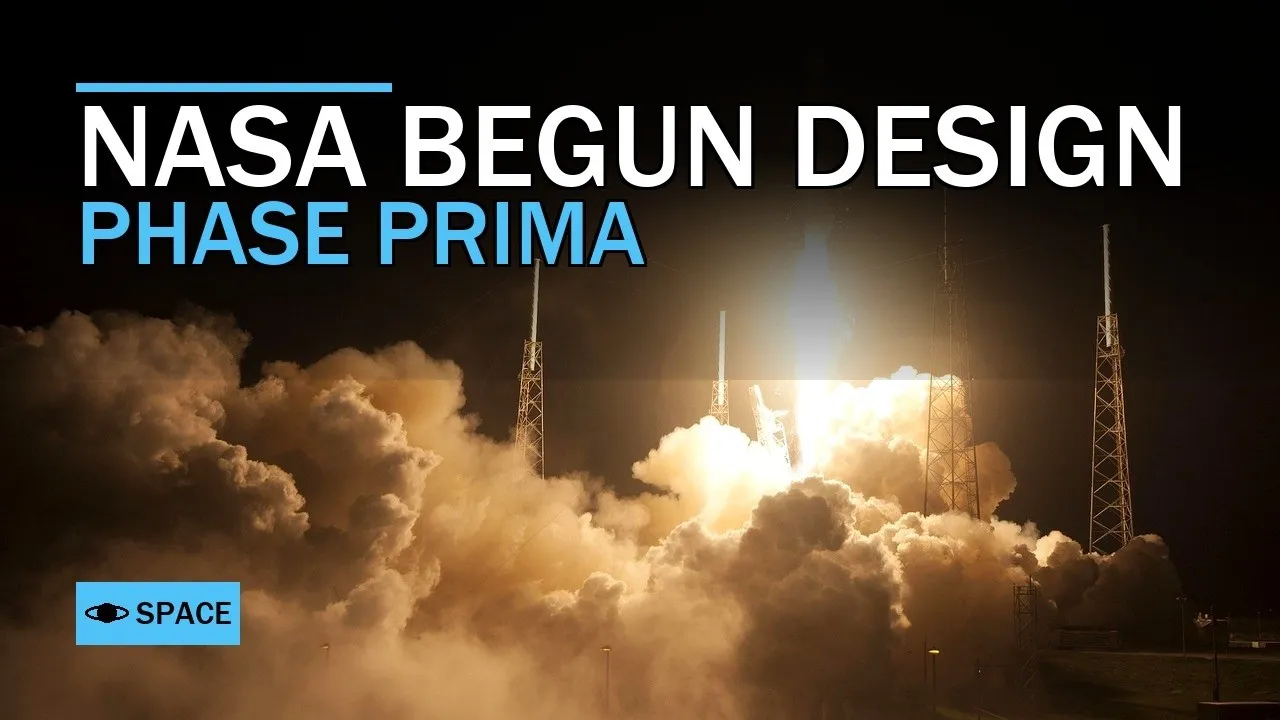
NASA announced Wednesday it will move forward with PRIMA, short for the Probe far-Infrared Mission for Astrophysics, a new space telescope that will explore the origins of planets and galaxies.
PRIMA will be led by NASA’s Jet Propulsion Laboratory in Pasadena, California, and will be the first of NASA’s Probe Explorers, a new line of observatories intended to do more science for less money.
The mission will use spare parts from the James Webb Space Telescope to reduce costs, with a max project cost of $1.2 billion, not including launch and other costs.
NASA officials said PRIMA will unveil the obscure across cosmic time to better understand the formation of planets, stars, black holes, and even how water on Earth came to be.
The PRIMA mission will be developed by NASA’s Jet Propulsion Laboratory in collaboration with NASA’s Goddard Space Flight Center and Marshall Space Flight Center as well as the space agencies of Canada, France, Germany, Japan, South Korea, and the United Kingdom.
The observatory will provide new insight into a universe that is otherwise hidden at visible wavelengths, helping scientists to study the formation of stars and planetary systems, trace the evolution of galaxies across cosmic time, and characterize the composition of exoplanet atmospheres and solar system bodies.
The mission features a cryogenically cooled 1.8-meter telescope, an imaging polarimeter (PRIMAger) to map large areas of the sky, and a high-resolution spectrometer (FIRESS) to conduct multimode spectroscopy.
PRIMA will investigate the universe at far-infrared wavelengths ranging from 24 micrometers to 235 micrometers.
NASA’s PRIMA mission will be the first of NASA’s Probe Explorers, a new line of observatories intended to do more science for less money.
The mission will be the first in a new class of space telescopes that will reach the launch pad in the early 2030s.
The California Institute of Technology’s (Caltech) Infrared Processing & Analysis Center (IPAC) is designated as the mission science center where raw data from the telescope is received, processed, and archived for use by astronomers.
PRIMA is scheduled to launch in 2033, and NASA will select a launch provider at a later time.
What this adds
NASA’s PRIMA mission will be the first of NASA’s Probe Explorers, a new line of observatories intended to do more science for less money.
The mission will use spare parts from the James Webb Space Telescope to reduce costs.
The mission will be the first in a new class of space telescopes that will reach the launch pad in the early 2030s.
Background
Kombos pointed to the Great Sea Interconnector, a planned subsea electricity cable connecting Israel to Cyprus and Cyprus to Greece, which would link the island to Europe’s power grid.
NASA will develop PRIMA, a new space telescope that will explore the origins of planets and galaxies.
What's confirmed
- “The PRIMA mission is humanity’s next window into the deep Universe,” said Nicky Fox, associate administrator for NASA’s Science Mission Directorate, in a statement.
- The California Institute of Technology’s (Caltech) Infrared Processing & Analysis Center (IPAC) is designated as the mission science center “where raw data from the telescope is received, processed, and archived for use by astronomers seeking to answer some of the universe’s deepest mysteries,” according to Caltech.
- “PRIMA represents a giant leap for far-infrared astronomy,” said Caltech President Ray Jayawardhana.
What's still developing
- The agency’s space telescopes typically fall into lower-cost “Explorer-class” missions, with cost caps in the range of a few hundred million dollars, or flagship observatories like the recently launched Nancy Grace Roman Space Telescope, which came with a price tag of some $4.3 billion.
- But it wasn’t clear until recently whether NASA’s science budget, which is under pressure from the Trump administration, would be sufficient to actually start developing one.
- NASA said a concept study for AXIS indicated it would not meet the agency’s schedule and budget constraints.
- PRIMA will be led by NASA’s Jet Propulsion Laboratory in Pasadena, California, which has also found itself in an institutional crisis, with few missions in development and a series of layoffs.
- “A single mission alone can’t probe all the Universe’s mysteries. But by extending the survey capabilities of our fleet into far-infrared wavelengths with PRIMA, we’re enabling an incredibly comprehensive look at the cosmos,” said Shawn Domagal-Goldman, director of NASA’s Astrophysics Division.
- With the Probe Explorers, NASA officials seek to find a better balance between the smaller Explorer missions and multibillion-dollar flagships.
- NASA has studied potential Probe Explorer mission concepts for several years after an independent panel of scientists recommended the new mission category.
- PRIMA was the sole finalist for the first Probe Explorer mission after NASA disqualified a competing mission, an X-ray observatory known as AXIS, earlier this year.
- The scientist leading the AXIS concept study blamed disruptions and mismanagement at NASA’s Goddard Space Flight Center in Greenbelt, Maryland, the NASA location charged with leading the AXIS mission if it moved forward into development.
- The agency said Wednesday PRIMA was moving into what’s referred to as Phase B development.
- NASA officials cleared Boeing’s Starliner spacecraft for flight Thursday after a “thorough and comprehensive” review of the crew capsule’s readiness, setting the stage for final pre-launch preparations at Cape Canaveral ahead of liftoff Dec. 20 on an unpiloted demonstration mission to the International Space Station.
- That allows for further development of the preliminary design and for NASA to conduct technical and budget reviews.
Sources
- Ars Technicalink
- BBClink
- Space.comlink
- Spaceflight Nowlink
- Universe Todaylink
- Sciencedailylink
- Universe Todaylink
- Thedebrieflink
- Science Newslink
- Scitechdailylink
- Scientific Americanlink
- Ipmnewsroomlink
- NASAlink
- Spaceflightnowlink
- The Guardianlink
- WarpBeat — background on Billion-dollar power link connecting Israel to Europe hits roadblock in bitter regional feud link
- Space News Today — video link