
Home · World · Oct 6 archive
France Tests Upgraded Nuclear Missile Amid Russia Tensions
Confirmed
In Short: France conducted a test of its updated nuclear-capable missile, highlighting growing tensions with Russia.
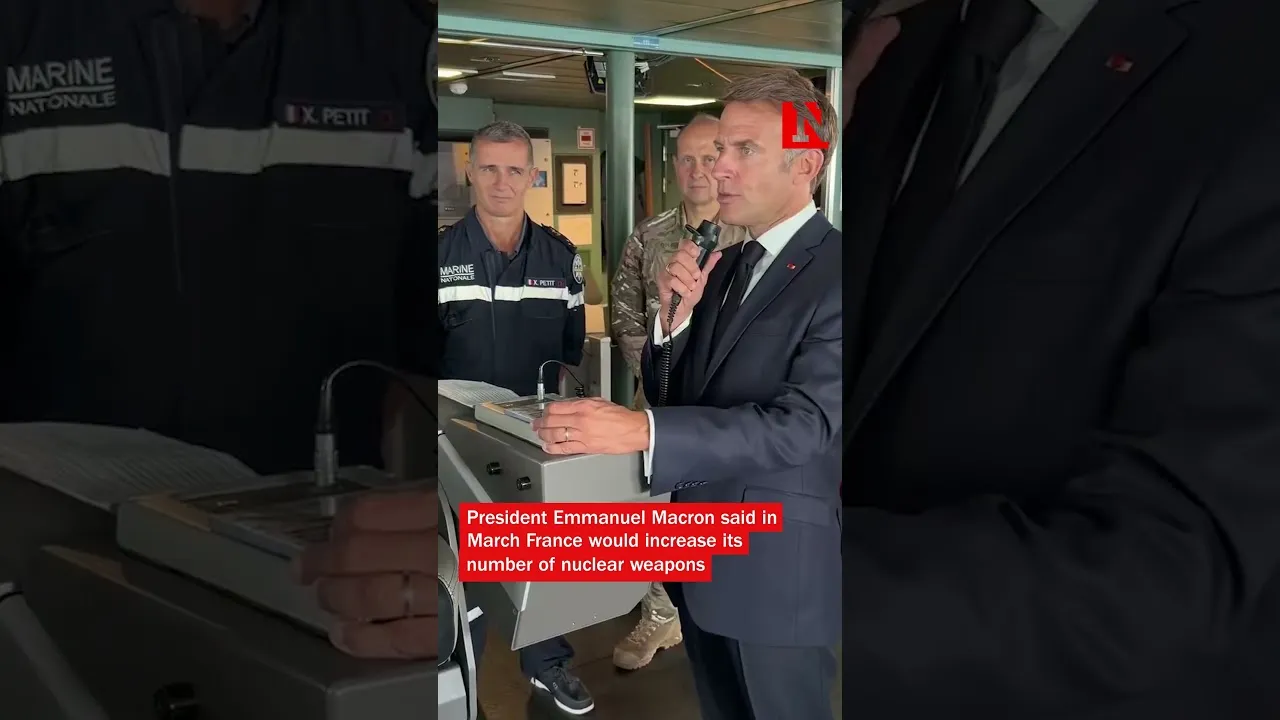
French President Emmanuel Macron announced on Tuesday that the country had successfully tested an upgraded nuclear-capable missile, the M51.3, launched from a submarine off the coast of Brittany.
The test, which did not involve a live nuclear warhead, was part of France's ongoing efforts to modernize its nuclear arsenal.
Macron emphasized the importance of the test, stating, "Our nuclear dissuasion protects us and will continue to do so." He also noted that the demonstration was a "demonstration of the credibility of our deterrence."
The missile test comes in the context of escalating tensions between Russia and NATO. Russia has issued warnings about the potential use of nuclear weapons if NATO attempts to isolate the Kaliningrad region.
NATO Secretary General Jens Stoltenberg responded to Russia's threats, emphasizing that the alliance is defensive and calling on Moscow to cease nuclear threats.
"This is absolutely not called for and not helpful," Stoltenberg said, reiterating NATO's stance that its exercises and activities do not pose a threat to Russian territory.
The Danish Defence Intelligence Service's September report highlighted Russia's intensifying use of sabotage, cyber attacks, and drone strikes against European targets, indicating an escalation in hybrid warfare.
The report also noted that Russia is under significant pressure due to heavy battlefield losses and an economy on the brink of crisis.
France's move to expand its nuclear arsenal is part of a broader trend among NATO members. The U.K. has pledged to increase its nuclear stockpile by up to 40 percent, to 260 warheads.
Both France and the U.K. maintain that their nuclear deterrents are independent and sovereign, reflecting a growing reliance on nuclear weapons as instruments of national power.
"Countries are increasingly relying on nuclear weapons as instruments of national power—reversing decades of efforts to reduce the numbers and role of nuclear weapons," researchers with the Stockholm International Peace Research Institute noted.
France, with an estimated 290 nuclear warheads, is the only nuclear power in the European Union and has the world's fourth-largest nuclear arsenal.
What this adds
The missile test was conducted shortly after Russia warned NATO about the potential use of nuclear weapons if the alliance seeks to cut off Kaliningrad.
The test highlights the ongoing arms race and the increasing reliance on nuclear weapons as a deterrent in the face of geopolitical tensions.
What's confirmed
- French President Emmanuel Macron announced on Tuesday that the country had successfully tested an upgraded nuclear-capable missile, the M51.3, launched from a submarine off the coast of Brittany.
- The test, which did not involve a live nuclear warhead, was part of France's ongoing efforts to modernize its nuclear arsenal.
- The missile test comes in the context of escalating tensions between Russia and NATO. Russia has issued warnings about the potential use of nuclear weapons if NATO attempts to isolate the Kaliningrad region.
- NATO Secretary General Jens Stoltenberg responded to Russia's threats, emphasizing that the alliance is defensive and calling on Moscow to cease nuclear threats.
- "This is absolutely not called for and not helpful," Stoltenberg said, reiterating NATO's stance that its exercises and activities do not pose a threat to Russian territory.
- The Danish Defence Intelligence Service's September report highlighted Russia's intensifying use of sabotage, cyber attacks, and drone strikes against European targets, indicating an escalation in hybrid warfare.
- The report also noted that Russia is under significant pressure due to heavy battlefield losses and an economy on the brink of crisis.
- France's move to expand its nuclear arsenal is part of a broader trend among NATO members. The U.K. has pledged to increase its nuclear stockpile by up to 40 percent, to 260 warheads.
- Both France and the U.K. maintain that their nuclear deterrents are independent and sovereign, reflecting a growing reliance on nuclear weapons as instruments of national power.
- "Countries are increasingly relying on nuclear weapons as instruments of national power—reversing decades of efforts to reduce the numbers and role of nuclear weapons," researchers with the Stockholm International Peace Research Institute noted.
- France, with an estimated 290 nuclear warheads, is the only nuclear power in the European Union and has the world's fourth-largest nuclear arsenal.
What's still developing
- The exercise involved a submarine-launched ballistic missile capable to carrying a nuclear head, Paris' defense ministry said on Tuesday.
- "Today we are stronger. The message has been sent loud and clear for wherever it must be received," Macron said in a social media publication showing him watching the launch.
- A document accuses the alliance of going through a "dangerous and reckless course" that puts the sides at "high risks of the outbreak of a direct armed conflict,".
- "Our nuclear dissuasion protects us and will continue to do so." À bord de la frégate multi-missions Auvergne, j'ai assisté au premier tir du nouveau missile balistique M51.3 depuis le sous-marin nucléaire lanceur d'engins Le Vigilant.
- Félicitations à tous les acteurs de cette réussite… pic.twitter.com/bElCe99hMd While the publication doesn't mention Russia specifically, the exercise took place shortly after Moscow warned NATO that it is ready to use nuclear weapons if the alliance seeks to cut off Kaliningrad, an enclave bordering the Baltic Sea.
- It also threats with "Russian strikes against decision-making centers in the alliance's member states right from the outset".
- "Russia will be ready to use the entire arsenal of forces and capabilities at its disposal, including nuclear weapons, in order to defend its territory should NATO countries undertake any attempt aimed at isolating the Kaliningrad Region from the rest of the country," the document added.
- "be willing to compromise on his fundamental objectives of war."
- But sharp White House criticism of America's European allies and Canada has forced the rest of NATO to re-evaluate how much trust it can place in the U.S. and its so-called nuclear umbrella to defend their interests.
- "Those advocating plans to blockade or strike Kaliningrad should have no illusions about the consequences," the Russian embassy in London said at the time.