
Home · Science · Oct 6 archive
Curiosity Rover Captures Stunning Martian Dawn Panorama
Confirmed
In Short: NASA's Curiosity rover has released a stunning panorama of Martian cliffs, providing the most detailed view yet of the wind-carved landscape.
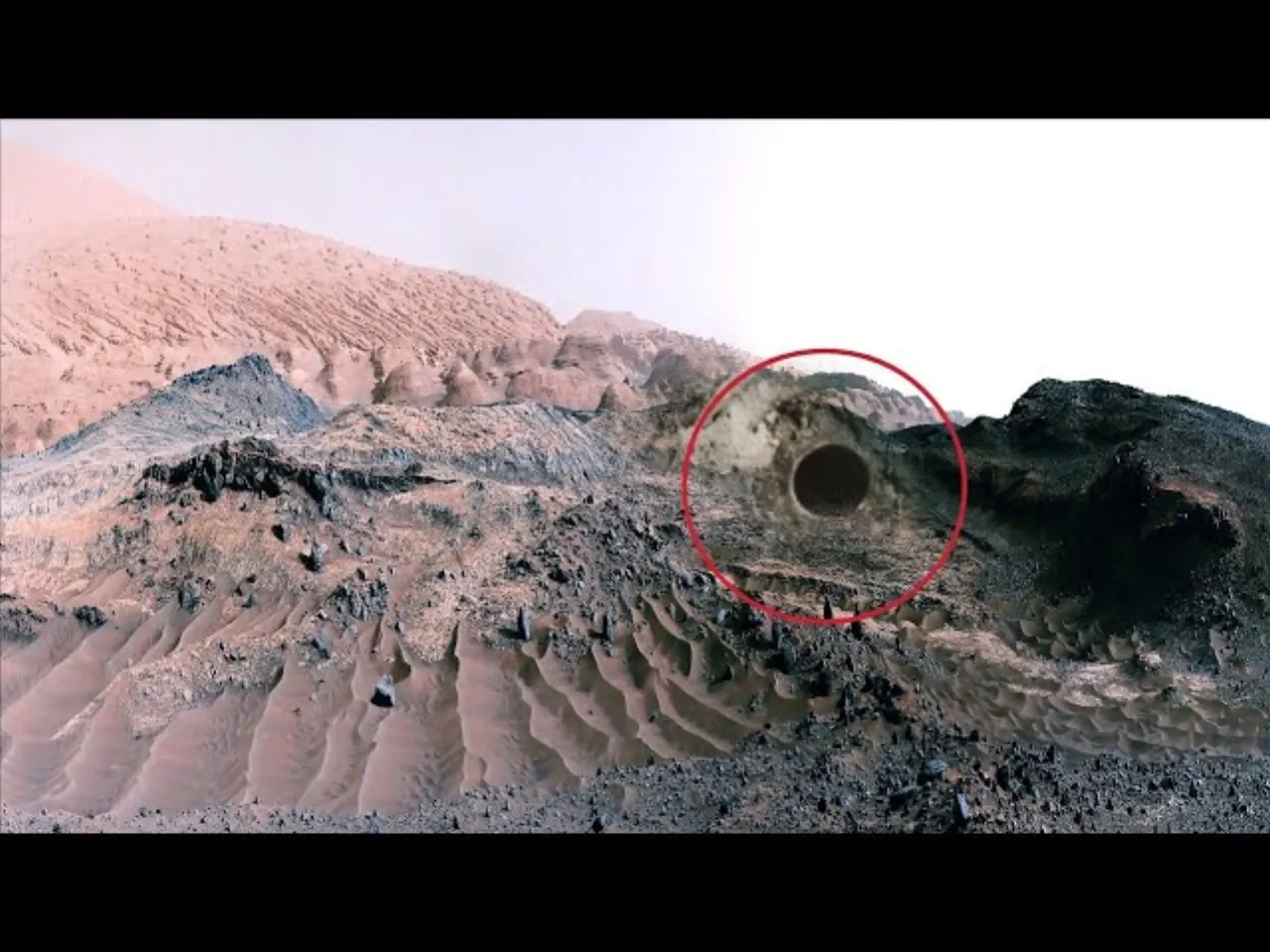
NASA's Curiosity rover has released a stunning panorama of Martian cliffs, providing the most detailed view yet of the wind-carved landscape. The panorama, captured on Aug. 11, the 4,982nd Martian day of the mission, comprises six individual images stitched together.
The images highlight the yardang layer, a geological formation that extends roughly 10 miles across the northwestern reaches of Mount Sharp, a 3-mile-tall mountain that Curiosity has been ascending since 2014.
Curiosity recently reached an elevation of 0.6 miles, the highest ever climbed on Mars. The rover is currently in the second year of its fifth extended mission, which began with an exploration of the spiderweb-like boxwork ridges.
According to NASA, the yardang layer appears out of place, with its wrong color, tilted layers, and unusual appearance. Project scientist Ashwin Vasavada noted, 'The yardang layer looks out of place. It’s the wrong color, the layers tilt at an odd angle, and it almost appears plastered on.'
Curiosity’s latest panorama was processed without white balancing, preserving the early morning appearance. Scientists are intrigued by the layer, with one theory suggesting it may be ash from ancient volcanic eruptions.
SciTechDaily reported that Curiosity has captured a 360-degree view of the Martian landscape, revealing unusual stone ridges known as boxwork patterns. The rover has been exploring the foothills of Mount Sharp since 2014.
Since landing in 2012, Curiosity has been studying Gale Crater’s geology and climate to assess past habitability. The boxwork ridges, believed to have formed from ancient groundwater, have fascinated scientists.
The panorama, made up of 291 individual images taken between May 15 and May 18, 2025, during the rover’s 4,451st to 4,454th Martian days, has been color-adjusted to show the scene as it would appear under Earth-like lighting.
Curiosity’s tracks and a butte nicknamed 'Texoli' are visible in the panorama, along with the distant rim of Gale Crater. The rover’s Alpha Particle X-ray Spectrometer has validated findings from its observations.
TechEBlog noted that Curiosity has been working its way down the Gediz Vallis channel on Mount Sharp’s flank, discovering pale stones and organic molecules that may have formed through geological processes or originated from meteorites.
Curiosity’s mission aims to determine whether Mars has or had the environmental conditions to support microbial life. The rover’s discoveries continue to provide valuable insights into the planet’s ancient past.
What this adds
Curiosity's latest findings add to the growing body of evidence about Mars' geological history and potential past habitability.
What's confirmed
- NASA's Curiosity rover has released a stunning panorama of Martian cliffs, providing the most detailed view yet of the wind-carved landscape. The panorama, captured on Aug. 11, the 4,982nd Martian day of the mission, comprises six individual images stitched together.
- The images highlight the yardang layer, a geological formation that extends roughly 10 miles across the northwestern reaches of Mount Sharp, a 3-mile-tall mountain that Curiosity has been ascending since 2014.
- Curiosity recently reached an elevation of 0.6 miles, the highest ever climbed on Mars. The rover is currently in the second year of its fifth extended mission, which began with an exploration of the spiderweb-like boxwork ridges.
- Curiosity’s latest panorama was processed without white balancing, preserving the early morning appearance. Scientists are intrigued by the layer, with one theory suggesting it may be ash from ancient volcanic eruptions.
- SciTechDaily reported that Curiosity has captured a 360-degree view of the Martian landscape, revealing unusual stone ridges known as boxwork patterns. The rover has been exploring the foothills of Mount Sharp since 2014.
- Since landing in 2012, Curiosity has been studying Gale Crater’s geology and climate to assess past habitability. The boxwork ridges, believed to have formed from ancient groundwater, have fascinated scientists.
- The panorama, made up of 291 individual images taken between May 15 and May 18, 2025, during the rover’s 4,451st to 4,454th Martian days, has been color-adjusted to show the scene as it would appear under Earth-like lighting.
- Curiosity’s tracks and a butte nicknamed 'Texoli' are visible in the panorama, along with the distant rim of Gale Crater. The rover’s Alpha Particle X-ray Spectrometer has validated findings from its observations.
- TechEBlog noted that Curiosity has been working its way down the Gediz Vallis channel on Mount Sharp’s flank, discovering pale stones and organic molecules that may have formed through geological processes or originated from meteorites.
- Curiosity’s mission aims to determine whether Mars has or had the environmental conditions to support microbial life. The rover’s discoveries continue to provide valuable insights into the planet’s ancient past.
What's still developing
- NASA-supported scientists have discovered an organism that lives at… Part of NASA’s Mars Science Laboratory mission, at the time of launch, Curiosity was the largest and most capable rover… Curiosity Finds Evidence of Persistent Liquid Water in the Past Just after landing, Curiosity found smooth, rounded pebbles that likely… Mars is the only planet we know of inhabited entirely by robots.
- The colors have been carefully adjusted to show the scene as it would appear under Earth-like lighting, giving us a vivid, true-to-life glimpse of this fascinating Martian terrain.
- Curiosity’s tracks can be seen in the middle of the image.
- In the distance to the right is a butte nicknamed “Texoli.” Far in the distance at the top center of the image is the rim of Gale Crater.
- AR brings the mission to life – The accompanying augmented reality app experience lets kids dive into the details of the rover and its mission $99.99 Buy on Amazon Curiosity’s Alpha Particle X-ray Spectrometer then validated what your eye had already detected.
- The crystals grew in settings that do not correspond to the typical sulphate-rich environment Curiosity has been mapping in the channel.
- Curiosity eventually discovered several more pale stones spread throughout the same tiny area, and the rover simply halted to take some more photos with its mast camera, returning to take one last look a few months later before continuing on.
- The rover’s wheels left fresh tracks in the loose soil and scattered stones as it hunted for clues about the planet’s ancient past.
- On May 30, 2024, during the 4,200th Martian day of the mission, one of those wheels rolled over a rock that looked no different from thousands of others nearby.
- I work with the NASA Mars Curiosity rover science team, and that mission actually has an instrument on board it that's able to detect organic carbon, and so I've had the opportunity to work with the team to develop an experiment that actually revealed some organic carbon that we've never seen before on Mars.
- We think that some of the molecules that we saw, so we saw more than 24 molecules, revealed with this first-of-its-kind experiment done with the Curiosity rover, and some of the molecules have the same character that you see when you do this type of experiment with a meteorite.